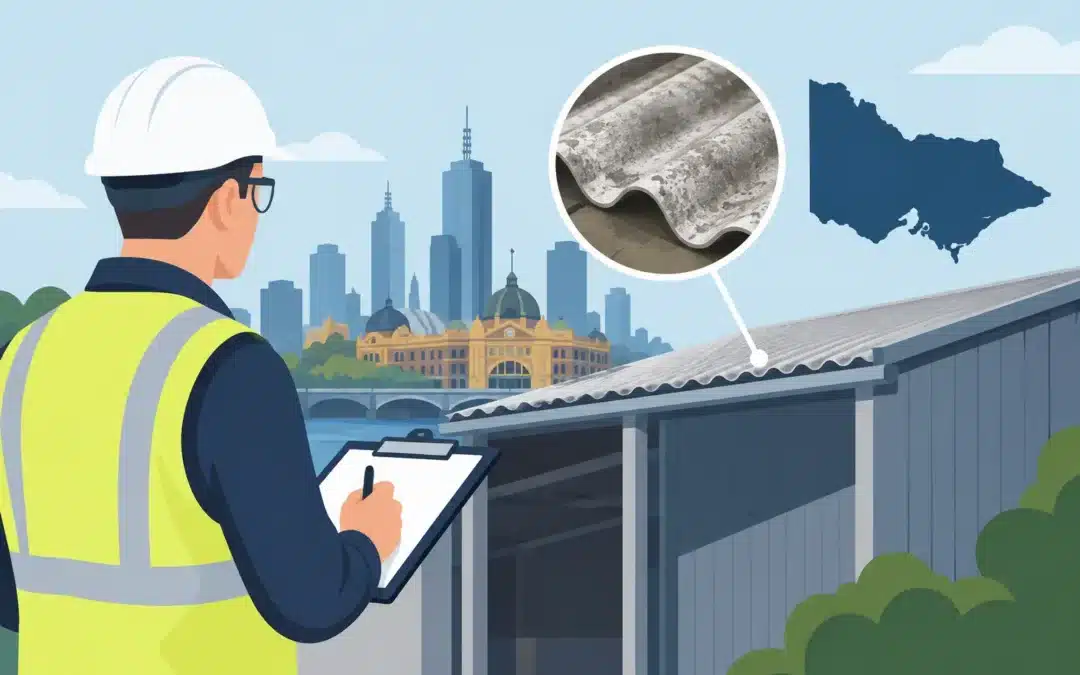
A renovation can look straightforward until the first wall lining, vinyl floor or eave is disturbed. For Victorian property owners and site managers, the top asbestos audit questions usually arise when work is ready to start and nobody wants a costly delay. Getting clear answers before demolition, refurbishment or maintenance begins protects people on site, helps meet duty-of-care obligations and gives the project a safer path forward.
Top asbestos audit questions before work starts
1. What is an asbestos audit?
An asbestos audit is a systematic inspection of a property, building or work area to identify materials that may contain asbestos. The inspector assesses accessible areas, notes the condition of suspect materials, may arrange laboratory testing, and records where the materials are located.
The result is more than a simple yes or no. A useful audit explains the material type, its condition, the likelihood of disturbance and the control measures required. For commercial, industrial and government sites, this information can support an asbestos register and management plan. For a home renovation, it gives the owner and builder practical direction before work begins.
An audit is not asbestos removal. It is the process of finding, assessing and documenting the risk so removal, encapsulation or safe management can be planned properly.
2. When do I need an asbestos audit?
If a building was constructed or renovated before 2004, asbestos should be considered before intrusive work takes place. It was used in many Australian building products, including cement sheeting, corrugated roofing, eaves, wall linings, wet-area linings, vinyl tiles, pipe lagging, electrical backing boards and insulation.
An audit is particularly sensible before demolition, refurbishment, major maintenance, drilling, cutting or removing fixtures in an older property. A property may have had previous upgrades, but that does not mean all asbestos-containing materials were removed. New plasterboard can sit over old sheeting, and floor coverings can conceal older vinyl products and adhesives.
For workplaces and properties under a person or business’s management or control, asbestos identification and record keeping may also be a regulatory requirement. The exact obligation depends on the site, its age, the materials present and the planned works. When in doubt, arrange an inspection before trades begin disturbing the area.
3. Can an inspector tell if a material contains asbestos just by looking at it?
Sometimes an experienced inspector can recognise products commonly associated with asbestos, but visual inspection alone cannot confirm every material. Many non-asbestos products look similar to older asbestos cement sheeting, insulation boards or vinyl flooring.
Where confirmation is needed, a sample should be taken safely and sent to an appropriate laboratory for analysis. This avoids guesswork. It also prevents the opposite problem: treating every old material as asbestos and adding unnecessary cost or delay to the project.
There are situations where sampling is not appropriate, such as fragile material that could release fibres if disturbed. In those cases, the assessor may recommend managing the material as presumed asbestos until a safe testing or removal method can be arranged.
4. What areas should the audit cover?
The scope should match the work you are planning. A pre-demolition audit needs to be far more detailed than a routine inspection of occupied office areas. If walls, ceilings, floors, plant rooms, roofs, services or external structures will be disturbed, those locations need to be considered.
For a house, this may include eaves, garages, sheds, bathrooms, kitchens, laundries, subfloors, roof cavities and old fence lines. On a commercial or industrial site, attention may also be needed around boilers, ducts, pipework, fire doors, electrical switchboards, service risers, plant equipment and older roofing systems.
Tell the auditor exactly what is changing. If the project involves removing a wall, replacing a roof, upgrading services or demolishing a rear extension, say so at the start. A clear scope helps avoid a report that is technically sound but does not cover the actual work area.
5. What happens if some parts of the building cannot be accessed?
No audit can see through every wall, beneath every floor finish or inside every sealed cavity without opening up the building. Access restrictions are common, especially in occupied premises, tenanted spaces, live industrial sites and older homes with layered renovations.
A professional report should clearly identify inaccessible areas, assumptions and any limitations. This is not a minor detail. It tells the builder, owner or facility manager where further investigation may be needed before intrusive work proceeds.
For refurbishment and demolition projects, a staged approach can work well. An initial audit may identify known materials and access limitations, followed by further inspection once ceilings, wall linings or floor coverings are safely opened. Planning for this early is usually less disruptive than discovering suspect material halfway through the job.
6. What should an asbestos audit report include?
A report should be clear enough for the people making decisions and detailed enough for those carrying out the work. At a minimum, it should identify the inspected areas, suspect or confirmed materials, their location, condition, estimated extent and risk of disturbance. Photos, plans or marked-up site drawings are particularly useful on larger sites.
It should also state whether samples were collected and provide the laboratory results where testing was undertaken. Just as importantly, it should set out practical recommendations. That may mean leaving sound material undisturbed and managing it, restricting access, labelling the area, arranging removal before works, or undertaking further investigation.
Do not accept a vague report that simply says asbestos may be present somewhere on site. The document should help you make a safe next decision. If removal is recommended, ask whether the material is friable or non-friable, what work controls are likely to apply and how the area should be managed until the work is completed.
Questions to ask the asbestos auditor
7. Are you suitably qualified, licensed and insured for this type of work?
Experience matters because asbestos risks vary widely between a small residential bathroom and an operational factory. Ask about the auditor’s experience with similar buildings and the planned scope of works. They should be able to explain their inspection method in plain language, not bury the important issues in technical terms.
Licensing requirements can differ between auditing, sampling, removal and disposal. If the same contractor may later manage removal, clarify their capability, relevant licences and insurance for that work. A properly managed job also needs a plan for safe waste handling and lawful disposal, not simply the removal itself.
8. How quickly can the audit and results be completed?
Turnaround time depends on access, building size, the number of samples and laboratory processing. A small targeted inspection may be completed quickly, while a large industrial audit or a staged demolition assessment requires more coordination.
Fast service is valuable, but speed should not mean corners are cut. The inspector needs enough time to examine the relevant areas safely, record findings properly and explain any limitations. If your project is on a tight programme, raise the deadline when requesting a quote so the audit can be scoped and scheduled realistically.
9. Does a positive result mean all asbestos must be removed?
No. Asbestos-containing material that is in good condition and unlikely to be disturbed can sometimes be safely managed in place. Removal may be unnecessary where it is stable, protected and recorded, particularly if there is no planned work in that location.
The decision changes when material is damaged, deteriorating, friable or likely to be disturbed by renovation, demolition, maintenance or occupant activity. In those situations, removal or other controls may be the safer option. This is why the condition of the material and the planned use of the area matter as much as the laboratory result.
10. What should I do while waiting for the audit or removal?
Leave the suspect material alone. Do not drill, sand, scrape, pressure-clean, break or attempt to remove it yourself. Keep trades, occupants and visitors away from the area where practical, particularly if material is damaged or debris is visible.
If work has already disturbed a suspected asbestos product, stop work and prevent further access. Avoid sweeping or vacuuming the debris with a household vacuum. Contact a suitably qualified asbestos professional for advice on the safest next steps. Acting early can limit exposure and prevent a small issue from becoming a larger clean-up.
Make the audit useful to the whole project
The best asbestos audit is one commissioned early enough to influence the job, not one ordered after a crew has arrived on site. Give the auditor plans, photos, the proposed work scope and any previous reports you hold. Let your builder, maintenance contractor or project manager know that asbestos information is being obtained, so no one starts intrusive work before the findings are understood.
For larger works, use the report as a working document. Brief relevant contractors, update site records when materials are removed and review the information if the scope changes. A demolition project often exposes areas that could not be inspected during the original visit, and those changes need to be managed rather than assumed away.
Asbestos Audits Australia provides practical, professionally managed inspections and advice for properties across Melbourne and Victoria. Whether you are planning a bathroom renovation, managing an ageing commercial building or preparing a site for demolition, a clear audit gives you the information to act safely, meet your responsibilities and keep the work moving.