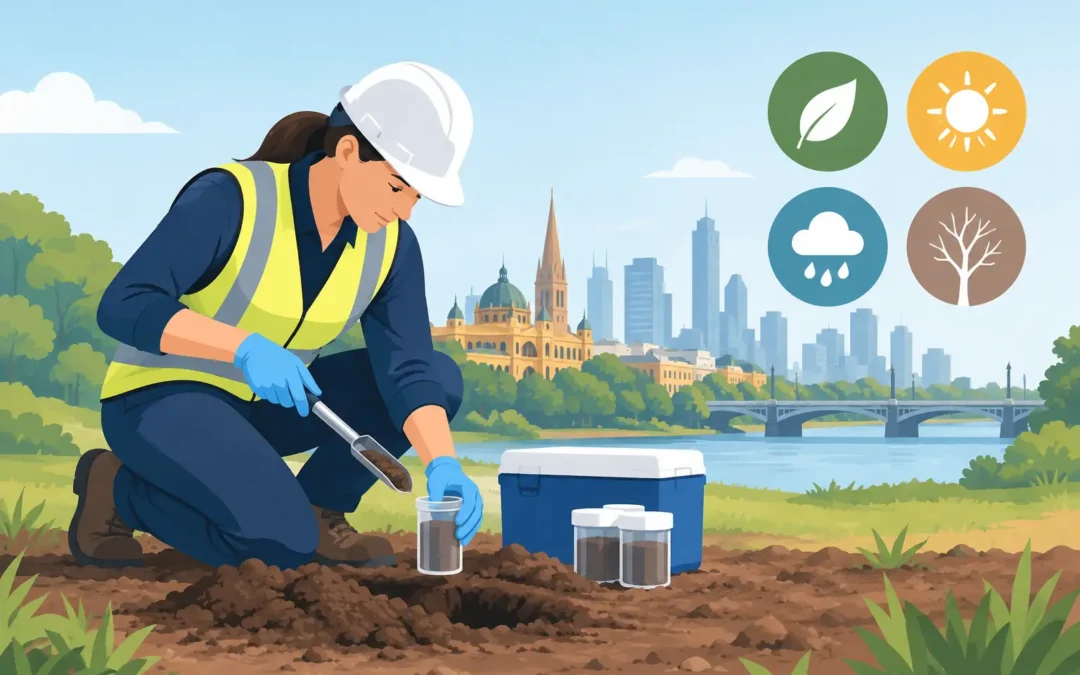
A small amount of disturbed soil can stop a renovation, excavation or demolition job far more quickly than most people expect. When should soil be sampled? The short answer is before soil is moved, removed, reused or built over where there is any reasonable concern about contamination. Early sampling gives property owners and project managers the information needed to protect people, meet waste requirements and avoid expensive surprises once machinery is on site.
For older Melbourne properties and industrial sites, soil can contain asbestos fragments, building debris, hydrocarbons, heavy metals or other contaminants linked to past use. You cannot reliably assess that risk by looking at the ground alone. A properly planned soil assessment is the practical starting point.
When should soil be sampled before works begin?
Soil should be sampled during project planning, ideally before a demolition contractor, excavator or landscaper starts work. This is particularly relevant when a site has a history of industrial activity, vehicle repairs, filling, demolition, fire damage, illegal dumping or previous building works.
For residential properties, testing may be warranted before removing soil around an older house, garage, shed or fence line. Asbestos-containing materials were widely used in Victorian buildings for decades. Broken cement sheeting, fragments of old pipe lagging, insulation, backing boards or demolition rubble can become mixed through surface soil, particularly where previous works were not managed correctly.
On commercial and industrial sites, sampling should be considered before excavation for services, foundations, drainage, car parks or redevelopment. The deeper the excavation and the greater the volume of spoil, the more important it is to understand what is being handled and where it can lawfully go.
Waiting until soil is already piled up on site creates unnecessary pressure. A suspected contamination issue at that point can delay trades, affect programme dates and make waste disposal more complicated. Sampling first allows the work to be planned properly.
Situations that call for prompt soil testing
There is no single rule that every block of land needs testing. The right approach depends on the site history, the planned works and what has been found on the ground. However, several warning signs should trigger a conversation with an experienced hazardous materials or environmental contractor.
Visible fragments of fibre cement sheeting, unusual rubble, ash, slag, buried building materials or discoloured soil are obvious reasons to investigate. So are sites where an old structure has been demolished, especially if there is no clear record of how the waste was removed.
A change in land use can also be a trigger. A former workshop becoming apartments, an old factory being redeveloped, or a commercial yard being converted for childcare or public use all require a more careful look at the ground conditions. The proposed use changes the level of exposure risk and the standard of investigation required.
Soil sampling is also sensible where a builder encounters unexpected material during excavation. Stop work in the affected area, keep people away from the material and arrange assessment before continuing. Continuing to dig, crush or spread questionable soil can increase the area affected and create a larger clean-up job.
Soil sampling before demolition and asbestos removal
Demolition can uncover problems that were hidden by slabs, structures, garden beds and hardstand. If a building is known or suspected to contain asbestos, a pre-demolition asbestos audit helps identify materials in the structure. But the assessment should not stop there when there is evidence of previous breakage, dumping or poorly managed removal around the building.
Soil around eaves, old sheds, service trenches, fence lines and demolition zones may need assessment if asbestos-containing material has deteriorated or been disturbed. This is especially relevant where fragments are visible in garden soil or where an old building has already been partly demolished.
The timing matters. Sampling before demolition allows the contractor to separate tasks, establish suitable controls and plan for the correct removal and disposal pathway. It also reduces the chance that clean soil becomes mixed with contaminated material during works.
Asbestos Audits Australia approaches this type of work with the same focus applied to asbestos removal: assess the condition, manage the risk, keep the site clean and carry out the work in a controlled manner. Every site is different, so the scope should reflect what is actually present rather than relying on assumptions.
What a proper sampling process looks like
Good sampling is more than taking one scoop of dirt and sending it to a laboratory. The number, depth and location of samples should be based on the size of the area, visible conditions, site history and the work proposed. A representative sample plan is essential because contamination can be uneven across a site.
The assessor may first review available records and inspect the property for suspect materials, filled areas, stained ground, drainage lines and demolition debris. Samples can then be collected from targeted locations or across a grid, depending on the circumstances. Where excavation is planned, samples may need to reflect the expected digging depth rather than surface soil alone.
For asbestos concerns, the method needs to account for the fact that asbestos can be present as small fragments or fibres within otherwise ordinary-looking soil. Careful collection, handling and laboratory analysis are needed to obtain useful results. Poor sampling can provide false reassurance or leave important questions unanswered.
The results should be explained in plain language. Property owners and project managers need to know what was found, where it was found, how it affects planned works and what practical next step is required. That may range from maintaining clean soil separation through to controlled removal, validation and lawful disposal at an approved facility.
Do not confuse sampling with waste classification
A soil sample can identify a potential issue, but testing requirements for disposal may be different from the investigation needed to plan site works. Waste facilities have acceptance criteria, and contaminated soil often requires specific classification or documentation before transport and disposal.
This is where early advice can save time. If soil is excavated before its status is understood, it may need to be stockpiled while further assessment is arranged. Stockpiling itself requires care, particularly where asbestos or other hazardous material may be present. The material must not be spread, reused as fill or mixed with other spoil simply to clear space on site.
Builders and site managers should also avoid assuming that soil can be taken away with general construction rubbish. Contaminated soil must be managed through the appropriate channels. Using a licensed, experienced contractor helps ensure the work is planned around safety, transport and disposal obligations from the beginning.
Seasonal timing and practical site access
Soil can be sampled throughout the year, but site conditions affect how easily and accurately the work can be completed. Heavy rain may make access difficult, create muddy excavation areas and complicate the identification of surface debris. Extremely dry, dusty conditions may require additional controls when suspect asbestos-contaminated soil is being assessed or handled.
The best time is usually before a project is locked into major costs and before site access becomes restricted by demolition, scaffolding, new slabs or landscaping. For a homeowner, that may mean testing before signing off on a large renovation. For a commercial project, it should be considered during due diligence, early design or pre-construction planning.
What to do if you suspect contaminated soil
Do not disturb material unnecessarily. Keep children, pets, workers and vehicles away from the affected area, and do not mow, rake, sweep, hose down or relocate visible fragments. Photograph the area from a safe distance if useful for an initial discussion, but avoid collecting samples yourself where asbestos may be involved.
A qualified specialist can advise whether inspection, soil sampling, asbestos testing or a broader contamination assessment is appropriate. The right response is not always full-scale removal. In some cases, the issue may be localised and manageable. In others, a controlled removal plan is the safest and most cost-effective path.
The key is to act before the soil becomes a problem for the people on site, the neighbours, the schedule and the budget. If there is any doubt about material in the ground, arrange professional advice early and make decisions with clear evidence rather than guesswork.