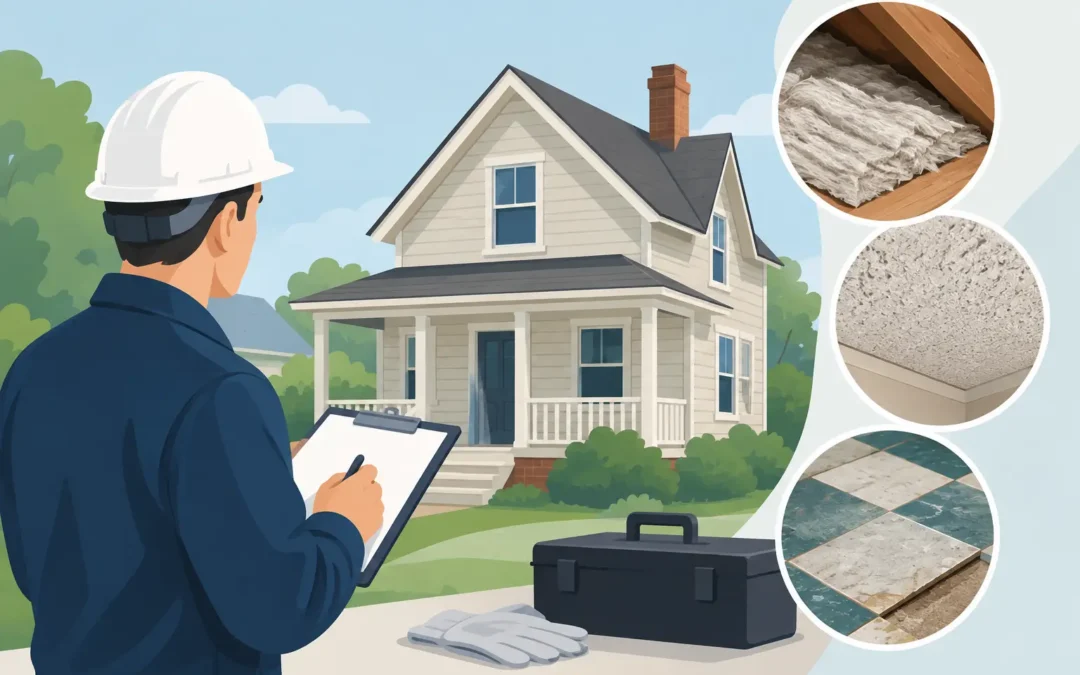
A renovation can uncover more than old timber, dated tiles and layers of paint. In many Melbourne properties built before 1990, asbestos in old homes may be sitting behind the first wall sheet removed, under old vinyl flooring, or around pipes and eaves. The material is not always obvious, and guessing can put your family, trades and neighbours at risk.
The practical rule is simple: if your home is older and you plan to drill, cut, sand, demolish or remove building materials, stop and have suspect materials assessed first. A small amount of planning at the beginning can prevent contamination, project delays and expensive clean-up work later.
Why asbestos is common in older Victorian homes
Asbestos was widely used in Australian building products because it was cheap, durable, fire resistant and effective for insulation. It appeared in thousands of residential products for decades before its use was phased out. While Australia introduced a total asbestos ban in 2003, many homes built well before that date still contain asbestos-containing materials.
Age alone does not confirm asbestos, but it should raise the question. Homes from the 1950s through to the late 1980s are particularly likely to contain it. Renovations completed years later can also leave asbestos products hidden beneath newer finishes, so a partly modernised kitchen or bathroom should not be assumed safe.
Asbestos is generally less of a risk when it is in good condition and left undisturbed. The risk changes when fibres become airborne. Cutting a sheet with a power tool, breaking brittle cement sheeting, pulling up old flooring or using a high-pressure cleaner on roofing can release fibres that cannot be seen or smelled.
Where asbestos in old homes is often found
A visual inspection can identify materials that need further assessment, but it cannot confirm whether a product contains asbestos. Similar-looking materials may be asbestos-free, while asbestos can be concealed inside ordinary-looking building components.
In older Victorian houses, suspect materials are often found in:
- Cement wall cladding, eaves, gable ends, internal wet-area linings and fencing
- Corrugated cement roofing, roof capping, gutters and downpipes
- Vinyl floor tiles, vinyl sheet flooring and the adhesive beneath them
- Bathroom, laundry and kitchen wall linings, particularly behind tiles
- Heater flues, pipe lagging, electrical backing boards and old insulation products
Fibro sheeting is one of the best-known examples, but not all fibro contains asbestos. Equally, some products that do contain asbestos do not look especially unusual. This is why a qualified assessment and, where required, laboratory analysis are safer than relying on age, colour or a builder’s best guess.
Friable and non-friable asbestos
The condition and type of material matter. Non-friable asbestos, often called bonded asbestos, is mixed into a hard matrix such as cement sheeting. When intact, it is less likely to release fibres. However, once drilled, cut, weathered, broken or improperly removed, it can become hazardous.
Friable asbestos is softer and can be crumbled by hand pressure when dry. It may be present in some insulation, pipe lagging, loose-fill insulation and fireproofing materials. Friable materials require a much higher level of control and should never be handled as a DIY job.
Do not disturb suspect material to find out
Property owners sometimes take a sample themselves or remove a small section before calling a contractor. That is where a manageable issue can become a contamination problem. Breaking, snapping, sanding, sawing or sweeping suspect asbestos can spread fibres through rooms, roof spaces, gardens and neighbouring properties.
If you find a material you are concerned about, leave it where it is. Keep people away from the area, avoid creating dust and do not use a domestic vacuum cleaner, blower or pressure washer. A professional can advise whether the material should be sampled, managed in place, enclosed or removed.
The same caution applies to trades. Before work begins, tell your builder, electrician, plumber or renovator that the home may contain asbestos. Good trades will want this information before they start opening walls, accessing roof cavities or disturbing flooring.
Arrange an asbestos audit before renovation or demolition
An asbestos audit gives you a clearer picture of what is present, where it is located and how it should be managed. For a homeowner planning a bathroom renovation, that might mean assessing wall sheeting, floor coverings, eaves and service penetrations. For a larger renovation or demolition, the scope may include the whole house, garage, shed, fencing, roofing and surrounding areas.
The benefit is not just safety. An audit allows you to price work properly and sequence the project without unnecessary hold-ups. If asbestos removal is identified early, it can be completed before other trades arrive. This reduces the chance of newly installed finishes being damaged during removal or contaminated by uncontrolled work.
A clear report can also help builders and project managers understand the required controls. For commercial, industrial and government properties, documented asbestos information supports duty-of-care obligations and safer contractor management. The exact requirements depend on the building, materials and proposed works, but the principle is consistent: identify the hazard before it is disturbed.
Plan removal properly, not cheaply
Asbestos work is regulated for good reason. The right removal method depends on whether the material is friable or non-friable, its condition, its location, the amount involved and whether the work could affect occupied areas or neighbouring properties.
Professional removal is more than taking sheets down and loading them into a ute. It involves preparing the work area, using suitable controls and protective equipment, minimising dust, packaging waste correctly, transporting it lawfully and disposing of it at an approved facility. Depending on the job, air monitoring, clearance processes and site-specific controls may also be needed.
The cheapest quote is not always the best value if it leaves out containment, waste disposal, cleaning or documentation. Ask what is included, who will perform the work, how the area will be protected and how asbestos waste will be managed. A licensed, insured contractor should be able to explain the process in plain language.
What to do if material is damaged
Storm damage, renovation accidents and deteriorating roof sheets can all create urgent asbestos concerns. If a suspect sheet has cracked or broken, keep the area isolated and avoid walking through debris. Do not sweep fragments into piles, hose them down or place them in household rubbish bins.
For material inside the home, close doors where practical and keep children and pets away until advice is obtained. Outside, prevent access to the affected area and avoid mowing, blowing leaves or using equipment that could spread debris. The correct response will depend on the material, the extent of damage and whether dust has been released.
Fast, professional advice is particularly valuable after storm events or accidental damage. The aim is to make the area safe, prevent further spread and organise compliant clean-up without creating extra disruption.
A practical approach for Victorian property owners
If you are buying, renovating, repairing or demolishing an older property, build asbestos checks into the early planning stage. Do it before finalising renovation designs, booking trades or starting demolition. It is a straightforward step that protects people and keeps the job moving.
Asbestos Audits Australia provides professional asbestos audits, removal and contaminated soil services across Melbourne and Victoria. For suspected asbestos in an older home, clear advice from an experienced specialist is the safest place to start. When the material is identified and the work is planned correctly, you can get on with improving your property with confidence.