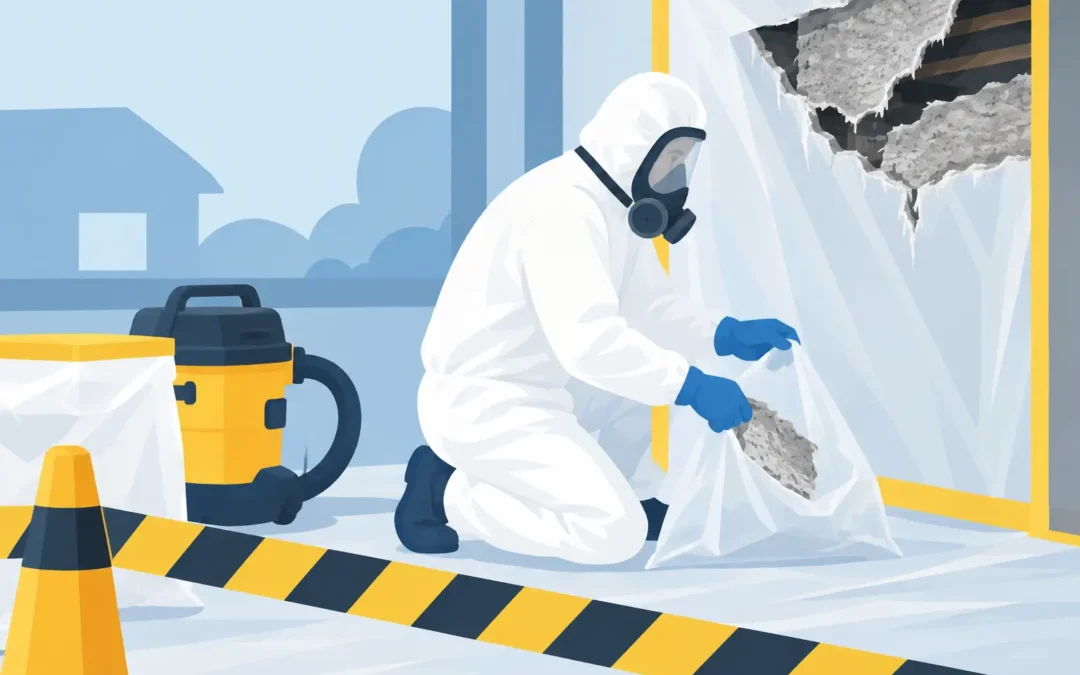
A cracked eave after a storm, broken vinyl tiles during a renovation, or damaged pipe insulation in a plant room can turn into an asbestos emergency quickly. Knowing how to handle asbestos emergencies means controlling the area first, not trying to clean up or work out the material yourself.
For Victorian homes and worksites built or refurbished before 2004, asbestos may be present in places that are easy to overlook. The risk rises when suspect material is broken, drilled, sanded, crushed, burnt or disturbed by water, wind or demolition. A calm, practical response can protect occupants, workers and neighbours while the right people assess the situation.
Treat damaged material as suspect asbestos
If you cannot confirm what the material is, assume it could contain asbestos until it has been assessed. This is particularly relevant for older fibro sheeting, corrugated cement roofing, eaves, wall cladding, vinyl floor tiles and backing, lagging, fire doors, gaskets, insulation and old electrical backing boards.
Asbestos-containing material is not always an immediate airborne hazard simply because it exists. Intact, sealed asbestos cement sheeting is generally lower risk than friable asbestos, which can be crumbled or reduced to powder by hand pressure. However, once material is damaged, the safest approach is to prevent further disturbance and arrange professional advice.
Do not rely on appearance alone. Some non-asbestos materials look very similar, while asbestos can be hidden beneath newer linings, paint, floor coverings or soil. Sampling should only be carried out by a competent professional using controlled methods.
What to do in the first few minutes
The first response should be simple: stop work, keep people away and avoid spreading dust. If a builder, tradesperson or employee has exposed suspect material, they should put down tools and notify the person responsible for the property or site immediately.
Where it is safe to do so, close doors and windows near the affected area to reduce drafts. Keep pets, children, staff, tenants, customers and contractors out. In a commercial or industrial setting, isolate the area using barriers, signage or temporary exclusion controls. Do not allow people to walk through debris, track dust through a building, or move broken pieces into another location.
If there is visible dust, do not sweep, vacuum with a household vacuum, use a leaf blower, hose the area down, or attempt to wipe it with dry rags. These actions can spread fibres further. Do not bag loose material unless directed by a licensed asbestos professional or emergency authority.
For an incident outdoors, such as storm-damaged roofing or fencing, keep people well clear and avoid working in windy conditions. Restrict access from nearby paths, driveways and work areas where practical. If debris has crossed into a neighbouring property, advise the neighbour not to touch it and arrange a controlled inspection.
When to call emergency services
Some asbestos incidents sit alongside more urgent hazards. Call emergency services first if there is a fire, serious injury, immediate structural collapse, a gas or electrical risk, or a major incident affecting public safety. Follow their directions and do not re-enter an unsafe building.
After the immediate danger has been managed, engage an appropriately licensed asbestos assessor or removalist. In Victoria, asbestos removal is regulated, and the class of licence required depends on the type and quantity of asbestos involved. Friable asbestos requires particularly strict controls because it is more likely to release fibres when disturbed.
A small piece of intact asbestos cement may not need the same emergency response as widespread debris from a demolition accident or fire. That said, the correct response depends on the material condition, location, extent of damage, who may have been exposed and whether contamination has spread beyond the original work area.
How to handle asbestos emergencies on a worksite
Duty holders on worksites need to respond quickly and document what occurred. The priority is preventing further exposure while protecting the integrity of the site. Stop affected work, secure the area and make sure no one removes tools, clothing or waste that may be contaminated without direction.
The site supervisor or manager should record the location, time, nature of the disturbance, people present and any steps taken to isolate the area. Photographs may be useful, but only take them from a safe distance and without entering the exclusion zone. This information helps an asbestos professional plan the assessment and any removal work.
Do not send untrained workers back in to collect tools, complete a measurement or tidy the area. Personal protective equipment alone does not make an unlicensed clean-up safe or compliant. Proper asbestos work may require controlled removal methods, specialised equipment, decontamination procedures, air monitoring and independent clearance inspection.
For occupied commercial buildings, facility managers should consider how to maintain safe access around the affected space. In some cases, a room or section of a building can be isolated while the rest remains operational. In others, particularly where friable material or dust is involved, broader closure may be necessary. A competent assessment provides the basis for that decision.
If asbestos may have been tracked through a property
It is understandable to want to clean immediately when dust or fragments appear in a hallway, roof space, workshop or office. Resist that instinct. Walking through the area, shaking clothing, using a domestic vacuum or brushing debris from shoes can make the situation larger and harder to manage.
Ask everyone who may have entered the affected area to stop moving through the property. Keep footwear and equipment in place if possible, rather than taking potentially contaminated items through clean areas. A licensed contractor can advise on whether controlled decontamination is required and how far the clean-up needs to extend.
If dust is on clothing, do not shake it out. Place the clothing aside and seek professional direction. The response should be proportionate to the incident, but it must be based on the actual risk rather than guesswork or reassurance from an unqualified person.
Professional assessment, removal and clearance
A proper response starts with identifying the material and the scope of the incident. Depending on the circumstances, this may involve sampling, a site inspection, review of an asbestos register, or assessment of damaged building components and surrounding surfaces.
The removal plan should set out containment requirements, access controls, waste handling, decontamination and the method for returning the area to use. Asbestos waste must be packaged, transported and disposed of through approved channels. It must never go into household rubbish bins, skips intended for general building waste, or stockpiles on site.
For higher-risk work, independent clearance inspection is a critical safeguard. It confirms that removal and cleaning have been completed to the required standard before the enclosure or work area is released. This is especially relevant after friable asbestos removal, extensive contamination, fire damage or works in occupied premises.
Asbestos Audits Australia provides practical, licensed support for asbestos audits, removal and contaminated material issues across Melbourne and Victoria. The aim is not to make a difficult situation sound more complicated than it is. It is to assess the risk properly, manage the work safely and leave the property clean and ready for the next step.
Avoid the shortcuts that create bigger problems
The most common mistakes after an asbestos incident are well intentioned: a homeowner breaks up sheets to fit them in a bin, a contractor sweeps dust into a pile, or a manager reopens an area before it has been assessed. Each shortcut can expose more people and increase the cost of remediation.
Be equally cautious with advice from online forums or people who suggest that wetting, double-bagging or wearing a disposable mask is enough. Those measures may form part of controlled professional work, but they do not replace correct licensing, containment, decontamination and disposal procedures.
If you are planning repairs after a storm, flood, fire or accidental damage, do not let programme pressure drive the response. A brief pause to assess suspect materials is far less disruptive than discovering contamination after other trades have started work.
A safe next step
When suspect asbestos is damaged, the best decision is rarely to act faster with a broom, vacuum or tool. Isolate the area, keep people clear, record what happened and obtain qualified advice before anything is moved. Good old fashioned service in an asbestos emergency means clear communication, careful control of the site and work completed properly the first time.