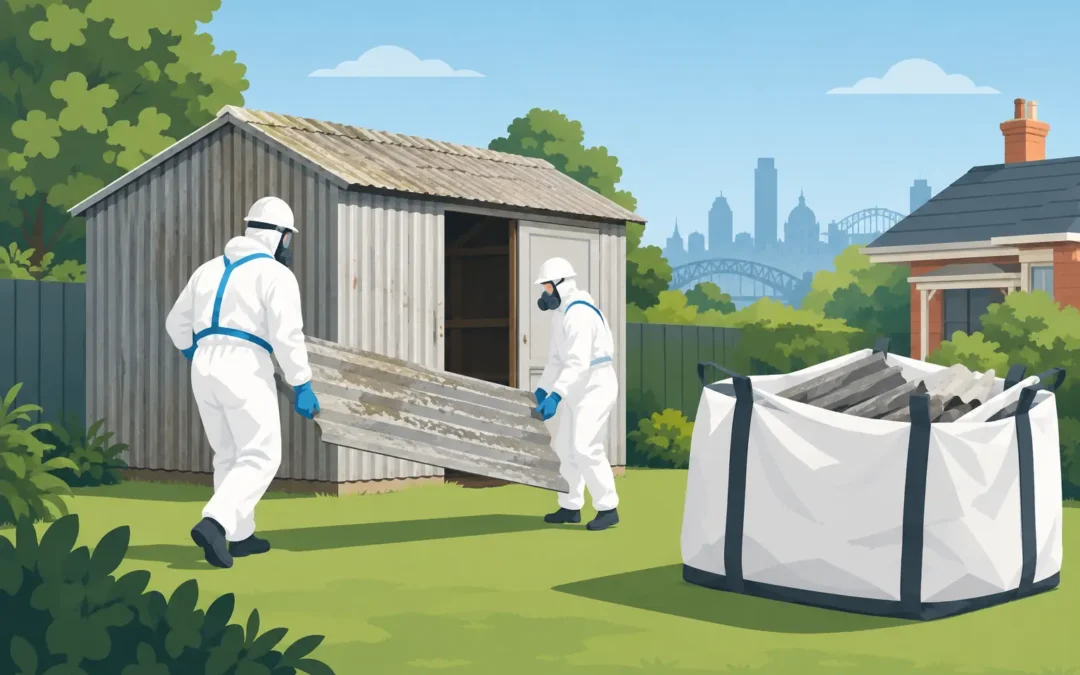
A weathered backyard shed can look like a straightforward clean-up job until the roof, wall sheets or eaves are found to contain asbestos. This asbestos shed removal guide is designed for Victorian property owners who need clear, practical advice before demolition, renovation or disposal begins. The key rule is simple: if asbestos is suspected, do not disturb it until it has been properly assessed.
Many older sheds across Melbourne and regional Victoria were built with fibre cement sheeting. When that sheeting is in good condition and left alone, the immediate risk can be low. The danger rises when sheets are cracked, drilled, cut, broken, pressure-cleaned or pulled down during demolition. Those activities can release asbestos fibres into the air, soil and surrounding areas.
Why old sheds need special attention
Asbestos cement products were widely used in Australian buildings for decades because they were durable, affordable and resistant to heat. Sheds commonly used asbestos-containing flat sheets on walls, corrugated roofing, gable ends, eaves and sometimes fencing attached to the structure.
Age alone does not confirm asbestos. However, a shed built or renovated before the mid-1980s should be treated with caution, particularly where the sheets are grey cement, weathered, brittle or visibly fibrous at broken edges. Visual inspection can indicate a possible issue, but it cannot provide certainty. Laboratory testing of a properly collected sample is the reliable way to confirm whether a material contains asbestos.
A shed can also become more complicated than it first appears. Old structures may contain painted sheets, damaged roofing, accumulated dust, contaminated soil beneath broken sheets, electrical wiring, old rubbish and boundary fencing. If the shed is close to a neighbour’s fence, garden bed, driveway or living area, containment and clean-up planning matter just as much as the removal itself.
Asbestos shed removal guide: the safe first steps
Do not start by lifting a corner of a sheet or taking a sample yourself. Avoid drilling, sanding, scraping, sweeping dry debris or using a household vacuum. A leaf blower and pressure washer are also unsuitable, as they can spread fibres well beyond the shed.
Instead, keep people, pets and vehicles away from the area as far as practical. If sheets are damaged or debris is visible, avoid walking through it and do not mow or whipper-snip nearby. Take clear photos from a safe distance for a contractor to review, then arrange an inspection or asbestos test.
A professional assessment should establish what materials are present, their condition, the approximate amount involved and whether any surrounding ground or surfaces may have been affected. This allows the removal method, licensing requirements, site controls and disposal arrangements to be planned before work starts.
For a simple freestanding shed with intact non-friable sheeting, the project may be relatively contained. A deteriorated shed with broken roof sheets, exposed soil or limited access between homes requires more detailed controls. Good preparation prevents rushed decisions once demolition is underway.
Know the difference between bonded and friable asbestos
Most asbestos shed sheets are non-friable, also called bonded asbestos. In these products, asbestos fibres are bound into cement. They can still be hazardous when damaged or worked incorrectly, but intact sheets are generally less likely to release fibres than friable materials.
Friable asbestos is material that can be crumbled, pulverised or reduced to powder by hand pressure when dry. It may include loose debris, severely degraded material or dust contaminated by damaged asbestos products. Friable asbestos presents a higher risk and needs much stricter control.
In Victoria, asbestos removal is regulated, and licence requirements depend on the type, condition and quantity of asbestos involved. Friable asbestos removal must be completed by appropriately licensed professionals. Non-friable removal may be permitted in limited circumstances, but property owners should not mistake legal permission for a safe or sensible option. A shed roof is awkward, fragile and often deteriorated. Breaking sheets during removal can quickly turn a manageable job into a contamination issue.
For homeowners, builders and facility managers, engaging a licensed and insured asbestos contractor is usually the clearest path to a safe, compliant result. It also provides confidence that the material will be handled, transported and disposed of correctly.
What professional shed removal should look like
A properly managed job begins before anyone touches the shed. The contractor should review access, nearby properties, power lines, drainage points, the condition of the structure and the safest sequence for removal. Where required, notices, site controls and disposal documentation should be organised in advance.
The work area is then prepared to prevent the spread of debris. Depending on the site, this may involve exclusion zones, warning signage, ground protection and controlled access. Workers wear suitable personal protective equipment and use methods intended to keep sheets intact. The aim is not to smash a shed down quickly. It is to carefully dismantle it while minimising breakage and dust.
Asbestos sheets are generally removed whole where possible, carefully lowered rather than dropped, wrapped or packaged for transport, and placed in an approved waste vehicle. Fragments and visible debris are cleaned using appropriate asbestos procedures, not ordinary sweeping or household cleaning methods.
The structure underneath should also be checked. Timber framing, concrete slabs, soil, fence lines and nearby garden areas may need further inspection if sheets have broken down over time. This is particularly relevant where an old shed has been exposed to storms, vandalism or previous DIY demolition.
Demolition, soil and neighbour considerations
Shed removal often forms part of a larger renovation, new garage build or backyard redevelopment. This is where planning pays off. Removing asbestos first gives builders a clean work area and reduces the risk of trades accidentally disturbing material later.
If the shed is on a boundary, let adjoining owners know when work is scheduled. They do not need to manage the removal, but advance notice helps them keep windows closed, move washing, relocate pets and avoid the area while work is underway. It is good old fashioned service and sensible site management.
Soil deserves close attention where broken sheets have sat on the ground for years. Even small pieces can be overlooked among leaves, gravel or garden mulch. A contractor may recommend a targeted clean-up, soil assessment or contaminated soil removal where there is evidence of asbestos fragments. Covering suspect material with fresh soil or landscaping over it is not a substitute for proper assessment.
Choosing the right contractor
Price matters, but an unusually cheap quote can leave out the controls that make asbestos work safe. Ask whether the contractor holds the appropriate Victorian asbestos removal licence for the work, carries relevant insurance and has experience with sheds, demolition and waste management.
You should also expect a clear scope. It should identify what is being removed, how access and clean-up will be managed, whether the shed frame is included, and how asbestos waste will be disposed of. If testing is needed before the quote can be confirmed, that should be explained plainly.
For commercial, industrial and government sites, the contractor should be able to work within site inductions, traffic management plans, security requirements and project schedules. Documentation, communication and clean handover are particularly important where multiple contractors are working on site.
Asbestos Audits Australia provides professional asbestos assessment, removal, contaminated soil removal and demolition services across Melbourne and Victoria. The focus should always be on safe work, clear advice and workmanship that leaves the site ready for its next use.
After the shed is gone
Once removal is complete, do not rush straight into construction or landscaping. Review the area for any remaining debris, confirm that waste has been removed from site and make sure the scope of clean-up matches the condition of the original shed. For higher-risk work, clearance processes may be required before the area is returned to normal use.
Keep copies of quotes, testing results, waste records and any clearance documentation with your property records. This can be useful for future renovations, property sales, insurance queries and builder handovers.
An old shed is replaceable. Your health, your neighbours’ safety and the condition of your property are not. If there is any doubt about the sheeting, pause the project and get experienced advice before the first panel comes down.