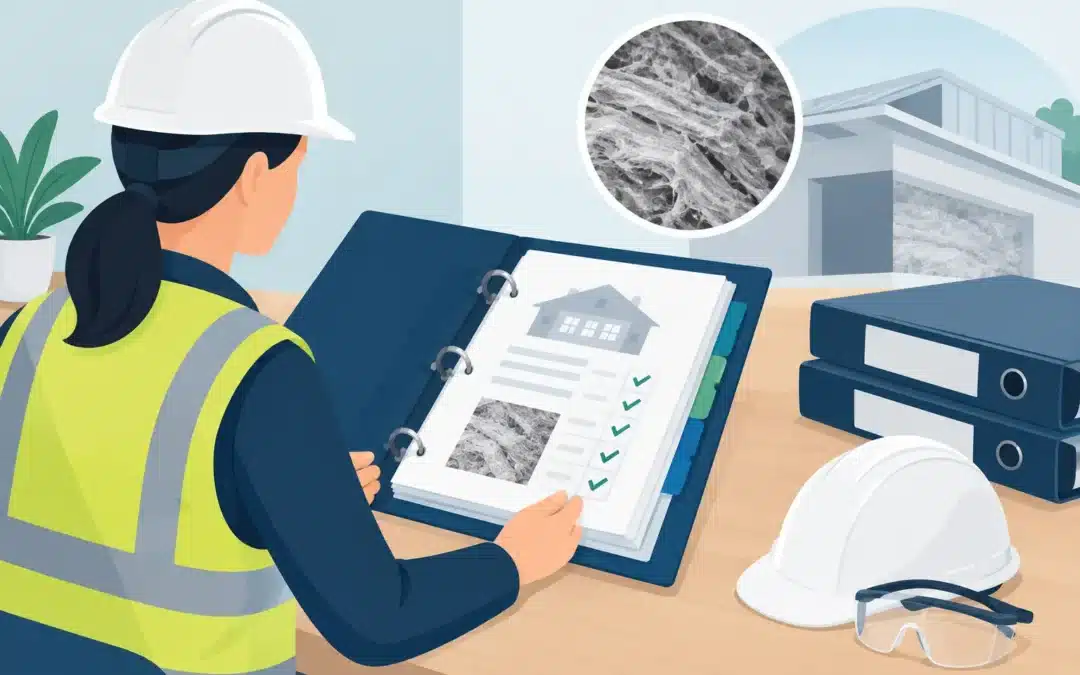
A register that sits in a filing cabinet is not protecting anyone. Knowing how to manage asbestos registers means making sure the right information is current, easy to find and used before maintenance, renovation or demolition work begins. For Victorian duty holders, that is a practical safety responsibility, not just an administrative task.
An asbestos register records identified or presumed asbestos-containing materials at a workplace. It helps prevent workers, contractors and occupants from disturbing hazardous materials without the correct controls. When it is managed properly, it supports safer decisions, fewer project delays and clearer compliance across the life of a building.
Start with an accurate asbestos register
A register is only as useful as the inspection behind it. Older workplaces can contain asbestos in far more places than people expect, including cement sheeting, vinyl floor tiles, backing boards, eaves, pipe lagging, electrical switchboards, gaskets and fire doors. Materials may be visible, concealed or altered by years of repairs.
For workplaces built before 31 December 2003, asbestos must be assumed to be present unless there is reliable evidence otherwise. An experienced asbestos assessor can inspect accessible areas, identify suspected materials, arrange sampling where needed and record the findings clearly. The register should identify both confirmed asbestos-containing material and material presumed to contain asbestos.
A useful register does more than say “asbestos present”. Each entry should describe the material and location precisely enough for a contractor to find it without guesswork. It should also record the material’s condition, whether it is friable or non-friable, any known disturbance or damage, and the date it was identified or reviewed.
Photographs, marked-up floor plans and room references make a significant difference, particularly in large commercial, industrial and government sites. A vague entry such as “asbestos in warehouse” is not sufficient for a tradesperson preparing to drill into a wall, replace a service or remove plant.
How to manage asbestos registers on active sites
The day-to-day job is keeping the register connected to the work being planned. Facility managers should treat it as a live site document, not a one-off survey report.
Before any maintenance, fit-out, refurbishment, demolition or service work starts, the person organising the work should check the relevant area of the register. This applies to internal staff as well as external contractors. Plumbers, electricians, air-conditioning technicians, data cablers and builders can all disturb asbestos if they are not given the information early enough.
The register must be readily accessible to workers, health and safety representatives and contractors who may be exposed. In practice, many sites retain a controlled digital copy and a readily available site copy. This can work well, provided staff know where to access it and the document is not buried in a system only one administrator can open.
Access should be built into contractor induction, permit-to-work processes and job planning. A contractor should be required to acknowledge the relevant register information before beginning work. If the proposed task involves an area that has not been inspected, has incomplete records or contains damaged material, stop and obtain competent advice before proceeding.
There is a balance to strike. Giving every contractor a large, unfiltered register without direction can cause confusion. Giving them no register until they arrive on site is worse. The practical approach is to provide the relevant information for the task, explain the site controls and ensure the full register remains available where required.
Keep the information current
Asbestos registers need regular review and prompt updates. Victorian workplace requirements include reviewing the register at least every five years, but waiting five years after a material has been damaged, sealed, removed or newly discovered is not acceptable. Update it as soon as circumstances change.
Common triggers for an update include:
- asbestos removal, encapsulation or repair work;
- refurbishment or demolition that exposes previously concealed materials;
- damage caused by water, impact, ageing or vandalism;
- a new sample result or asbestos survey finding; and
- a change in the condition or accessibility of known asbestos materials.
When asbestos is removed, do not simply delete the entry. Record what was removed, where it was located, who performed the work, the date and any clearance documentation relevant to the job. A clear record can avoid uncertainty during future works, leasing discussions, property transactions or insurance enquiries.
If material is encapsulated rather than removed, the register should state this clearly. Encapsulation can be a suitable management control where the material is sound, unlikely to be disturbed and the treatment can be maintained. It still requires monitoring. It does not make asbestos disappear.
Pair the register with an asbestos management plan
The register tells people where asbestos is or may be. The asbestos management plan explains how the risk will be controlled. On a straightforward site, the two documents may be managed together, but they serve different purposes.
A practical management plan should set out who is responsible for maintaining the register, how workers and contractors are informed, what happens if asbestos is damaged, and how inspections and reviews are scheduled. It should also identify procedures for emergency work. Burst pipes, storm damage and urgent electrical faults can put people under pressure to act quickly, which is exactly when asbestos controls are most likely to be overlooked.
The plan should be proportionate to the property. A small office with stable, sealed asbestos cement sheeting needs a different approach from an industrial facility with ageing insulation, multiple contractors and frequent plant modifications. The standard remains the same: identify the risk, prevent disturbance and use appropriately licensed professionals where removal work is required.
Inspect condition, not just location
Some asbestos-containing materials can remain in place safely when they are in good condition and left undisturbed. Immediate removal is not automatically the best or safest answer in every situation. Removal creates a controlled disturbance, so the decision should consider the material type, condition, location, likelihood of disturbance and planned use of the area.
Regular visual inspections help identify change before it becomes a larger problem. Look for cracking, broken edges, water damage, loose debris, deteriorated coatings or signs that previous work has cut into a material. Friable asbestos requires particular care because fibres can be released more readily when disturbed.
If a material appears damaged, isolate the area where practical and avoid touching, sweeping, drilling, cutting or attempting a DIY repair. Arrange an assessment by a competent asbestos professional. For workplaces, the response should be documented and the register updated once the risk has been assessed or controlled.
Make register ownership clear
Registers often fail because everyone assumes someone else is looking after them. Nominate a responsible person or role, such as the facilities manager, site manager or health and safety representative. That person does not need to conduct asbestos inspections personally, but they should control document versions, arrange reviews and ensure work teams use the information.
For multi-tenanted properties, responsibilities can be less clear. Building owners, property managers, tenants and contractors may each control different areas or works. Establish who holds the master register, who provides it to contractors and who is authorised to update it. Put the arrangement in writing, especially where common areas, plant rooms and base-building services are involved.
It is also wise to keep a record of when the register has been issued or reviewed for a project. This creates a clear trail that the information was communicated before work began. It is not about paperwork for its own sake. It is about proving that people had the information needed to work safely.
Avoid the shortcuts that create risk
An old register should never be treated as a blanket clearance for new work. Buildings change, inaccessible areas may not have been inspected and earlier surveys can have limits. Read the scope of the original inspection and confirm it covers the area and activity now proposed.
Similarly, do not rely on visual identification alone where the material is uncertain. Many non-asbestos and asbestos products look alike. Sampling and analysis by appropriate professionals may be needed before invasive work goes ahead.
Private homes are not generally subject to the same workplace asbestos register requirements. However, if a builder, tradesperson or other worker is engaged at a home, the asbestos risk still needs to be properly identified and managed. A pre-renovation asbestos inspection can give homeowners and contractors the information they need before work starts.
Get specialist advice before the work becomes urgent
The best time to review an asbestos register is before budgets are approved, contractors are booked and walls are opened up. Early advice allows the work to be scoped properly, controls to be planned and any removal to be carried out safely with less disruption.
Asbestos Audits Australia assists Victorian property owners and site managers with asbestos audits, assessment and removal services backed by practical experience and clear advice. If your register is missing, outdated or unclear, arranging a professional review now is a sensible way to protect people and keep future works moving.