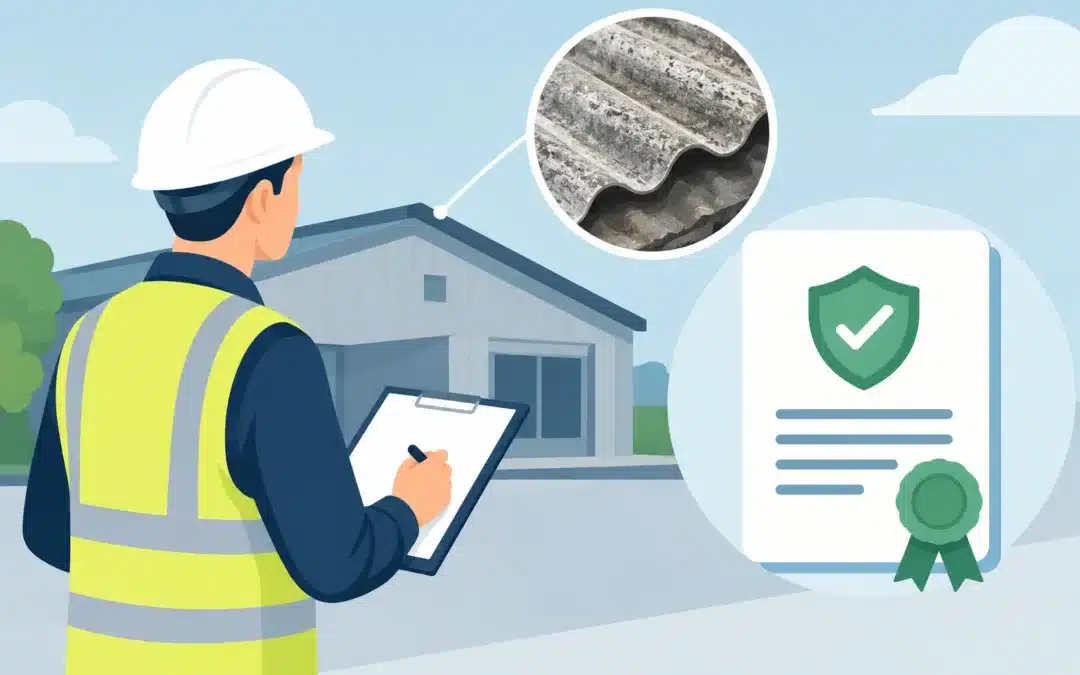
A removal job is not finished when the asbestos is loaded onto a ute. Before a home, workplace or demolition area is handed back for normal use, asbestos clearance certificates may be required to confirm the area has been inspected and is safe to re-enter.
For property owners, builders and site managers across Melbourne and Victoria, this document is more than project paperwork. It provides evidence that the removal area was checked independently, the work site was properly cleaned, and the next stage of work can proceed with greater confidence. Getting clearance right protects occupants, workers, your schedule and your compliance position.
What is an asbestos clearance certificate?
An asbestos clearance certificate is a formal record issued after asbestos removal and a clearance inspection. It confirms that the removal area has been visually inspected, that asbestos debris is not visible, and that the area is suitable for reoccupation or for follow-on work, subject to the scope of the inspection.
The certificate should clearly identify the site, the removal area, the inspection date, the type of asbestos work completed and the person or assessor who carried out the inspection. It is not simply a statement from the removal contractor saying the job is complete. Where a formal clearance is required, the inspection needs to be carried out by an appropriately independent and competent person.
That independence matters. It gives clients, builders, tenants and other duty holders a reliable record that the area was assessed after removal rather than signed off internally without a separate check.
When are asbestos clearance certificates required in Victoria?
The exact requirement depends on the type of asbestos, the scale of the removal work and the applicable Victorian health and safety requirements. Friable asbestos removal carries the highest level of risk. In these situations, formal clearance processes and independent assessment are central to safely returning the area to use.
Friable asbestos can be crumbled, pulverised or reduced to powder by hand pressure when dry. Because it can release fibres more readily, it is commonly removed within a controlled enclosure using strict decontamination, air monitoring and waste handling procedures. A clearance inspection and certificate are an essential part of closing out this type of work.
Non-friable asbestos removal, such as intact cement sheeting, vinyl tiles or eaves, may involve different clearance arrangements. A certificate may still be required under the project scope, client policy, site rules or the circumstances of the work. For example, a commercial fit-out, government site, school, occupied strata building or major demolition project will often require clear documented evidence before trades or occupants return.
The practical rule is simple: do not assume a small-looking job needs no clearance, and do not accept verbal assurance where your project requires documented sign-off. Ask before removal starts what clearance process applies, who will perform it and what documents you will receive at completion.
What happens during a clearance inspection?
A proper clearance inspection begins only after the removal contractor has completed the removal, detailed cleaning and waste removal process. The assessor examines the defined removal area and any relevant adjacent areas for visible asbestos-containing material, dust and debris.
For enclosed friable removal work, the inspection is particularly thorough. The assessor checks the enclosure, surfaces, ledges, equipment, access points and decontamination arrangements. They also consider whether the area has been cleaned to the standard required before the enclosure can be dismantled or the site handed back.
Air monitoring may form part of the wider control and clearance process, particularly for higher-risk work. However, air testing and a visual clearance inspection are not interchangeable. A clear air result does not make visible debris acceptable, and a clean-looking area does not remove the need for any air monitoring specified for the job. The approach should match the asbestos risk, the work method and the legal requirements.
If the area does not pass inspection, it is not cleared. The contractor must carry out further cleaning or rectification before another inspection is completed. This can affect the programme, which is exactly why experienced planning and careful removal work matter from day one.
Who can issue a clearance certificate?
For regulated asbestos removal, clearance certificates must be issued by a person with the right competency and independence for the work being assessed. In higher-risk circumstances, such as friable asbestos removal, a licensed asbestos assessor is generally required to perform the clearance inspection and issue the certificate.
The removal contractor and assessor have different roles. The contractor controls the removal work, containment, cleaning and lawful disposal. The assessor independently inspects the completed area against the relevant clearance requirements. Keeping those responsibilities separate helps avoid conflicts and provides stronger assurance for the client.
For non-friable work, the appropriate person and documentation can vary. The safest course is to confirm the requirements before work begins, especially where a principal contractor, property manager, insurer or government procurement process is involved. A reputable asbestos contractor will explain this plainly, rather than leaving you to sort it out after the removal is complete.
Why the certificate matters after the workers leave
A clearance certificate is useful long after a site has been cleaned and reopened. It becomes part of the project record, showing that a defined area was inspected after asbestos removal. This can be valuable when managing future renovations, tenant enquiries, property transactions, maintenance records, audits or incident investigations.
For builders, it reduces uncertainty before other trades move in. Plasterers, electricians, painters and demolition crews should not be sent into an affected area based on assumptions. The certificate provides a clear handover point and supports better coordination between contractors.
For commercial and industrial operators, the document also supports duty-of-care obligations. Facility managers may need to demonstrate that work was managed properly and that employees, visitors and contractors were not returned to an area prematurely. On a busy site, good paperwork is not red tape for its own sake. It is part of controlling risk.
Common mistakes that create unnecessary risk
The most common problem is treating asbestos removal as a single task rather than a process. Removal, cleaning, waste transport, disposal and clearance all need to be planned together. If the clearance assessor is brought in at the last minute, a failed inspection can hold up handover and create avoidable cost.
Another mistake is failing to define the removal boundary. If a contractor removes asbestos from one room but dust control, access routes or adjacent areas are unclear, the clearance inspection can become more complicated. A written scope, site plan and agreed work area make the final inspection far more straightforward.
Clients also sometimes confuse a clearance certificate with an asbestos register or survey. They serve different purposes. A register identifies known or presumed asbestos-containing materials in a property. A clearance certificate relates to a particular removal area after specific work has been completed. You may need both documents, particularly in workplaces or larger managed buildings.
Finally, never rely on a general cleaning certificate, rubbish docket or invoice as a replacement for asbestos clearance documentation. Waste disposal records are important, but they confirm where waste went. They do not confirm that the removal area passed a post-removal inspection.
Planning clearance into your project
The best time to discuss clearance is when requesting a quote. Explain whether the property is occupied, whether other trades are waiting, and whether the work is part of a renovation, demolition, insurance repair or commercial shutdown. These details affect the removal method, timing and clearance arrangements.
Ask your contractor who will organise the independent inspection, whether air monitoring is needed, what handover documents will be provided and how long the process is likely to take. There is no single answer for every site. An isolated sheet removal from an empty garage is different from friable pipe insulation removal in an operating plant room.
Asbestos Audits Australia manages asbestos work with clear planning, licensed expertise and practical communication across Melbourne and Victoria. The aim is not just to remove hazardous material, but to leave the site clean, properly documented and ready for the next step.
When asbestos is involved, do not rush the final sign-off. Arrange the right clearance process early, keep the certificate with your project records and only return people to the area when the work has been properly completed.