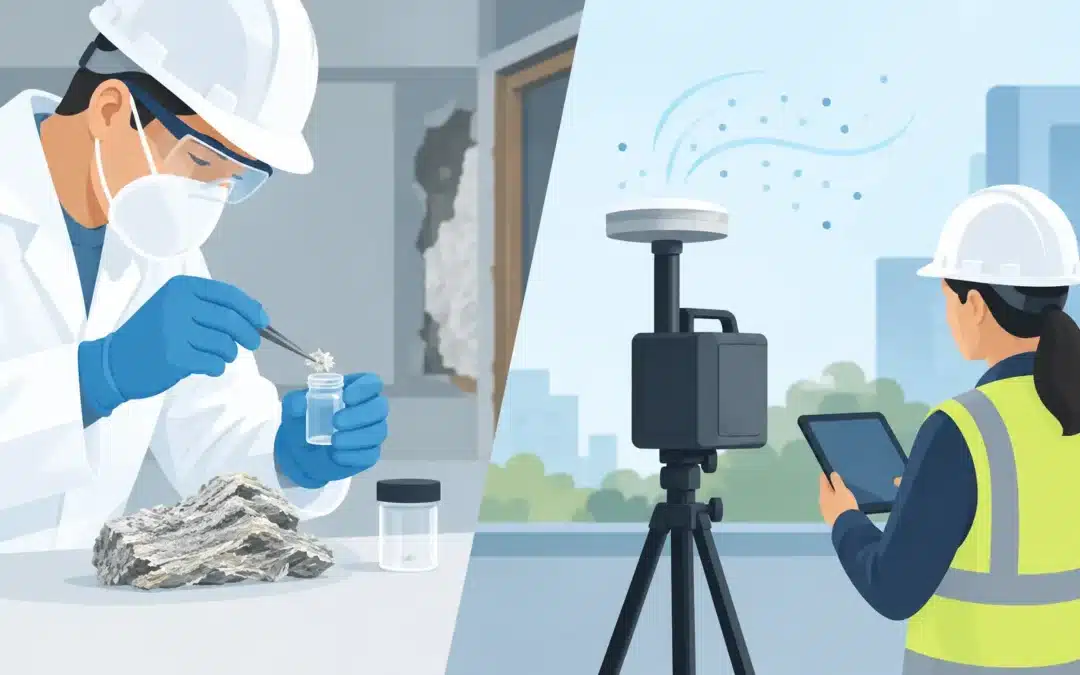
A damaged eave, old vinyl tiles or pipe lagging can raise an immediate question: is asbestos present? That is where asbestos testing versus air monitoring is often misunderstood. Both services help manage asbestos risk, but they answer two very different questions. One identifies asbestos in a material. The other checks whether asbestos fibres are present in the air during or after particular work.
Choosing the wrong service can mean unnecessary delays, added cost or, more seriously, work continuing without the right controls. For Melbourne and Victorian property owners, builders and facility managers, the practical approach is to identify the material first, then use air monitoring where the removal method, condition of the asbestos and regulatory requirements call for it.
What asbestos testing tells you
Asbestos testing, also called bulk sampling or material sampling, determines whether a particular building material contains asbestos. A trained professional takes a small, controlled sample from the suspected material and sends it to a suitably accredited laboratory for analysis.
The result is specific. It can confirm whether the sample contains asbestos and, depending on the analysis, identify the asbestos type. This information is used to plan renovation, demolition, removal or ongoing management work safely.
Testing is normally the first step when you have a material of unknown composition. Common examples include cement sheeting, eaves, wall cladding, vinyl floor tiles and backing, textured coatings, insulation, gaskets, roofing products and old pipe or duct insulation. Age alone cannot confirm asbestos. Many products look similar, and visual inspections are useful for locating suspect materials but cannot provide a laboratory result.
A controlled sample matters. Breaking, drilling, sanding or pulling at a suspect material yourself can release fibres, particularly if it is weathered, friable or already damaged. A competent asbestos professional uses the right precautions, minimises disturbance and manages the sample area properly.
When material testing is the right choice
Material testing is appropriate before renovations, demolition and maintenance that could disturb an older product. It is also useful when a property owner needs certainty before arranging asbestos removal or when a site register needs updating.
For example, a homeowner planning to remove an old laundry wall may need testing of the sheeting before plumbing or demolition begins. A commercial facility manager may require multiple samples across plant rooms, ceiling spaces and service risers before contractors start upgrades. In each case, the question is the same: what is this material, and can it be disturbed safely?
A negative test applies to the sample tested, not automatically to every similar-looking product elsewhere on site. Where materials vary by location, age or appearance, a proper inspection and sampling plan is the safer option.
What air monitoring measures
Air monitoring measures airborne fibres in a work area. It does not test the wall, tile, roof or insulation itself. Instead, a qualified assessor collects air samples using specialised equipment and sends filters for laboratory analysis.
The purpose is to check whether asbestos fibres may be airborne while work is underway, and in some circumstances to support decisions about the safety of an area after removal. Monitoring can provide assurance that controls such as enclosures, negative air pressure units, decontamination procedures and removal methods are performing as intended.
Air monitoring is particularly relevant for higher-risk asbestos work, including friable asbestos removal. In Victoria, air monitoring requirements depend on the nature of the work and the asbestos involved. It is generally required for friable asbestos removal and may also be appropriate for other removal activities where there is a risk of airborne fibre release. An independent licensed asbestos assessor can advise on the correct monitoring and clearance process for the job.
What air monitoring cannot do
Air monitoring is valuable, but it is not a substitute for asbestos testing or a clearance inspection. A low or clear air result does not prove that a building contains no asbestos. It only reflects the air sampled at a particular place and time.
Likewise, testing a sheet of cement sheeting and confirming asbestos does not tell you whether fibres are currently airborne. An intact, well-maintained non-friable asbestos product may present a much lower immediate release risk than damaged insulation, but it still needs to be managed correctly and not disturbed without suitable controls.
This is the key difference: testing identifies the hazard in the material, while air monitoring checks for potential exposure in the environment.
Asbestos testing versus air monitoring: which service do you need?
The answer depends on the stage of your project and the condition of the material. If you are unsure whether a product contains asbestos, start with an inspection and material testing. There is little value in air monitoring a renovation area simply because an old material looks suspicious. First establish what the material is and plan the work accordingly.
If asbestos removal is planned, especially where friable materials are involved, air monitoring may form part of the control strategy. The removal contractor, licensed asbestos assessor and site management team should establish responsibilities before work begins. This is particularly important on occupied commercial, industrial and government sites, where nearby workers, tenants and the public may need protection.
After removal, a clearance inspection is a separate and critical step. The independent assessor inspects the removal area to determine whether visible asbestos debris has been removed and whether the area can be returned for normal use. Air monitoring may be part of the process where required, but a clearance certificate should never be treated as an optional extra after licensed asbestos removal.
A practical example for Victorian projects
Consider an older commercial building undergoing a services upgrade. During a ceiling inspection, contractors find insulation around old pipework. The material is in poor condition and may be friable.
The first action is to stop any work that could disturb it and arrange professional assessment and testing. Once laboratory results confirm asbestos, the removal can be planned under the appropriate licence and controls. Because the material is friable, the project may require enclosure, decontamination arrangements, independent air monitoring and a clearance inspection before other trades return.
Now consider a different situation: a homeowner wants to replace cracked asbestos cement sheets on an external shed. Testing may be needed if the material has not already been confirmed. Once identified, the removal approach will depend on the quantity, condition and work scope. The material is non-friable, so the air monitoring requirements may differ from a friable removal job. It still must be handled carefully, with safe removal methods, lawful transport and disposal at an approved facility.
These scenarios show why a one-size-fits-all answer is not good enough. The material type, condition, quantity, location, occupancy and proposed work all affect the right response.
Do not rely on a quick visual judgement
People sometimes assume asbestos is only a problem when they can see dust. Fibres can be too small to see, and risk is affected by how the material is handled. Cutting with power tools, high-pressure cleaning, sanding, breaking sheets or sweeping debris can turn a manageable issue into a contamination problem.
If suspected asbestos has been damaged, isolate the area where practical and avoid further disturbance. Keep people away, do not use a household vacuum cleaner or blower, and seek professional advice promptly. For workplaces, follow site procedures and notify the person responsible for health and safety.
A clear plan also protects project timing. Testing before renovation starts is usually faster and more cost-effective than stopping trades after materials have been broken or debris has spread through a work area.
Get advice that matches the work
The best outcome comes from matching the service to the risk. Material testing gives you evidence about what is in the building. Air monitoring helps verify whether airborne-fibre controls are working during relevant asbestos work. A clearance inspection provides the formal check needed before an area is handed back after removal.
Asbestos Audits Australia provides practical advice for residential, commercial, industrial and government projects across Melbourne and Victoria. If you have a suspect material, planned works or a removal project requiring careful coordination, arrange an assessment before the job starts. A prompt, properly managed decision now can keep people safe, protect your compliance obligations and prevent a small issue becoming a costly site delay.