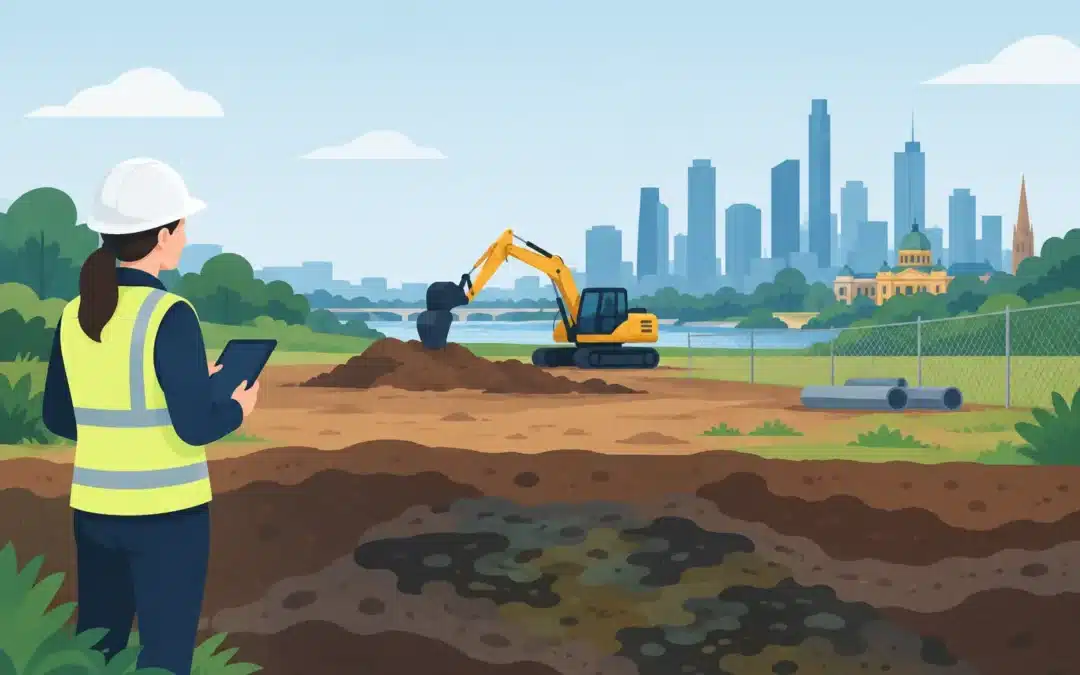
A stockpile of soil can look clean, smell normal and still create a serious problem for a building project. Once soil is excavated, moved or disposed of, the property owner and project team may need to prove it has been managed lawfully. That is where contaminated land regulations matter – particularly on older Melbourne sites with a history of industrial use, fill, demolition waste or asbestos.
For homeowners, builders and facility managers, the practical question is not simply whether contamination exists. It is whether it has been identified early enough, assessed properly and managed without exposing workers, neighbours, future occupants or the project budget to unnecessary risk. Getting clear advice before earthworks begin is usually far less costly than stopping work after unexpected material is found.
Why land contamination can affect any project
Contaminated land is not limited to large factories or former service stations. In Victoria, contamination can be present on former workshops, transport depots, dry-cleaning sites, market gardens, landfill areas and properties that have received imported fill. It can also be found beneath older homes, warehouses and commercial buildings where previous uses were never documented clearly.
Common contaminants include asbestos, hydrocarbons, heavy metals, pesticides, solvents and construction or demolition waste. The risk depends on the material involved, how concentrated it is, where it is located and who could come into contact with it. Soil that may be manageable in a sealed commercial car park could require a very different response where a childcare centre, garden bed or residential development is proposed.
This is why a site history matters. A block’s current appearance tells only part of the story. Old aerial photos, council records, previous reports, underground storage tanks, imported fill and neighbouring land uses can all point to issues that deserve investigation.
Contaminated land regulations in Victoria: what applies
Victorian contaminated land requirements sit across environmental, planning, occupational health and safety, and waste management obligations. The exact pathway depends on the site, the intended use and what is found. There is no one-size-fits-all clearance process.
EPA duties and preventing harm
The Environment Protection Act 2017 places a General Environmental Duty on people undertaking activities that may give rise to risks of harm from pollution or waste. In practical terms, this means those responsible for a site must understand reasonably foreseeable risks and take proportionate steps to prevent them.
For excavation work, that can involve arranging appropriate sampling, controlling dust and runoff, separating suspect material, using covered loads and sending waste only to a facility authorised to receive it. If contamination is identified, there may also be duties to manage it and, in specified circumstances, notify EPA Victoria. Advice should be obtained promptly where there is a potential risk to human health or the environment.
The duty is not satisfied by simply arranging a truck and removing soil quickly. Poor handling can spread contamination across a site, create exposure for workers and complicate disposal records. Good management starts before the excavator arrives.
Planning controls and environmental audits
Planning requirements are often triggered when land use is changing, a sensitive use is proposed or a site has a potentially contaminating history. A council may require environmental information as part of a planning permit application, including a preliminary site investigation or more detailed assessment.
Some sites are affected by an Environmental Audit Overlay. Where this applies, an environmental audit may be required before a permit can be granted or before the proposed use can begin. An EPA-appointed environmental auditor may issue a statement or an audit report, depending on the findings and the suitability of the land for its intended use.
This process can feel slow when a project has deadlines, but it provides an independent pathway for dealing with uncertainty. It is especially relevant for residential developments, schools, healthcare facilities and other sensitive uses. Trying to treat an audit requirement as a paperwork exercise can lead to longer delays later.
Asbestos and worker safety obligations
Asbestos in soil is a contamination issue and a serious workplace safety issue. Fragments of asbestos cement sheeting, loose bonded material or friable asbestos-contaminated dust require careful assessment. The method of removal, required controls, licensing and clearance arrangements depend on the type and condition of the asbestos material.
WorkSafe Victoria requirements apply to asbestos work, while EPA requirements govern the handling, transport and disposal of asbestos waste. Soil containing asbestos should never be treated as ordinary clean fill. It needs to be isolated, managed by suitably qualified people and taken to an approved receiving facility with the right documentation.
Start with evidence, not assumptions
A practical investigation usually begins with a preliminary site investigation. This reviews the history of the site, its surroundings and likely contamination sources. It may identify whether further intrusive work is needed before demolition, excavation or construction proceeds.
Where there is a credible concern, a detailed site investigation can involve a sampling plan, soil bores, laboratory analysis and an assessment of how contaminants may move through soil, groundwater or dust. The purpose is not to over-test every square metre. It is to collect enough reliable information to make decisions about worker safety, soil classification, remediation and disposal.
The scope should match the project. A homeowner excavating for a small extension may need a more targeted assessment than a developer preparing a multi-stage residential site. However, both projects can be affected by the same basic mistake: assuming that untested fill is clean because it has been buried for years.
If suspect material is uncovered during works, stop disturbing that area until it has been assessed. Continuing to dig can mix contaminated soil with clean soil, increase the volume requiring special disposal and make the situation more expensive to resolve.
Lawful soil removal is more than loading a truck
Once soil leaves a property, it becomes a waste management issue. The receiving facility needs accurate information about what it is accepting, and the project team needs records showing where material has gone. Soil classification should be based on appropriate evidence, not visual judgement alone.
A properly managed removal job considers segregation from the start. Clean excavated natural material, general fill, demolition waste and asbestos-affected soil may need separate stockpiles, different transport arrangements and different disposal pathways. Keeping materials separate can reduce costs, but only where the classification and handling are sound.
Dust suppression, covered loads, clean vehicle exits and secure stockpiling are not cosmetic measures. They help prevent waste leaving the site through wind, tyres, runoff or public roads. On tight urban sites, these controls also protect neighbours and reduce the chance of complaints or enforcement action.
Keep copies of assessment reports, waste transport records, weighbridge dockets and disposal documentation. These records support compliance, provide confidence for clients and can be valuable if questions arise during a sale, audit or future development application.
When remediation is needed
Removal is not always the only answer. Depending on the contaminant, site conditions and future land use, remediation may involve excavation and disposal, capping, containment, treatment or a combination of methods. The right approach should be based on the assessed risk, not just the cheapest initial option.
For example, removing all impacted soil may be appropriate where asbestos fragments are present near a future garden or building footprint. On another site, a properly designed hardstand or building slab may form part of a suitable management solution. That approach can only be relied on when it is supported by competent environmental advice, appropriate documentation and ongoing controls where required.
Cost, programme and certainty all need to be weighed up. Full excavation can provide a clear outcome but may increase trucking and disposal costs. Containment can reduce disturbance but may create long-term management obligations for the owner. The best result is the one that is safe, lawful and suitable for the site’s proposed use.
Avoid the mistakes that cause expensive delays
The most common problems are avoidable. Starting demolition or excavation before reviewing site history can turn a straightforward job into an urgent contamination response. Mixing suspect soil through a clean stockpile can multiply disposal costs. Engaging unlicensed or poorly equipped operators for asbestos-affected material creates unacceptable safety and legal exposure.
Another frequent issue is relying on a disposal facility to decide what the soil is after it arrives. Facilities have their own acceptance criteria and may reject loads that are not supported by suitable classification information. A rejected truckload can hold up a project, affect traffic management and leave contaminated material sitting where it should not be.
Experienced contractors work with the investigation findings, the project plan and the required disposal pathway before removal begins. That means clear site controls, suitable equipment, trained workers and transparent records rather than shortcuts.
For Victorian property owners and project managers, early advice is the practical first step. If asbestos, unusual fill or suspect soil is present, Asbestos Audits Australia can help assess the removal requirements and manage contaminated material with the care, licensing and good old fashioned service the work demands. A quick discussion before works start can protect your people, your programme and the property long after the site is cleaned up.