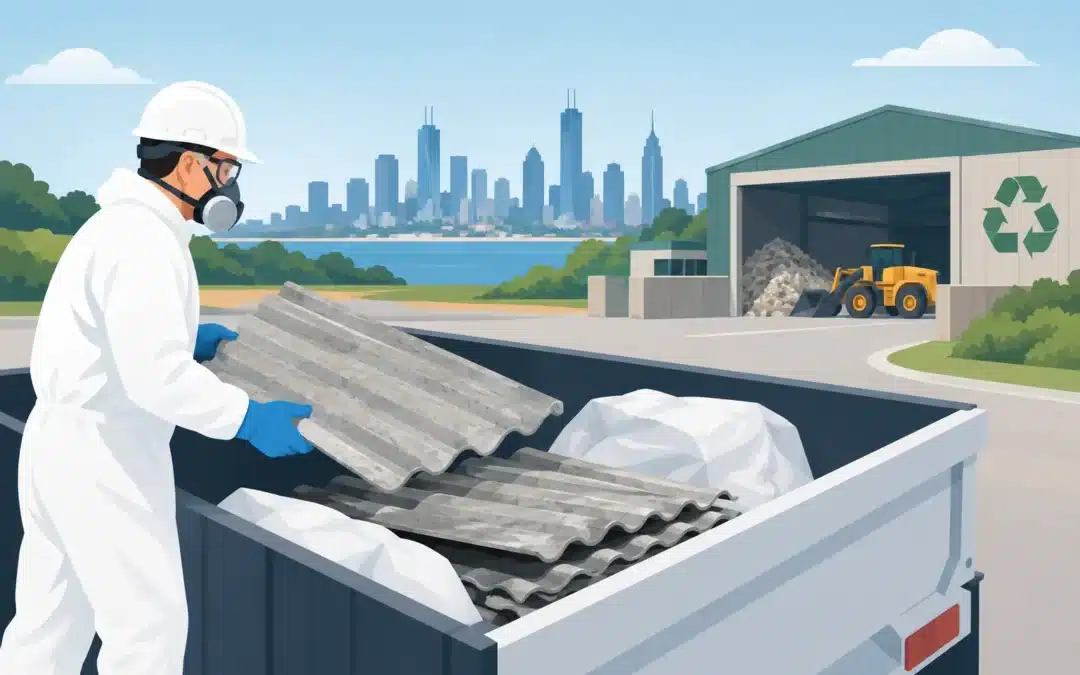
A renovation can stop abruptly when old fibro sheeting, vinyl tiles or pipe insulation turns out to contain asbestos. The immediate question is usually, “where is asbestos waste accepted?” In Victoria, the answer is not the nearest tip by default. Asbestos must go to an authorised waste facility that is approved to receive it, and the waste must be packaged, transported and disposed of correctly.
Getting this wrong can expose workers, neighbours and the public to asbestos fibres. It can also lead to rejected loads, project delays and compliance issues. A little checking before removal starts is far safer and usually far more cost-effective than trying to solve disposal at the gate.
Where is asbestos waste accepted in Victoria?
Asbestos waste is accepted at selected licensed landfills and transfer facilities across Victoria. Not every council tip, resource recovery centre or commercial landfill accepts it. Even facilities that do accept asbestos may have limits on the type, quantity or condition of material they will receive.
Acceptance conditions can vary between facilities. Some accept only bonded asbestos, such as cement sheeting and roofing. Others may accept both bonded and friable asbestos under strict arrangements. Many require advance bookings, set delivery times, pre-approval or a waste transport certificate. A site may also refuse a load if it is not double-wrapped, labelled, contained or declared correctly.
For homeowners, builders and facility managers, the practical rule is simple: confirm the receiving facility before any asbestos is removed. Do not assume a facility that took asbestos last year, or accepted it from another contractor, will accept your particular load today.
What counts as asbestos waste?
Asbestos waste is not limited to obvious fibro sheets. It can include broken cement products, roofing, fencing, backing boards, insulation, vinyl flooring and adhesives where asbestos has been identified. It also includes contaminated materials generated during removal, such as plastic sheeting, disposable coveralls, cleaning materials and soil where fibres may be present.
The type of asbestos matters. Bonded asbestos is generally mixed with a hard material such as cement and is less likely to release fibres while intact. Friable asbestos can be crumbled or reduced to powder by hand pressure when dry, making it much more hazardous. Friable asbestos work and disposal demand a higher level of control and should be managed by appropriately licensed specialists.
A common mistake is treating small fragments as ordinary building rubble. Broken pieces can create more exposed edges and release fibres if handled carelessly. Asbestos-contaminated rubble must never be placed in a skip bin intended for general construction waste unless the provider has specifically approved asbestos handling and disposal.
Why ordinary rubbish and recycling centres are not suitable
Asbestos cannot be placed in household rubbish bins, green waste, recycling, hard rubbish collections or general demolition bins. Once asbestos is mixed into a waste stream, it can contaminate equipment, workers and other materials that would otherwise be recycled or disposed of safely.
Resource recovery centres are designed to sort and recover materials. They are not suitable for unpackaged or undeclared asbestos. A contaminated load may need to be isolated, professionally cleaned and disposed of as hazardous waste. That turns what looked like a cheaper option into a much larger problem.
Illegal dumping is also a serious risk. Leaving asbestos near a reserve, vacant block, roadside or shared bin area places unsuspecting people at risk and can result in substantial clean-up costs. Property owners and businesses should keep any suspected asbestos material secure, avoid disturbing it and arrange proper assessment and removal.
Check these details before booking disposal
Calling an authorised facility before work begins is essential. Ask clear questions and keep a record of the advice provided. At a minimum, confirm:
- whether the facility accepts bonded asbestos, friable asbestos or asbestos-contaminated soil
- whether a booking is required and which delivery times apply
- the facility’s packaging, labelling and load-containment requirements
- whether there are quantity limits, fees or documentation requirements
- whether the site accepts waste from your council area, business or project type.
This check is particularly important for commercial demolition and contaminated soil projects. Loads may need to be classified, tracked and scheduled around site operations. A licensed contractor can plan removal and disposal together, rather than leaving waste management until the end of the job.
Packaging and transport are part of compliant disposal
An authorised landfill is only one part of the disposal process. Waste must arrive in a condition the facility can safely receive. For small quantities of bonded asbestos, requirements commonly include wetting the material where appropriate to minimise dust, wrapping it in heavy-duty plastic, sealing it securely and clearly identifying the contents. Exact packaging requirements should always be confirmed with the receiving facility.
The material should be handled carefully and kept intact wherever possible. Cutting, snapping, drilling, sanding or dropping asbestos products can create airborne fibres. Never use high-pressure water cleaning, power tools without suitable controls or a household vacuum cleaner on asbestos debris.
Transport also needs care. The waste must be secured so packaging cannot tear or shift during travel. It should not be carried loose in a ute tray, trailer or vehicle boot. For larger quantities, friable asbestos, commercial works or contaminated soil, licensed transport and specialist waste arrangements may be required.
There is a trade-off for property owners considering a do-it-yourself approach. A very small, clearly identified bonded asbestos job may appear manageable, but disposal rules, wrapping standards and handling risks still apply. If the material is damaged, widespread, difficult to access or uncertain, professional removal is the safer decision. The cost of a licensed service often includes the controls, labour, transport and disposal coordination that prevent an expensive mistake.
When to use a licensed asbestos contractor
A licensed asbestos contractor is the right choice when the scope is more than a straightforward, low-risk task, or when there is any doubt about the material. This includes friable asbestos, demolition work, commercial properties, multi-room contamination, large roofing or fencing jobs, and sites with asbestos-contaminated soil.
Professional removal begins with identifying the material and planning the work area. Controls may include exclusion zones, containment, safe removal methods, decontamination procedures and waste packaging. The contractor then arranges lawful transport and disposal at an appropriate authorised facility, with documentation suited to the work.
This approach also gives builders, landlords, facility managers and government clients greater confidence that their duty of care has been met. It protects schedules as well as people. A planned removal avoids a crew discovering asbestos halfway through demolition, only to have work stopped while waste arrangements are made.
What to do if you have already found asbestos waste
If asbestos waste has been left on your property or discovered in an old shed, under a house or within a renovation area, do not sweep, break up or bag it immediately. Restrict access, keep children and pets away, and avoid creating dust. If safe to do so without touching the material, close doors or isolate the area.
The next step is to obtain informed advice on identification, removal and disposal. Photographs taken from a safe distance may help a specialist assess the likely material, but laboratory testing may be needed where the product cannot be confidently identified. Treat suspect material as asbestos until it has been assessed.
For Melbourne and Victorian projects, Asbestos Audits Australia can provide practical advice and professionally managed asbestos removal, including the waste handling arrangements needed to keep your site clean and compliant. The right disposal point is the one authorised for your waste type, but the safest result comes from planning the whole job properly before a single sheet is moved.