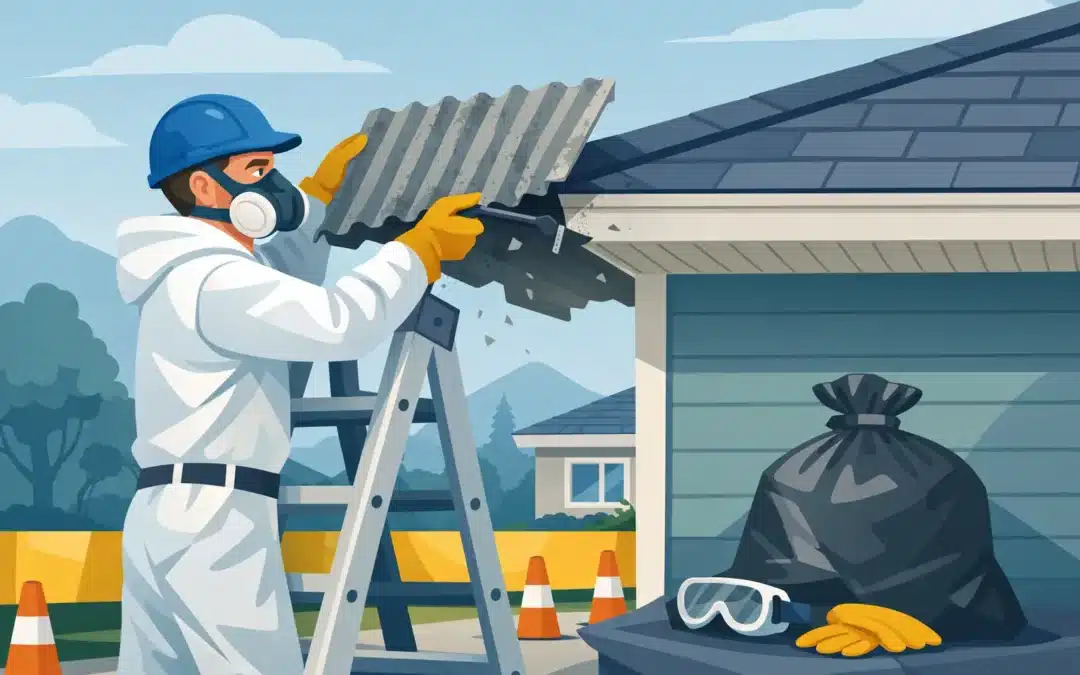
Older Melbourne homes often have asbestos cement sheeting tucked beneath the roofline. It can look harmless, especially when painted and intact, but knowing how to remove asbestos eaves safely is not a standard home renovation task. Eaves are overhead, often weathered and difficult to access, which increases the chance of sheets cracking and releasing hazardous fibres.
For property owners, builders and facility managers, the safest approach is to stop work, confirm what the material is, and arrange a compliant removal plan. A quick decision made to keep a renovation moving can create a far bigger health, clean-up and liability issue.
Why asbestos eaves need careful handling
Asbestos was widely used in Australian building products before it was banned in 2003. Eaves, soffits and under-eave linings were commonly made from asbestos cement because the material was durable, fire resistant and suited to external conditions.
When asbestos cement remains in good condition and is left undisturbed, the risk of fibre release is generally low. The risk changes when a sheet is drilled, sawn, snapped, scraped, pressure-cleaned or damaged during access works. That is why eaves become a concern during roof repairs, gutter replacement, painting preparation, electrical work, demolition and renovations.
Overhead sheeting creates additional practical risks. It may be brittle from years of sun and moisture, fixed in awkward positions, or partly concealed by fascia boards and gutters. Breaking a sheet above head height makes fibre control and clean-up more difficult. A contractor also needs to consider access equipment, nearby openings, gardens, public areas and other trades working below.
First, confirm whether the eaves contain asbestos
You cannot reliably identify asbestos by appearance alone. Older flat cement sheets, sheets with a dimpled or textured finish, and products installed before 2003 should be treated as suspect until tested. Paint, age and weathering can make asbestos products look very similar to modern fibre cement.
Do not take a sample yourself unless you have the training, equipment and method to do so without disturbing the material. Arranging professional sampling and laboratory analysis gives you a clear answer before removal, repair or demolition begins. It also prevents builders and trades from making assumptions that may expose workers or occupants.
A proper assessment should look beyond the visible eave lining. Adjacent fascia, gable ends, wall cladding, vent panels, backing materials and old patch repairs may also contain asbestos. Identifying the full scope at the start helps avoid delays once work is underway.
Can you remove asbestos eaves yourself in Victoria?
Victorian rules distinguish between non-friable asbestos, such as bonded asbestos cement, and friable asbestos, which can be crushed or reduced to powder by hand pressure when dry. Licensing requirements depend on the type and quantity of asbestos involved. However, what may be legally possible is not always the safest or most sensible option.
Eaves are a poor candidate for do-it-yourself removal. Their elevated position, condition and fixing methods can make them difficult to remove without breakage. If sheets are damaged, heavily weathered, soft, delaminated, contaminated or likely to crumble, the work requires a higher level of control and must be handled by appropriately licensed professionals.
For commercial, industrial and managed properties, duty-of-care responsibilities also matter. Employers, landlords, facility managers and principal contractors must protect workers, tenants, visitors and the public. Using an experienced asbestos removalist provides a documented process, trained personnel, suitable controls and lawful waste management.
If you are unsure whether a licensed removalist is required for your particular job, obtain site-specific advice before anyone touches the material. Never ask a general labourer, roofer or demolition crew to remove suspect asbestos eaves without confirming they are properly qualified and authorised for the work.
How professionals remove asbestos eaves
Professional asbestos removal is planned around preventing fibres from becoming airborne, not simply getting sheets off the building quickly. The exact method depends on the property, sheet condition, height, access and surrounding environment.
Assessment and removal planning
The work begins with an inspection to identify asbestos-containing materials, assess their condition and determine the removal area. The removalist plans safe access, isolates the work zone and considers who may be affected nearby. On a busy site, this may mean coordinating with other trades, residents, neighbours or building occupants before work starts.
A clear work plan also identifies how sheets will be handled, packaged, lowered and transported. This matters because an otherwise careful removal can be undermined if damaged materials are carried through an occupied area or placed in an unsuitable vehicle.
Controlled removal without breakage
The aim is to keep asbestos cement sheets intact wherever possible. Workers use appropriate protective equipment and controlled techniques to minimise disturbance. They do not cut sheets with power tools, grind fixings, smash material into smaller pieces or use high-pressure water to clean surfaces.
Care is taken around fasteners, joins and sections hidden behind roof components. Where removal needs to occur near gutters, wiring or roof edges, the job may require staged work and suitable height-access controls. Rushing this stage is one of the most common causes of breakage and avoidable contamination.
Cleaning, packaging and disposal
Once removed, asbestos waste is contained in approved packaging, labelled and prepared for transport to a licensed disposal facility. It must never go into a household rubbish bin, skip bin or general construction waste load.
The work area is then cleaned using methods suitable for asbestos contamination. Dry sweeping, standard vacuuming and leaf blowing are not acceptable because they can spread fibres. A professional contractor will inspect the area, remove visible debris and ensure waste is managed in line with Victorian requirements.
For larger or more complex projects, documentation and clearance arrangements may also be required. This is particularly relevant for workplaces, multi-unit properties, public-facing sites and demolition projects where there is greater exposure risk and stronger compliance obligations.
What not to do with suspected asbestos eaves
The wrong approach can turn a manageable removal into a costly contamination event. Do not drill holes to install lights, cameras or brackets. Do not sand, scrape or pressure-clean the eaves before painting. Do not use a circular saw or angle grinder to cut sheets around a new pergola, extension or roof repair.
Avoid pulling sheets down by force or dropping them from height. Even if the material appears solid, old asbestos cement can crack unpredictably around nails and screw holes. Broken pieces are harder to contain and can contaminate soil, pathways, roof cavities, vehicles and nearby surfaces.
It is also unwise to cover an asbestos issue without checking the condition first. Encapsulation or painting can be appropriate where asbestos is sound and will remain undisturbed, but it is not a solution for damaged eaves or a building area about to be renovated. The best option depends on the condition of the material and the future plans for the property.
Plan removal before related building work starts
Asbestos eave removal should be scheduled before roof repairs, demolition, external cladding work or major renovations begin. This keeps trades from working around suspect material and reduces the risk of accidental disturbance.
For a homeowner, that may mean arranging testing before accepting a roofing or renovation quote. For builders and facility managers, it means including asbestos assessment in early project planning, site inductions and contractor coordination. Allowing time for inspection, removal and disposal is far more efficient than stopping a project after asbestos is broken or discovered halfway through the job.
Cost is naturally a consideration, but removal pricing should be assessed against the full scope of work. Access height, sheet condition, quantity, site restrictions, disposal requirements and whether other asbestos materials are present all affect the quote. A clear, itemised scope helps you compare providers on more than a headline price.
Get clear advice before work begins
If your property has older eaves and you are planning repairs or renovations, treat them with care until their composition is confirmed. Asbestos Audits Australia provides practical advice, professional assessment and compliant removal services for residential, commercial and industrial properties across Melbourne and Victoria.
The right next step is simple: pause the work, keep people away from the area, and arrange an expert inspection. A properly managed removal protects the people on site and lets the rest of your project proceed with confidence.