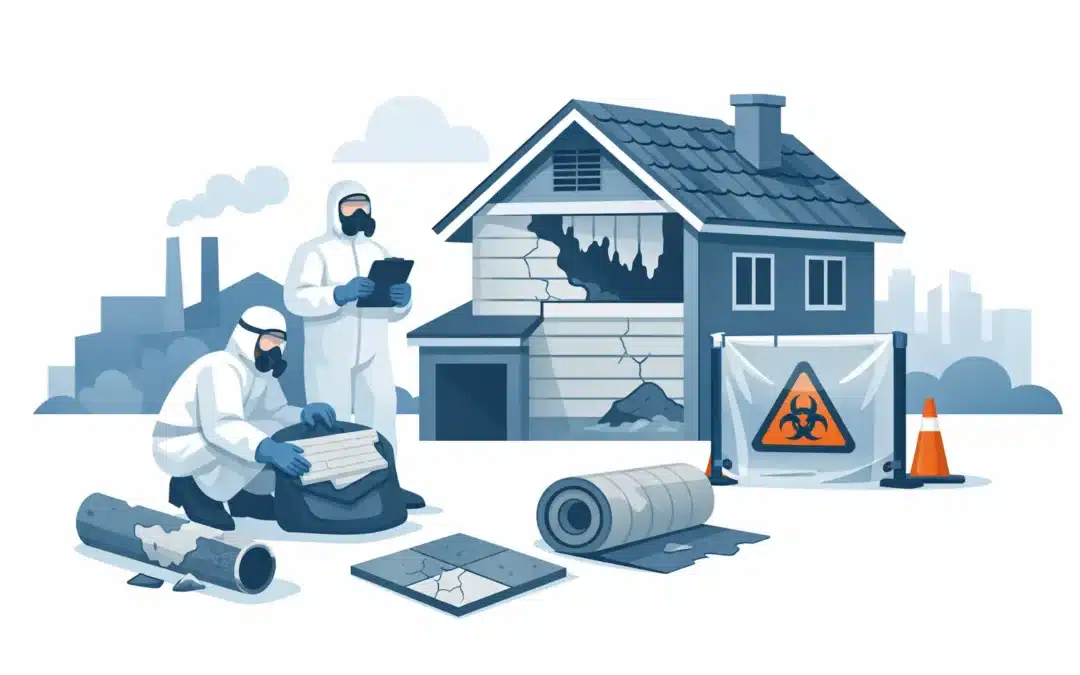
A cracked fibre cement sheet behind a bathroom wall, old pipe lagging above a commercial ceiling, or loose debris beneath a weatherboard home can all create very different asbestos risks. The question of what asbestos materials require removal cannot be answered by age alone. In Victoria, the condition of the material, the work planned around it, its location and the likelihood of fibres becoming airborne all matter.
Asbestos was widely used in Australian construction until the national ban in December 2003. It may be present in homes, factories, schools, offices, sheds and public buildings built or renovated before then. The safest first step is not to pull, drill, sand or remove suspected material yourself. Arrange a professional assessment so the material can be identified and the right control measure can be put in place.
What asbestos materials require removal?
Not every asbestos-containing material must be removed immediately. Material that is in good condition, sealed, unlikely to be disturbed and properly managed may sometimes remain in place. This is often called asbestos management in situ.
Removal becomes necessary when asbestos is friable, damaged, deteriorating, disturbed by planned works, or located where it cannot be safely managed. It may also be required when asbestos debris has contaminated a roof void, subfloor, garden bed, demolition site or work area.
The key issue is fibre release. Asbestos is most hazardous when small fibres are released into the air and breathed in. A licensed asbestos professional can assess the material’s condition and recommend whether removal, encapsulation, repair or ongoing management is appropriate.
Friable asbestos usually needs urgent specialist control
Friable asbestos can be crumbled, pulverised or reduced to powder by hand pressure when dry. It is higher risk because fibres can be released far more easily than from bonded materials. Common examples include pipe or boiler insulation, sprayed fireproofing, loose-fill insulation, acoustic insulation, fire door cores and some older vinyl floor backing.
Where friable asbestos is damaged, exposed or likely to be disturbed, removal by a suitably licensed contractor is generally required. These jobs demand strict controls, including contained work areas, negative air equipment where needed, decontamination procedures, specialist personal protective equipment and lawful waste disposal.
Loose-fill asbestos insulation deserves particular attention. It can be present in ceiling spaces and wall cavities in some older properties and can contaminate surrounding areas if disturbed. If there is any reason to suspect loose-fill insulation, keep out of the affected space and seek expert advice immediately.
Damaged bonded asbestos can require removal too
Bonded asbestos, also called non-friable asbestos, was commonly used in fibre cement products. When intact, painted and left undisturbed, it is generally less likely to release fibres. However, “bonded” does not mean harmless.
Removal should be considered when bonded asbestos has become cracked, broken, weathered, drilled, cut, sanded, pressure-washed or otherwise damaged. Age and exposure can weaken old sheeting over time, particularly on roofs, eaves, fences, garages and external cladding.
Examples of bonded materials that may require removal include asbestos cement wall and ceiling sheets, corrugated roofing, fencing, backing boards, flue pipes, electrical switchboard panels and old vinyl floor tiles. The decision depends on their condition and the scope of work planned nearby.
Renovation, demolition and maintenance change the answer
An intact asbestos eave may be manageable today, but it cannot safely stay in place if a builder needs to remove it to install new gutters, rewire the roof space or extend the home. The same applies to a commercial property where services works will penetrate an asbestos ceiling or wall lining.
Before renovation, refurbishment, demolition or intrusive maintenance starts, suspected asbestos must be identified and assessed. This is especially relevant for builders, facility managers and duty holders responsible for older workplaces. Starting work without knowing what is behind a wall, beneath flooring or above a ceiling can expose workers, occupants and contractors to unnecessary risk.
An asbestos audit or survey provides a practical basis for planning. It identifies likely asbestos-containing materials, records their condition and location, and helps determine whether removal is required before works proceed. For larger or more complex sites, this information can prevent delays, variations and contamination issues once a project is underway.
Materials that are difficult to manage safely
Sometimes asbestos needs removal not because it is visibly broken, but because leaving it in place is not a realistic long-term option. Materials in high-traffic areas, public access areas, plant rooms or locations exposed to repeated maintenance may be too likely to be disturbed.
For example, asbestos-backed vinyl flooring in a busy commercial tenancy may be covered temporarily, but repeated fit-outs or flooring repairs can make management unreliable. Similarly, deteriorated asbestos roof sheeting above a warehouse may present an ongoing risk to maintenance crews and contractors accessing the roof.
In these cases, planned removal can be the safer and more cost-effective choice. It removes a recurring liability and allows future work to proceed without the same restrictions. The right approach still depends on the site, budget, programme and risk assessment.
Asbestos debris and contaminated soil require action
Broken asbestos sheeting dumped in a backyard, fragments mixed through soil, or debris left after unlicensed work should never be treated as ordinary building rubbish. Even small pieces can create a wider contamination issue if they are crushed, moved around by machinery or spread during landscaping.
Contaminated soil removal requires a controlled process. The area may need to be isolated, assessed, excavated carefully and cleared of visible asbestos-containing material before disposal at an approved facility. Depending on the site and extent of contamination, air monitoring, validation or clearance processes may also be appropriate.
Property owners should avoid raking, mowing, sweeping, pressure-washing or using a blower around suspected asbestos debris. Restrict access and obtain professional advice. Quick action helps keep a localised issue from becoming a larger clean-up.
When can asbestos remain in place?
Removal is not automatically the best answer for every intact asbestos product. Undamaged, sealed fibre cement sheeting in a low-disturbance location may be safer left alone than removed unnecessarily. The material should be recorded, monitored and clearly communicated to anyone carrying out future work.
For workplaces, asbestos management duties can include maintaining an asbestos register and management plan, labelling where appropriate, and ensuring workers and contractors can access accurate information before work begins. Homeowners may not have the same formal documentation requirements, but keeping records and photographs of identified material is still sensible.
The trade-off is simple: management only works while the asbestos remains sound and is not disturbed. Once its condition changes or works are planned, reassessment is needed.
Why licensing and clearance matter
In Victoria, asbestos removal is regulated, and licence requirements depend on the asbestos type and amount involved. Friable asbestos removal requires higher-level controls, while larger bonded asbestos jobs also require appropriately licensed removalists. Even where a small amount of bonded material may be legally removed without a licence, professional removal is usually the safer option for property owners who lack the equipment, training and disposal arrangements.
A professional contractor should assess the scope, establish suitable controls, remove and package material safely, transport waste lawfully and leave the work area clean. For higher-risk work, an independent clearance inspection may be required before the area can be reoccupied or normal work can resume.
At Asbestos Audits Australia, we take a practical approach: identify the risk, explain the options clearly and carry out the required work with careful attention to safety, cleanliness and compliance.
If you are unsure whether a material needs removal, treat it as suspected asbestos until it has been assessed. A prompt inspection gives you a clear path forward and lets renovations, maintenance or site works proceed with confidence.