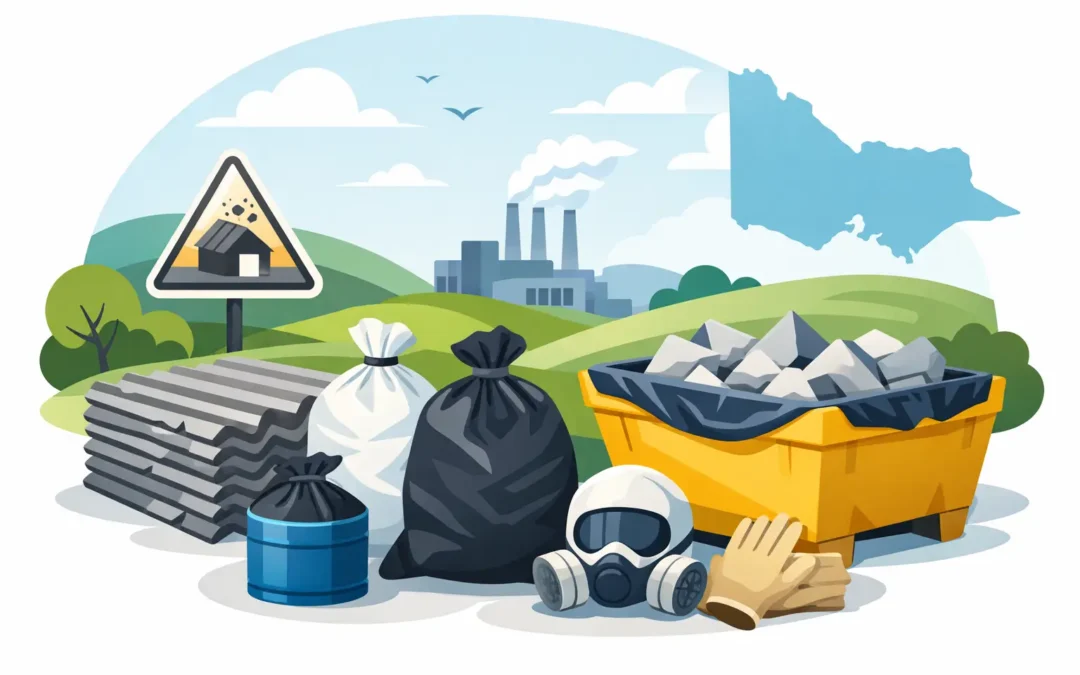
A renovation rubbish pile can look straightforward until asbestos is involved. Once material is suspected or confirmed to contain asbestos, it cannot be treated as ordinary demolition waste, hard rubbish or clean fill. This asbestos waste classification guide explains the practical decisions Victorian property owners, builders and site managers need to make before material leaves the site.
The central rule is simple: asbestos waste must be identified, kept separate, contained properly and sent through an approved waste pathway. Getting one part wrong can expose workers and occupants to fibres, contaminate other waste streams and create avoidable compliance issues.
What counts as asbestos waste?
Asbestos waste is not limited to obvious asbestos cement sheeting. It includes any material containing asbestos, as well as materials contaminated by asbestos fibres or fragments during removal, demolition, fire damage, illegal dumping or soil disturbance.
Common examples include broken or intact cement sheeting, corrugated roofing, eaves, wall cladding, vinyl floor tiles and backing, pipe lagging, sprayed coatings, rope and gaskets. It can also include disposable coveralls, masks, plastic sheeting, rags, filters and tools that cannot be effectively decontaminated after asbestos work.
Soil needs particular care. Visible fragments of asbestos cement in soil may mean the soil is asbestos-contaminated, but the correct classification depends on the nature and extent of contamination. A few surface fragments, widespread debris and fine asbestos contamination are not the same problem. Sampling, inspection and an appropriate waste assessment may be needed before excavation or disposal is arranged.
Classification starts before removal
Waste classification is not something to leave until the truck is loaded. The best time to determine the likely waste stream is during an asbestos audit, demolition inspection or pre-work survey.
For a house built or renovated before 2004, assume suspect materials may contain asbestos until they have been assessed by a competent person or tested by an appropriate laboratory. Age alone does not prove a product contains asbestos, but it is a sound reason to stop, avoid disturbing the material and seek advice.
On larger commercial, industrial and government sites, a current asbestos register and demolition or refurbishment survey should guide the work. These documents help identify the location, condition and type of asbestos-containing material, allowing the removal method, packaging, transport and disposal arrangements to be planned properly.
There are four practical waste situations that are often confused:
- Intact bonded asbestos, such as cement sheeting or roofing, where fibres are bound into a solid matrix.
- Friable asbestos, where material can be crumbled or reduced to powder by hand pressure when dry, such as some insulation, lagging and loose-fill material.
- Asbestos-contaminated demolition waste, where otherwise ordinary building materials have been mixed with asbestos debris.
- Asbestos-contaminated soil, fill or rubble requiring assessment before excavation, stockpiling or disposal.
Each situation requires controlled handling. Friable asbestos generally presents a higher immediate fibre-release risk and requires more stringent controls. However, bonded asbestos becomes hazardous when broken, drilled, cut, sanded or mishandled. Do not assume a small amount of bonded material can go in a skip bin with general renovation waste.
Victorian asbestos waste classification and disposal
In Victoria, asbestos waste is managed as a regulated priority waste stream and must be transported and disposed of in line with current EPA Victoria requirements. The exact obligations can vary according to the type of waste, amount, transport arrangements and receiving facility.
For clients, the practical outcome is clear: only use a contractor and waste pathway that can demonstrate where the material is going and how it will be managed. Approved disposal facilities have specific acceptance conditions, and they may require prior booking, correctly packaged loads or documentation. Turning up with unwrapped asbestos waste, mixed demolition material or unapproved soil can result in the load being refused.
Waste should never be diluted, buried on site, placed in a domestic bin, mixed into a general demolition skip or stored indefinitely in a shed. These shortcuts can spread contamination well beyond the original work area and often cost far more to fix later.
A licensed asbestos removalist can assess the job, separate waste streams and arrange compliant transport and disposal. This is particularly valuable where waste includes friable asbestos, damaged sheeting, contaminated soil or demolition debris from an unknown source.
Why mixed loads are a problem
A mixed load is one of the most common and costly issues on renovation and demolition jobs. If asbestos-containing material is placed into a bin with timber, bricks, plaster, insulation and metal, the entire load may need to be treated as contaminated. Sorting it after the fact creates unnecessary exposure for workers and can increase disposal costs.
Segregation starts at the work area. Keep asbestos waste away from reusable materials, clean soil and general demolition waste. Establish a clearly controlled removal zone and ensure workers understand that nothing leaves it unless it has been cleaned, assessed or packaged as asbestos waste.
For demolition projects, staged removal is usually the safer option. Remove identified asbestos-containing materials before broader demolition begins, then arrange clearance and waste removal before other trades enter. It takes planning, but it protects the programme, avoids cross-contamination and gives everyone on site a clearer line of responsibility.
Packaging and labelling requirements
Correct packaging prevents fibres escaping during handling and transport. The method used depends on the material, its condition and the removal controls required, but the principle does not change: waste must be securely enclosed, sealed and labelled before leaving the controlled area.
Smaller pieces and loose debris are generally placed in suitable heavy-duty plastic packaging and sealed to prevent leakage. Larger sheets may require wrapping in heavy-duty plastic and taping all joins securely. Sharp broken cement sheeting needs extra care so it does not puncture the packaging.
Packaging should be clearly marked as asbestos waste. It must remain intact during loading, transport and unloading. Throwing bags, overfilling them or loading unwrapped sheets onto a ute or trailer is not acceptable. A covered load is not the same as a properly packaged load.
Personal protective equipment, disposable drop sheets, cleaning materials and vacuum contents from asbestos work may also require disposal as asbestos waste. Never shake, sweep dry or reuse contaminated disposable materials. The aim is to contain fibres, not move them from one location to another.
Transport is part of compliance
Waste transport needs to be considered early, especially where a project produces substantial quantities of asbestos waste or contaminated soil. The vehicle, load restraint, packaging, paperwork and destination must all be appropriate to the waste being moved.
For small residential jobs, homeowners may think a quick trip to the tip is the cheapest solution. It often is not. Many facilities will not accept asbestos from the public, accept it only at certain times, or impose strict packing and quantity requirements. A rejected load creates another handling event, which is exactly what should be avoided.
For commercial and industrial work, maintain a clear chain of custody. Site managers should retain records showing what was removed, where it was taken and who received it. This supports duty-of-care obligations and provides valuable evidence if a question arises later about the site, the waste or the project close-out.
When testing and professional advice are needed
If you cannot confidently identify the material, do not break off a sample yourself. Disturbing suspect material without the right controls can release fibres and make a contained issue worse.
Professional advice is worthwhile where material is damaged, friable, widespread, hidden in cavities, mixed through demolition debris or present in soil. It is also the sensible choice for landlords, body corporates, schools, workplaces and building managers who have responsibilities to occupants, workers and contractors.
Asbestos Audits Australia can inspect suspect materials, help establish the correct removal approach and manage waste through an approved pathway. Clear advice at the beginning usually saves time, prevents contaminated loads and keeps the job moving safely.
If asbestos is already sitting on your site, leave it undisturbed, restrict access and arrange an assessment before any clean-up or renovation work continues. The safest waste decision is made before the material is touched.