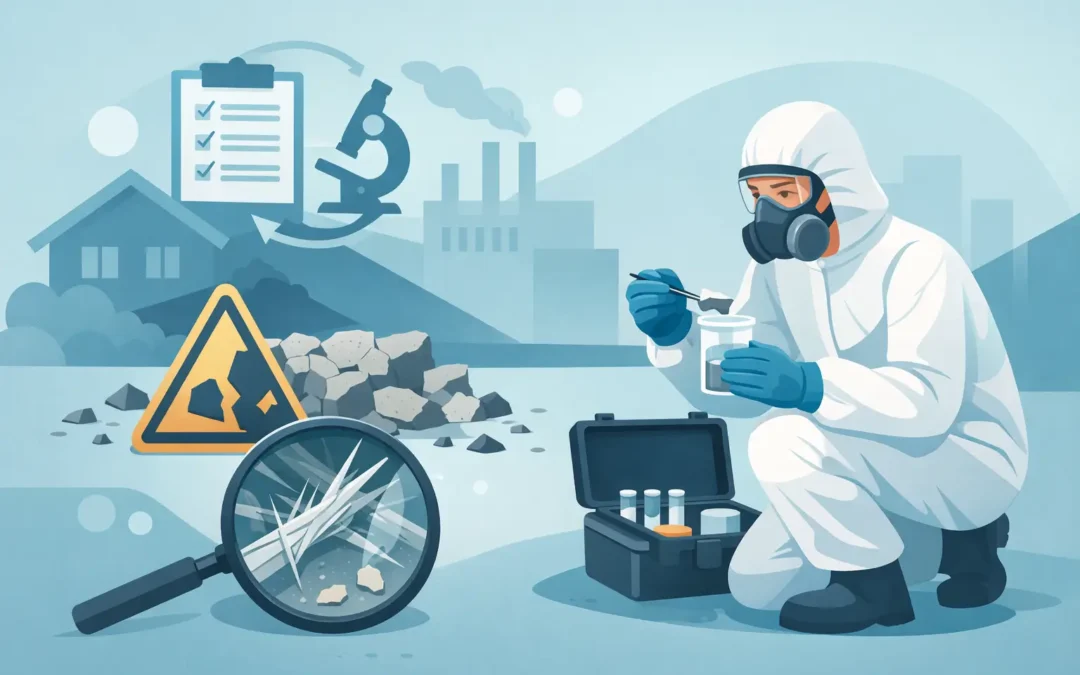
A small piece of old eaves lining, vinyl flooring or insulation can hold up an entire renovation if nobody knows what it is. Knowing how to arrange asbestos sampling gives you a clear answer before builders start work, materials are disturbed or a suspected hazard becomes a bigger clean-up.
For Melbourne and Victorian property owners, the right approach is straightforward: leave the material alone, arrange for a competent asbestos professional to inspect it, and have any necessary sample analysed by an appropriate laboratory. Guesswork is not a safe substitute for a result.
Start by treating suspect material with caution
Asbestos was widely used in Australian homes, commercial buildings and industrial sites before being banned. It can be found in cement sheeting, eaves, fencing, roof materials, backing boards, pipe insulation, vinyl tiles, adhesives, gaskets and fire-rated products. A building’s age and the appearance of a material can raise suspicion, but neither can confirm asbestos.
If the material is intact and will not be disturbed, avoid touching, drilling, cutting, sanding or removing it until you have advice. Do not break off a piece yourself and take it to a lab. Sampling can release fibres when it is done incorrectly, particularly with friable materials such as insulation, loose-fill products or deteriorated fireproofing.
If there has been accidental damage, stop work, keep people away from the area and avoid sweeping, vacuuming or using high-pressure water. Contact an experienced asbestos contractor promptly for site-specific advice.
When should you arrange asbestos sampling?
Sampling is commonly arranged before renovations, demolition, maintenance work or a property purchase where suspect materials have been identified. It is also sensible when a builder needs to drill into wall or ceiling linings, replace old flooring, remove a roof, upgrade services or work around old plant and equipment.
A sample may not always be the first or only requirement. On a larger commercial, industrial or government site, an asbestos audit or survey may be more appropriate. This identifies accessible asbestos-containing materials across the relevant area, records their condition and helps the duty holder plan safe maintenance or removal work.
The scope depends on the job. A homeowner replacing one damaged eave sheet may need a targeted inspection and sample. A facility manager planning staged refurbishment across several levels may need a broader audit, a register update and a clear plan for contractors. Asking for the right service at the beginning avoids delays and repeat visits later.
How to arrange asbestos sampling with the right contractor
Begin by contacting a specialist with asbestos experience, suitable licensing where the work requires it, insurance and a clear understanding of Victorian work health and safety obligations. The cheapest quote is not always the best value if it does not explain what will be inspected, sampled, analysed and reported.
When you call, provide as much practical information as possible. This lets the contractor assess urgency, prepare the right equipment and give you a realistic price and timeframe. Useful details include:
- the property address and type of building
- the age of the building, if known
- the location and condition of the suspect material
- clear photos taken from a safe distance
- the work you are planning and when it needs to begin
- whether the area is occupied, damaged or difficult to access.
Be clear about the purpose of the sample. For example, tell the assessor if you are planning demolition, bathroom works, roof replacement or maintenance around services. A good contractor will listen to the job at hand rather than treating every property as the same.
For urgent situations, ask how quickly an inspection can be arranged and what precautions should be taken in the meantime. Fast response matters, but it should never mean cutting corners on safety or documentation.
What happens during the site visit
The assessor will inspect the suspect material and consider its location, condition, accessibility and the work proposed nearby. If sampling is required, they will take a small, controlled representative sample using appropriate safety measures to minimise fibre release.
The sample should be properly contained, labelled and sent for analysis. The laboratory result determines whether asbestos is present and, where relevant, the type identified. Visual inspection alone cannot provide the same certainty.
You may be advised that several samples are needed where materials look similar but come from different areas, batches or building additions. This is not unnecessary upselling. Older properties are often altered over decades, and a material in one room may not match an apparently identical product elsewhere.
Ask what your report will tell you
Before engaging a contractor, ask what documents you will receive and when. At a minimum, you need a clear result that identifies the sampled location, material description and laboratory finding. This is the record you can provide to your builder, project manager, insurer or other trades.
For more complex sites, a detailed asbestos audit report may include photographs, material condition, risk information, recommended controls and an asbestos register. That information helps a business meet its duty of care and prevents workers from unknowingly disturbing hazardous materials during future repairs.
A negative result for one sample does not automatically clear the entire building. It only applies to the material and location sampled. Likewise, a positive result does not necessarily mean immediate removal is the only answer. Intact asbestos-containing material can sometimes be safely managed in place, provided it is monitored, labelled where required and protected from disturbance.
Plan the next step after the result
If asbestos is confirmed, the appropriate response depends on the type, condition and planned works. Cement sheeting in sound condition may be managed until removal is needed. Damaged material, friable asbestos or material that will be disturbed by construction may require removal by a suitably licensed asbestos removalist.
Do not ask general trades to remove confirmed asbestos as part of a renovation without confirming their competency and legal obligations. Removal, transport, disposal and site cleaning need to be managed correctly. Poor handling can expose occupants and workers, contaminate surrounding areas and create unnecessary project costs.
For commercial and industrial sites, make sure the result is passed to the person responsible for the asbestos register, contractor induction process and work planning. A laboratory result that sits in an email inbox does not protect anyone. It needs to inform the actual work method, access controls and scheduling.
There can also be a timing trade-off. Sampling early can feel like an extra step when a project is ready to start, but arranging it after demolition or renovation has begun can lead to stop-work delays, variation costs and a wider affected area. Early testing gives everyone a cleaner path forward.
Common mistakes to avoid
The biggest mistake is assuming a material is safe because it looks familiar or has been painted over. Another is relying on an old report without checking whether it covers the exact area of proposed work. Renovations often uncover concealed materials behind linings, under floors or above ceilings that were not accessible during an earlier inspection.
It is also risky to collect a sample without the right controls, or to place suspect material in a household rubbish bin. If asbestos is identified, it must be handled and disposed of in accordance with applicable requirements. Keep the area undisturbed until you have professional direction.
Finally, do not delay a conversation because you are unsure whether the material is asbestos. An experienced contractor can review your situation, explain whether sampling is warranted and help you choose a proportionate response. You do not need to diagnose the problem before making the call.
Get a clear answer before work begins
Asbestos Audits Australia can assist Melbourne and Victorian clients with asbestos sampling, audits, removal and related hazardous materials work. The focus should be on clear advice, safe methods and documentation that supports the next stage of your project.
Whether you are renovating a weatherboard home, managing a commercial tenancy or preparing an industrial site for demolition, arrange testing before the material is disturbed. A properly managed sample is a small step that can protect people, keep works moving and give you confidence that the job is being handled properly.