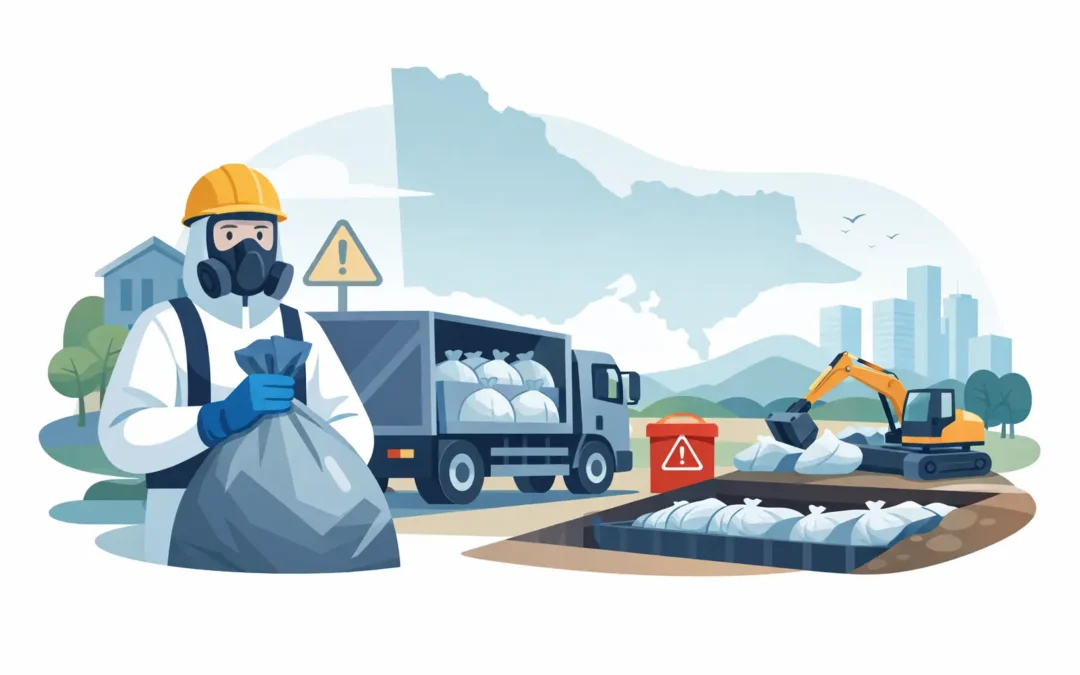
A renovation can look straightforward until old fibro sheeting, vinyl tiles or pipe insulation is uncovered. This licensed asbestos disposal guide explains what Victorian property owners and project managers need to know before asbestos waste is moved, transported or disposed of. The priority is simple: keep fibres contained, protect people on site and make sure the waste reaches an approved facility through the correct process.
Asbestos is not ordinary construction rubbish. Poor handling can contaminate a home, worksite, vehicle or surrounding area, creating avoidable health risks and costly clean-up work. Whether you are managing a small residential bathroom renovation or a large commercial demolition, licensed and properly managed disposal is part of doing the job safely.
Start by confirming what you are dealing with
Many older Victorian buildings contain asbestos-containing materials. Common examples include corrugated cement sheeting, eaves, wall linings, backing boards, electrical meter boards, old vinyl flooring, adhesives, flue pipes and insulation. It is not always obvious from appearance alone.
If a material is damaged, weathered, drilled, cut or disturbed during building works, it may release fibres. Do not break off a piece yourself to inspect it more closely. Stop work, restrict access and arrange a professional asbestos inspection or sample analysis where needed. Knowing whether asbestos is present before work begins gives you a clear plan and prevents trades, occupants and neighbours from being exposed unnecessarily.
For larger sites, an asbestos audit can identify materials across the property, assess their condition and support a safer removal or demolition programme. This is particularly useful for facility managers, builders and duty holders responsible for occupied commercial or industrial premises.
Removal and disposal are connected
Safe asbestos disposal begins before any material is removed. A licensed contractor plans the work area, uses suitable controls and personal protective equipment, and removes materials in a way that limits breakage and dust. The waste must then be packaged, labelled, transported and accepted at an appropriate disposal facility.
Trying to separate these stages can create problems. A person might remove sheets carefully enough but then load them unsecured into a ute, use unsuitable bags or take the material to a transfer station that cannot accept asbestos. That leaves the waste handler exposed and may result in rejected loads, contamination or compliance issues.
A properly managed job considers the entire chain from assessment through to lawful disposal. This includes whether the asbestos is friable or non-friable, the quantity of material, site access, the condition of the waste and the requirements of the receiving facility.
Friable and non-friable asbestos need different controls
Non-friable asbestos is commonly found in bonded products such as asbestos cement sheeting. When intact, the fibres are held within a solid matrix. However, drilling, sawing, breaking or heavy weathering can turn an otherwise manageable material into a significant risk.
Friable asbestos can be crumbled, pulverised or reduced to powder by hand pressure when dry. It may include loose insulation, sprayed coatings or deteriorated pipe lagging. Because fibres can become airborne more readily, friable asbestos work requires stricter controls and should only be handled by appropriately licensed specialists.
The right licence class and control measures depend on the material and the scope of work. Do not assume that a contractor who can remove a small amount of bonded sheeting is equipped or authorised to manage friable materials or a complex contaminated site.
What licensed asbestos disposal should look like
A professional contractor should be able to explain the disposal process in plain language before work starts. You should know what material is being removed, how the area will be controlled, where the waste will go and what records will be provided when the work is complete.
For most jobs, asbestos waste is handled in a way that prevents fibres escaping during removal and transport. Materials are kept damp where appropriate, carefully removed without unnecessary breakage, securely wrapped or bagged, labelled and loaded for transport. The work area is then cleaned using methods suitable for asbestos, not simply swept or blown down.
Asbestos waste should never be placed in household bins, mixed with general demolition rubbish, left on nature strips or stored around the property while you decide what to do next. Aside from the safety risk, illegal dumping can attract serious penalties and leave the property owner responsible for remediation.
A licensed operator also brings practical site discipline. That means controlled access, clean work practices, correct waste containment and a crew that understands the difference between finishing quickly and finishing properly. Good old fashioned service matters here: turn up prepared, keep the site tidy and leave the client with clear information.
Choosing a contractor for asbestos waste management
Price is relevant, but it should not be the only deciding factor. A low quote may exclude waste transport, disposal charges, site controls, clearance requirements or cleaning. Ask for the scope in writing so you can compare like for like.
Before appointing a contractor, confirm they hold the licences and insurance appropriate to the work. Ask how they manage waste, whether disposal costs are included and what documentation you will receive. For commercial, industrial and government projects, also check that the contractor can meet site induction, safety, reporting and programme requirements.
Four practical questions can help clarify a quote:
- What type of asbestos material has been allowed for, and is sampling required before removal?
- What licence class is required for this work and who will carry it out?
- How will asbestos waste be packaged, transported and disposed of?
- What completion records, waste receipts or clearance documentation will be supplied?
The answers should be direct. If a contractor is vague about where the waste is going, suggests placing it in general rubbish or cannot provide evidence of appropriate licensing, look elsewhere.
A licensed asbestos disposal guide for different properties
The same safety principles apply across Victoria, but the job details change with the property type.
For homeowners, the key risk is usually unplanned renovation work. A bathroom strip-out, fence replacement, kitchen update or shed demolition can uncover asbestos where it was not expected. Pause before demolition starts, particularly in homes built or renovated before asbestos restrictions came into effect. It is far easier and less expensive to arrange assessment before the room has been pulled apart.
For builders, asbestos needs to be considered early in the programme. Delays often occur when suspect materials are found after trades are booked and demolition is underway. Allow time for inspection, removal, disposal and any required clearance steps. Clear site boundaries and communication with subcontractors help prevent accidental disturbance.
For facility and industrial site managers, asbestos may be present in plant rooms, roofs, service ducts, old equipment and hidden building fabric. Works can affect employees, contractors and operations, so planning must account for access, shutdowns, isolation areas and occupied spaces. An audit and staged removal plan can reduce disruption while maintaining duty-of-care obligations.
Do not transport asbestos in a private vehicle unless you are certain of the rules
Victorian requirements can vary according to the type and amount of waste, the transport arrangement and the disposal facility. Facilities also have their own acceptance conditions, booking requirements and load preparation standards. These details should be confirmed before waste leaves site.
For small, legally manageable quantities of non-friable material, there may be specific procedures for householders. Even then, the material must be properly prepared and taken to a facility that accepts it. The safer option for many property owners is to use an experienced licensed contractor who can manage removal and disposal as one controlled service.
Never transport loose sheets, broken fragments or unsealed bags. Do not rely on a tarp thrown over a load. Vehicles and equipment can become contaminated if the waste is not properly contained, potentially exposing anyone who uses them afterwards.
Keep records and close the job properly
Once asbestos waste has been removed, keep the paperwork with your property or project records. Depending on the scope of work, this may include the quote and scope, asbestos register updates, waste disposal evidence, air monitoring results where applicable, and clearance documentation.
These records can be useful during future renovations, property sales, compliance reviews or insurance discussions. More importantly, they show that a known hazard was managed responsibly rather than hidden or passed on to the next contractor.
If you suspect asbestos at your Melbourne or Victorian property, stop work before the material is disturbed and get clear advice from a licensed specialist. A careful first decision protects your people, your programme and your site long after the waste has left it.