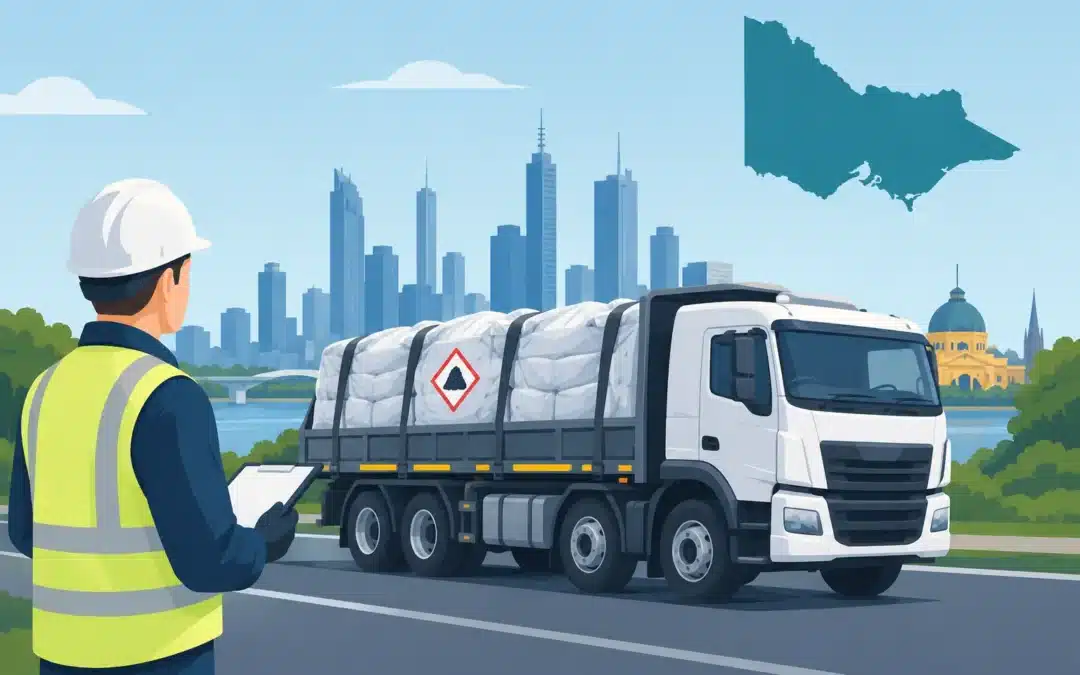
A renovation can be moving along well until the asbestos comes off site. That is the point where asbestos waste transport regulations become just as important as safe removal. A load that is poorly wrapped, unsecured, sent to the wrong facility or transported without the required documentation can expose people to asbestos fibres and leave the property owner, builder or contractor facing serious compliance issues.
For Victorian projects, asbestos waste must be handled as a controlled hazardous material from the moment it is removed until it is accepted at an authorised disposal facility. Good old-fashioned care matters here: contain it properly, move it securely and make sure the paperwork and disposal arrangements are right before the vehicle leaves site.
Asbestos waste transport regulations in Victoria
In Victoria, asbestos waste is regulated through a combination of occupational health and safety requirements, environment protection laws and EPA Victoria waste duties. The exact obligations can vary according to the type of asbestos, the amount being transported, who is doing the work and where the waste is going.
The key point is simple. Asbestos waste cannot be placed in a standard rubbish bin, mixed with demolition debris or taken to a tip that is not authorised to receive it. It must be packaged to prevent fibre release, transported safely and delivered to an approved facility that accepts asbestos.
This applies to bonded, or non-friable, asbestos such as asbestos cement sheeting, eaves, fencing and vinyl tiles, as well as friable asbestos. Friable material is more dangerous because it can be crumbled by hand when dry. It requires tighter controls and must be managed by appropriately licensed asbestos removal professionals.
For homeowners, the safest option is usually to have a licensed contractor remove and transport the waste. Builders, facility managers and industrial operators should also ensure the contractor’s scope covers the full waste chain, not only removal from the building.
Packaging comes before transport
Transport cannot make an asbestos removal job compliant if the waste has been packed badly at the source. Material should be kept wet where appropriate to minimise dust, handled carefully to avoid breakage and sealed as soon as practical.
Small pieces and dust are generally placed in heavy-duty plastic asbestos waste bags. Larger sheets, pipes or awkward items need to be wrapped in durable plastic sheeting and fully sealed with tape. Packaging must be strong enough to withstand handling, loading and unloading without tearing. It should be clearly labelled to identify the asbestos hazard.
Double-wrapping is commonly used where needed to reduce the risk of damage. The right approach depends on the waste type and condition. Intact asbestos cement sheets may be wrapped as whole sections, while broken fragments, contaminated soil or friable materials require more controlled containment.
Never break asbestos sheets into smaller pieces simply to make them fit into a vehicle or rubbish bin. Breaking material increases the chance of fibre release, creates more contaminated waste and makes safe transport harder.
The vehicle must prevent any release
A vehicle used to carry asbestos waste needs to keep the load contained for the entire trip. Waste must be secured so it cannot shift, tear, fall out or become exposed to wind and weather. An enclosed vehicle or fully covered, secure load arrangement is generally required, depending on the waste and transport method.
The vehicle should not carry loose asbestos waste. It should also not be used to carry food, personal belongings or unrelated materials alongside asbestos. If contamination is suspected, the vehicle must be cleaned using an asbestos-safe method. Sweeping with a broom, using compressed air or relying on an ordinary household vacuum can spread fibres and is not acceptable.
For commercial jobs, transport planning should consider the route, load size, collection timing and disposal facility booking requirements. A disposal facility may have set delivery hours, specific unloading instructions or limits on the type and quantity of asbestos it will accept. Turning up without confirming these details can cause costly delays.
Licences, permits and competent people
Licensing requirements depend heavily on whether the asbestos is friable or non-friable and on the removal work being performed. In Victoria, friable asbestos removal must be undertaken by a Class A licensed asbestos removalist. Non-friable asbestos removal above the relevant threshold requires a Class B licence, while smaller low-risk jobs may be subject to different requirements.
Transport obligations can also depend on the waste classification, load and business activity. EPA Victoria requirements may apply to waste transporters, including permissions, tracking or recordkeeping for certain industrial and priority wastes. These obligations change over time, so relying on old advice or a previous project is risky.
A professional contractor should confirm the current requirements before work starts and make sure the person transporting the waste is authorised to do so. This is particularly important for commercial demolition, contaminated soil removal and larger-scale asbestos projects, where waste volumes and chain-of-custody obligations are more complex.
Do not assume that a removal licence automatically answers every transport requirement. Removal, transport and disposal are connected, but each has its own responsibilities.
Disposal records protect everyone involved
For a straightforward residential job, the disposal receipt may be the most practical proof that the waste reached an authorised facility. For larger commercial, industrial or government works, the documentation may be more detailed and can include waste classification information, transport records, weighbridge dockets, disposal certificates and site waste registers.
Keep these records with the project file. They demonstrate that the material was not dumped, stockpiled or mixed into general demolition waste. They can also help satisfy a principal contractor, client, insurer, regulator or future property purchaser asking how asbestos was managed.
The chain of custody should be clear: where the asbestos came from, how it was contained, who transported it and where it was disposed of. If any part of that chain is unclear, there is a compliance risk.
Common mistakes that create unnecessary risk
Most asbestos transport problems are avoidable. They usually happen when a project is rushed, a property owner tries to save money by using general rubbish services, or a contractor treats asbestos as ordinary building waste.
The most common errors include:
- loading unwrapped sheets into a ute, trailer or skip
- using bags that are too thin, damaged or not sealed
- breaking sheets to reduce their size
- mixing asbestos with timber, plaster, soil or general demolition debris
- delivering waste to a facility that does not accept asbestos
- failing to retain disposal dockets and transport records
There is also a practical issue with skips. A skip bin may be suitable for many building materials, but it is not automatically suitable for asbestos. Unless the supplier has specifically arranged compliant asbestos containment, transport and disposal, asbestos should never be placed in it.
Why professional transport is often better value
Handling asbestos waste yourself can look cheaper at first. Once you factor in compliant packaging, personal protective equipment, vehicle protection, disposal fees, travel, cleaning and the possibility of getting it wrong, the saving can disappear quickly.
Professional asbestos contractors plan removal and transport as one controlled process. They know how to package different materials, secure a load, manage contaminated areas and use approved disposal pathways. For clients, that means fewer delays, a cleaner site and better confidence that the job will stand up to scrutiny.
At Asbestos Audits Australia, asbestos removal and waste management are approached with the same care as the initial inspection. The goal is not simply to get material off site. It is to ensure it is contained, transported and disposed of properly, with clear advice throughout the job.
If you are planning a renovation, demolition or clean-up involving suspected asbestos, arrange the waste pathway before removal begins. A quick professional assessment can prevent a small issue from becoming a safety risk, a project delay or an expensive compliance problem.