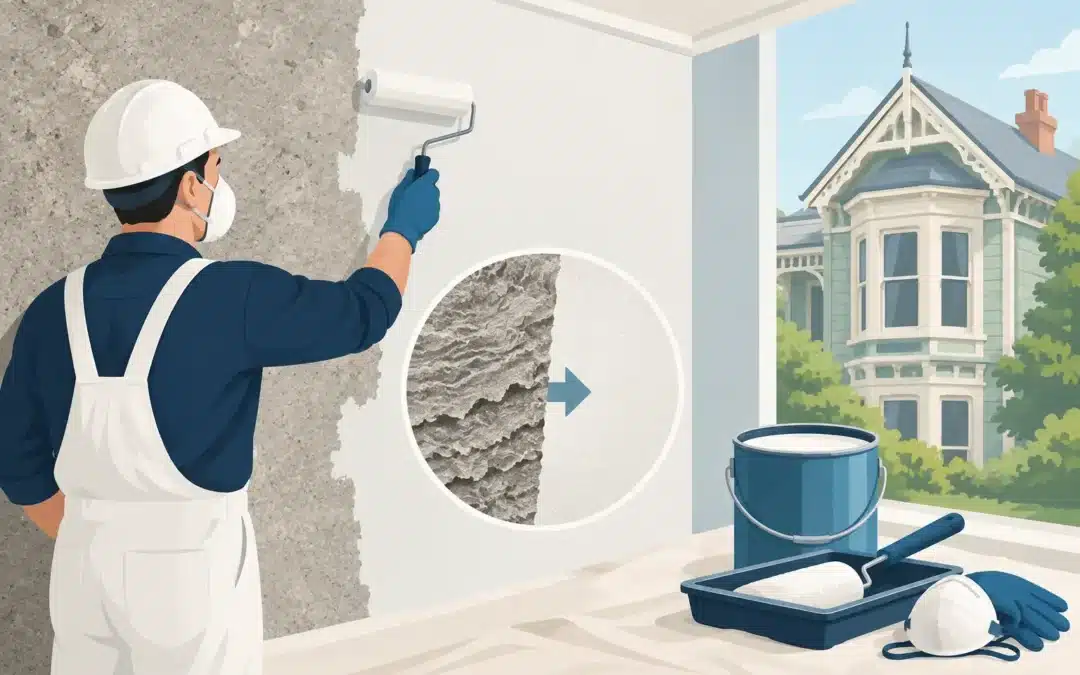
A weathered asbestos-cement fence, eaves or garage wall can make owners want a quick fix. The question, “can asbestos be painted over”, has a qualified answer: sometimes a suitable coating may be part of managing asbestos in good condition, but painting is not automatically safe, and it is never a substitute for a proper assessment.
The biggest risk comes from disturbing asbestos-containing material and releasing fibres into the air. Scraping, sanding, drilling, high-pressure washing or preparing damaged surfaces can turn a cosmetic job into a health and compliance issue. Before any work is planned, the material and its condition need to be understood.
Can asbestos be painted over safely?
Painting, also called sealing or encapsulation, may be considered where asbestos-containing material is confirmed to be non-friable, stable and in sound condition. Non-friable asbestos cement is commonly found in older fencing, wall sheeting, roofs, eaves and outbuildings. When it remains intact, the asbestos fibres are bound into a cement matrix.
A correctly selected coating can help protect an intact surface from weathering and reduce the chance of surface deterioration. However, it does not remove asbestos from the property. The material remains in place and must continue to be managed carefully whenever repairs, renovations, demolition or maintenance are proposed.
Painting is generally not the right answer where the surface is cracked, crumbling, heavily weathered, delaminating, fire-damaged or likely to be disturbed. It is also unsuitable where preparation would require aggressive cleaning or abrasion. In these cases, removal by a properly licensed contractor may be the safer long-term option.
Why a coat of paint is not a simple maintenance job
The danger is rarely the final paint coat. It is what happens beforehand. Ordinary painting preparation often involves cleaning loose material, stripping old paint, sanding rough areas and filling holes. Those activities can damage asbestos-containing products and create airborne fibres.
Even a surface that looks sound from the ground can be fragile at fixings, edges, joins and areas exposed to years of rain and sun. Old asbestos cement roofing and fencing can become brittle without obvious warning. Walking on sheets, leaning ladders against them or using power tools can cause breakage.
There is another practical issue: paint can conceal damage. If a deteriorating sheet is coated without addressing its condition, future owners or trades may assume it is ordinary building material. Good asbestos management means keeping clear records and making sure anyone undertaking later work knows what is present.
For commercial, industrial and government-managed sites, the duty of care is higher still. Building owners and managers need reliable asbestos information before arranging works that could affect employees, contractors, visitors or the public. An asbestos register and survey information can be far more valuable than a quick visual decision.
When sealing asbestos may be considered
Encapsulation can be a reasonable management option when the asbestos-containing material is intact, unlikely to be disturbed, and can be treated without unsafe surface preparation. It is usually considered as part of a broader plan rather than as an isolated DIY task.
A suitable assessment should look at the material type, its location, existing damage, surface weathering, access requirements and likely future works. For example, an intact asbestos-cement wall in a locked plant area may be managed differently from a brittle garage roof above an active work zone or a loose fence beside a family entertaining area.
The right coating system also matters. The product needs to suit the substrate and be applied in a way that does not damage it. Applying paint does not make asbestos safe to cut, drill or remove later. Nor does it remove the need to label, record and manage the material appropriately.
Where asbestos is painted, the condition of the coating and substrate should be checked over time. If cracking, peeling, impact damage or deterioration appears, do not scrape it back or attempt patch repairs without informed advice. The original asbestos-containing material is still underneath.
What to do before arranging any painting work
If a property was built or renovated before 2004, do not assume walls, eaves, ceiling linings, vinyl flooring, fencing or outbuildings are asbestos-free. Asbestos was used widely in Australian building products, and appearances alone are not enough to identify it with certainty.
Start by avoiding disturbance. Do not take a sample yourself, sand a small test area or wash the surface to see what it looks like underneath. Keep children, pets, workers and tenants away from damaged material where practical, particularly if debris is visible.
The sensible next step is to arrange professional identification and condition assessment. For workplaces and managed properties, this should sit alongside the site’s asbestos register and planned maintenance program. For homeowners, it provides a clear basis for deciding whether the material can be safely managed in place or should be removed.
Any work should then be planned around the assessment outcome. This includes deciding whether sealing is appropriate, selecting a competent contractor, controlling access to the area, and ensuring waste is handled correctly if damaged sections need to be removed. Requirements can differ between domestic settings and workplaces, so Victorian obligations should be checked before work starts.
Never rely on a painter’s assurance alone that a surface is safe to coat. A capable painter may be experienced with coatings, but asbestos assessment and removal require specific knowledge, controls and, where applicable, licensing.
Painting versus removal: choosing the right option
Removal provides the clearest long-term solution because the asbestos-containing material is taken away from the property and disposed of through the correct waste stream. It can be the better choice when material is deteriorating, where major renovations are planned, or where ongoing maintenance would repeatedly put people near the asbestos.
Removal also has trade-offs. It requires planning, controlled work practices, lawful disposal and, depending on the material and project, licensed asbestos removal. It may involve temporary disruption to access or operations. These are worthwhile considerations when set against future liability, maintenance costs and the risk of accidental disturbance.
Painting or encapsulation can be less disruptive where material is stable and will remain untouched. It may extend the serviceable life of an asbestos-cement product, but it commits the owner or manager to ongoing monitoring and clear communication. It is a management measure, not a permanent resolution.
The decision should be based on condition and future use, not just the lowest immediate cost. A homeowner planning a bathroom extension, a builder preparing a demolition scope, and a facilities manager maintaining a warehouse may all face different risks from the same type of sheet.
Common situations that need extra care
Asbestos roofs and external cladding are exposed to weather and can become fragile over time. Painting may sound practical, but roof access alone can create a breakage risk. Fence panels can be damaged by garden work, vehicle impact or loose fixings. Eaves can be disturbed when replacing gutters, installing lights or carrying out pest work.
Internally, asbestos-containing vinyl tiles, backing materials, ceiling panels and wall linings should not be assumed safe to paint over simply because they are indoors. Renovation tasks such as removing carpet, changing cabinetry or installing services can disturb hidden layers. The right response depends on the material and the planned work, not on whether it is visible.
If you are buying, selling, renovating or managing an older Victorian property, early asbestos advice avoids expensive changes once trades are already on site. It also helps keep scopes, timelines and responsibilities clear.
Asbestos Audits Australia provides practical asbestos assessment, removal and hazardous-materials support across Melbourne and Victoria. When the material needs to be removed, a licensed and properly managed approach protects people, the site and the project schedule.
A painted surface can look tidy, but safety depends on what lies beneath and how it is handled. If there is any doubt about the material or its condition, pause the work and get experienced advice before the first brush, roller or tool touches the surface.