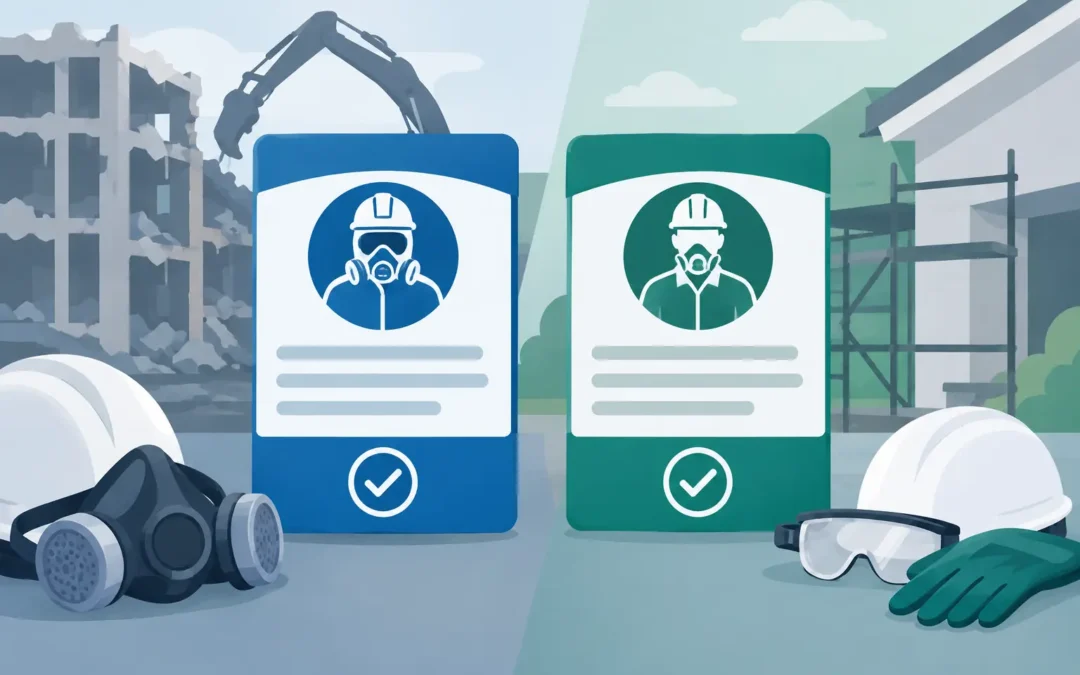
A renovation can change direction quickly when asbestos is found in an old eave, vinyl floor, switchboard backing or pipe lagging. The difference between class A versus class B asbestos removal is not paperwork for paperwork’s sake. It determines who can legally remove the material, how the work must be controlled and what level of risk your project carries.
For Victorian property owners, builders and facility managers, getting this decision right before work starts protects people on site, avoids delays and helps keep a refurbishment or demolition project compliant. The first step is identifying the material and its condition. The next is engaging a removalist with the right licence for that specific job.
What a Class A asbestos licence covers
A Class A asbestos removal licence is the highest level of asbestos removal licence. It permits the removal of both friable and non-friable asbestos-containing materials.
Friable asbestos is material that can be crumbled, pulverised or reduced to powder by hand pressure when dry. This matters because disturbed friable asbestos can release fibres into the air more readily than bonded material. Examples can include damaged pipe insulation, sprayed coatings, loose-fill insulation, fireproofing materials and some deteriorated insulation products.
Class A licensed removalists can also remove non-friable asbestos, such as asbestos cement sheeting, roofing, eaves, fencing, backing boards and vinyl floor products that contain asbestos. Their licence covers the broader range of conditions and removal methods, including high-risk work requiring tightly controlled enclosures, specialised equipment and more extensive decontamination arrangements.
A Class A job may involve a fully enclosed work area under negative pressure, controlled entry and exit procedures, personal protective equipment, decontamination facilities, air monitoring and clearance processes. The exact controls depend on the material, its condition, the location and the scale of the work. A small section of damaged friable lagging in a plant room needs a very different plan from bonded sheeting being removed from a vacant garage.
What a Class B asbestos licence covers
A Class B asbestos removal licence permits the removal of non-friable asbestos-containing material only. Non-friable material is commonly called bonded asbestos because the fibres are fixed into a solid matrix, such as cement or resin, rather than being loose.
In practical terms, Class B work often includes asbestos cement wall sheets, corrugated roofing, eaves, downpipes, fencing, flat sheets, gaskets and certain resilient floor coverings. When these materials are intact and carefully handled, the chance of fibre release is generally lower than with friable materials. Lower risk does not mean no risk.
Cutting, drilling, sanding, snapping or using power tools on asbestos cement products can create hazardous dust. The same is true when sheets are badly weathered, fire-damaged or broken. A licensed removalist must use suitable removal methods, isolate the area where required, control dust, package waste correctly and ensure the site is cleaned properly.
A Class B licence does not allow a contractor to remove friable asbestos. If bonded asbestos has deteriorated to the point where it may release fibres, or if the planned removal process creates a higher-risk condition, a Class A licence may be required. That assessment should be made before workers begin pulling sheets down or demolition equipment arrives on site.
Class A versus Class B: the key difference
The key difference is simple: Class A removalists can remove friable and non-friable asbestos, while Class B removalists can remove non-friable asbestos only.
The decision is less simple when you are standing in front of an ageing building. Materials that look like ordinary cement sheeting or insulation cannot be classified safely by appearance alone. Their location, age, condition and intended disturbance all affect the removal plan.
For example, an intact asbestos cement fence may be a straightforward Class B removal project. However, an old industrial building with damaged insulation around pipes, dusty ceiling spaces or loose debris requires a much more cautious investigation. If friable asbestos is present or suspected, only a Class A licensed contractor should undertake the removal.
This is why experienced advice early in the project saves time. It is far easier to organise the correct licence, controls and waste pathway before a strip-out begins than to stop work after suspect material has been broken or spread through a work area.
Why licence selection affects your project
Choosing a removalist based on price alone can be an expensive mistake. The right licence is one part of a compliant project, but it is closely connected to planning, safety controls, documentation, site cleanliness and lawful disposal.
For homeowners, the concern is often a bathroom renovation, reroofing job or backyard structure. Builders may be managing tight handover dates and multiple trades. Facility and industrial site managers may have operational areas, staff, tenants, public access and contractor coordination to consider. In each setting, asbestos work needs to be planned around the people who could be exposed.
A properly managed removal scope considers the material type and quantity, whether it is friable or non-friable, the condition of the material, site access, nearby occupants, weather exposure, service isolation and the disposal route. It also considers what happens after removal. Dust, fragments and contaminated soil can remain a concern if the job is rushed or poorly cleaned.
For commercial and government sites, the duty of care is broader. You may need to coordinate with an asbestos register, management plan, principal contractor requirements and site-specific procedures. A licensed specialist can help clarify the removal requirements and provide a practical scope that suits the site rather than applying a one-size-fits-all approach.
Do not rely on a visual guess
Many Victorian buildings constructed or renovated before the early 2000s can contain asbestos products. It may be visible in sheeting and cladding, but it can also be hidden behind walls, under floor coverings, inside service ducts or around old equipment.
If the material is unknown, treat it as suspect until it has been properly assessed. Do not break off a piece yourself, sweep dust, use a domestic vacuum or send workers in to investigate without controls. Disturbing a small amount of asbestos unnecessarily can turn a simple removal job into a contamination issue.
An asbestos audit or inspection provides a clearer starting point for larger properties, workplaces, demolition works and planned refurbishments. It identifies suspected materials, records their location and condition, and helps determine whether sampling or removal is needed. For a homeowner, targeted advice before renovation can provide the same practical benefit: you know what is there before trades start cutting into it.
Questions to ask an asbestos removalist
Before accepting a quote, ask whether the contractor holds the licence required for the material and scope of work. Ask how they have classified the material, what controls they will use, how they will protect occupants and neighbouring areas, and how waste will be transported and disposed of.
It is also reasonable to ask about insurance, experience with similar projects, site clean-up and clearance arrangements. A professional contractor should explain the process in plain language. If a quote is vague about the material, disposal or safety measures, ask for clarification before work begins.
Be cautious of anyone who suggests removing suspect asbestos without confirming the type and condition, or who treats asbestos waste like ordinary building rubbish. Compliance is not an optional extra. It is part of doing the job safely and properly.
Plan the removal before demolition or renovation
Asbestos is often discovered after demolition has already started, particularly in older homes, factories, sheds and commercial fit-outs. That can hold up the project, increase costs and create avoidable exposure concerns.
The better approach is to assess the building before demolition, refurbishment or invasive maintenance begins. Establish whether asbestos is present, identify whether Class A or Class B removal is appropriate, and schedule the work so other trades are not working around the removal area.
Asbestos Audits Australia provides licensed, professionally managed asbestos services across Melbourne and Victoria, with a focus on safe removal, clear advice and proper waste management. Whether the job involves bonded sheeting or suspected friable material, the right licence and a well-planned scope give you a safer path forward. If you are unsure what you have found, stop work, keep people away from the area and seek qualified advice before the material is disturbed.