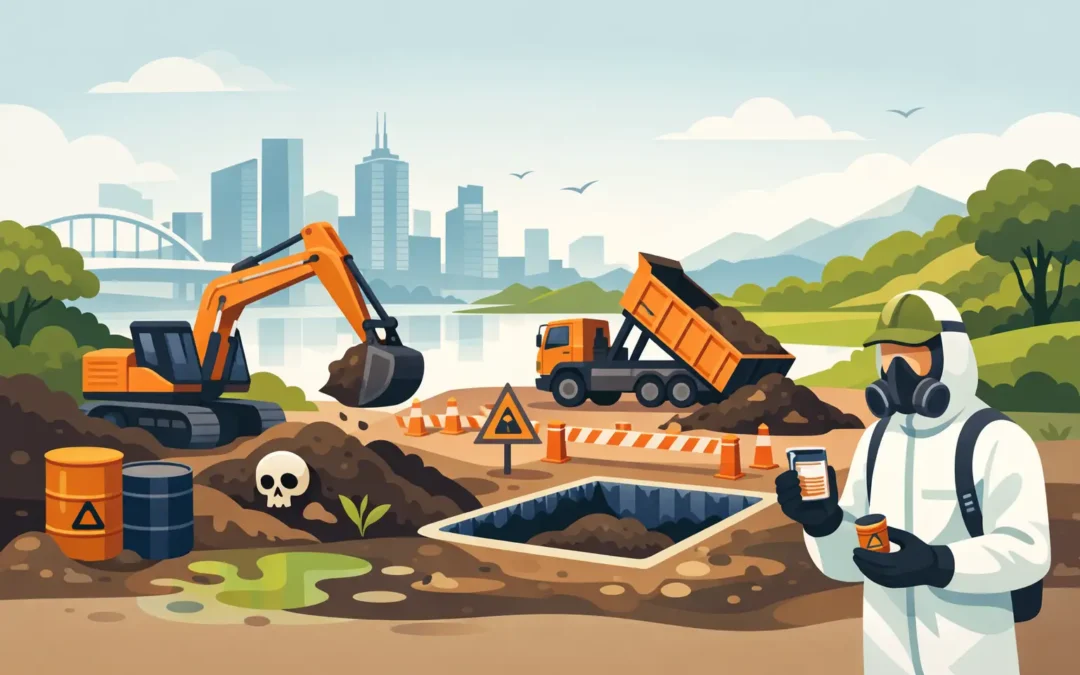
A stockpile of soil can look harmless until excavation exposes ash, building rubble, oily staining or buried waste. This contaminated soil disposal guide is designed to help Victorian property owners, builders and site managers make safe decisions before soil leaves the site. The key rule is simple: do not assume excavated soil is clean fill, and do not send it anywhere until its condition and disposal pathway are confirmed.
Contaminated soil can create health risks, delay construction and expose the person responsible for the site to significant compliance issues. A practical assessment early in the job is usually quicker and more cost-effective than stopping works after a truckload has been rejected at a receiving facility.
Contaminated soil disposal guide: start with classification
Soil is generally considered contaminated when it contains substances at levels that may harm people, the environment or the intended future use of the land. In Melbourne and across Victoria, common concerns include asbestos-containing material, lead paint fragments, hydrocarbons from fuel or oil, chemicals, heavy metals, treated timber residues and industrial waste.
Classification is not based on appearance alone. Dark soil may be naturally occurring, while clean-looking material may contain fibres, metals or chemicals that are not visible. A qualified environmental professional or appropriately experienced contractor can inspect the site history, identify likely contaminants and arrange representative sampling where required.
The disposal option depends on the test results, the volume of soil, the type of contamination and the acceptance criteria of the licensed receiving facility. Soil that cannot be reused on site may need to be transported to a facility authorised to receive that specific waste stream. This is why a general rubbish skip, vacant block or unapproved clean-fill site is never an acceptable answer.
Check the history before digging
Before excavation begins, review what has previously occurred on the land. Former workshops, service stations, factories, market gardens, landfill areas, rail corridors and demolition sites all deserve closer attention. Residential blocks can also present risks, particularly where older buildings have been demolished, burned or renovated.
Warning signs should trigger a pause and further assessment. These include visible asbestos fragments, demolition rubble mixed through soil, chemical odours, oily residue, discoloured ground, ash layers, drums, buried pipes or unexpected fill material. None of these signs confirms contamination on its own, but each is a good reason not to continue excavating blindly.
For projects involving older homes, asbestos is a particular concern. Broken cement sheeting, backing board, insulation debris and contaminated dust can be mixed through garden beds or demolition fill. Disturbing that material with an excavator can spread fibres beyond the original area. The work should be isolated, assessed and managed by suitably licensed professionals.
Test before you quote a disposal solution
Sampling is the step that turns a suspicion into a workable disposal plan. It should be planned around the site, not treated as a box-ticking exercise. Soil from a former shed slab may need to be assessed separately from soil taken from a garden bed, driveway or fuel storage area.
Representative samples allow the laboratory results to reflect the material that will actually be excavated. If contamination is patchy, more than one sample area may be needed. Mixing soil from different areas before testing can complicate classification and can turn a manageable stockpile into a larger volume of potentially contaminated material.
A clear sampling and reporting process helps answer practical questions before machinery arrives: whether the soil can remain on site, whether it can be reused under controlled conditions, how it must be separated, and which receiving facilities may accept it. It also gives builders and project managers a better basis for pricing, programming and communicating with clients.
There are trade-offs. Testing adds an upfront cost and may take time, but proceeding without it can be much more expensive if the soil is rejected after loading or contamination is found beneath a completed area. On larger commercial and industrial jobs, early investigation is often essential for managing risk and avoiding programme blowouts.
Keep contaminated material separate and controlled
Once suspect soil has been identified, treat it as a separate material stream. Do not blend it with clean excavated material, concrete, green waste or general demolition waste. Separation protects reusable material, reduces disposal volumes and makes it easier to demonstrate that the job has been managed responsibly.
Stockpiles should be placed in a suitable controlled area, away from drains, waterways and public access. Depending on the material and site conditions, controls may include covering stockpiles, using containment measures, suppressing dust and managing runoff. Vehicle movements should also be controlled so soil is not tracked onto roads, footpaths or neighbouring properties.
Asbestos-contaminated soil requires particularly careful handling. Dry sweeping, uncontrolled loading and breaking up visible fragments can release fibres. The correct approach depends on the scale and nature of the contamination, but it commonly involves exclusion zones, wet methods where appropriate, controlled excavation, suitable packaging or covered transport, and decontamination procedures. This is not work to hand to an unlicensed operator simply because the soil is already in the ground.
Protect workers, neighbours and the public
A disposal job is not only about where the soil ends up. It is also about managing exposure while it is being excavated, loaded and transported. Workers need task-appropriate training, protective equipment and a clear understanding of the material they are handling.
For occupied properties and active worksites, communication matters just as much. Nearby workers, tenants and neighbours should not be left guessing why an area has been cordoned off or why trucks are operating. A professional contractor will set out practical controls, keep the work area orderly and respond quickly if unexpected material is found.
Use lawful transport and an approved receiving facility
The final destination must be suitable for the classified material. Receiving facilities have their own acceptance requirements, and many require documentation or prior approval before a load is delivered. Turning up with an unknown or incorrectly described load can result in rejection, additional transport costs and delays to the project.
Transport should be arranged using the right vehicle and containment method for the waste. Loads must be secured to prevent dust, debris or liquids escaping during transit. Where Victorian waste tracking or transport requirements apply, records need to be completed accurately and retained as part of the project file.
Keep a clear chain of evidence from excavation through to disposal. This may include site assessment records, laboratory reports, photographs, load details, weighbridge dockets, transport records and disposal receipts. For homeowners, these records provide reassurance that the material has not been dumped illegally. For builders, facility managers and government clients, they support due diligence and demonstrate that duty-of-care obligations have been taken seriously.
It is tempting to choose the cheapest quote, especially when excavation is holding up a project. However, a low price that excludes testing, appropriate containment, lawful transport or disposal documentation is not a saving. It shifts risk back to the property owner, principal contractor or site manager.
Plan disposal into the wider project
Contaminated soil should be considered before demolition, bulk excavation or landscaping is scheduled. Allow room in the programme for assessment, laboratory turnaround, approvals and disposal bookings. If a project is likely to produce several waste types, plan the separation of soil, concrete, timber, metal and asbestos-containing material from the start.
Unexpected finds can still happen. When they do, stop work in the affected area, prevent further disturbance and obtain expert advice. Continuing to dig in the hope that the material will disappear beneath new fill or concrete can make the issue harder and more expensive to resolve.
For sites across Melbourne and Victoria, Asbestos Audits Australia can provide practical advice and professionally managed hazardous-materials work where asbestos-contaminated soil or demolition-related contamination is identified. The focus should always be on safe handling, clean work areas and a disposal pathway that stands up to scrutiny.
If you are unsure about soil on your property or worksite, pause before moving it. A prompt inspection and the right disposal plan can protect people, keep your project moving and prevent a manageable issue from becoming a costly one.