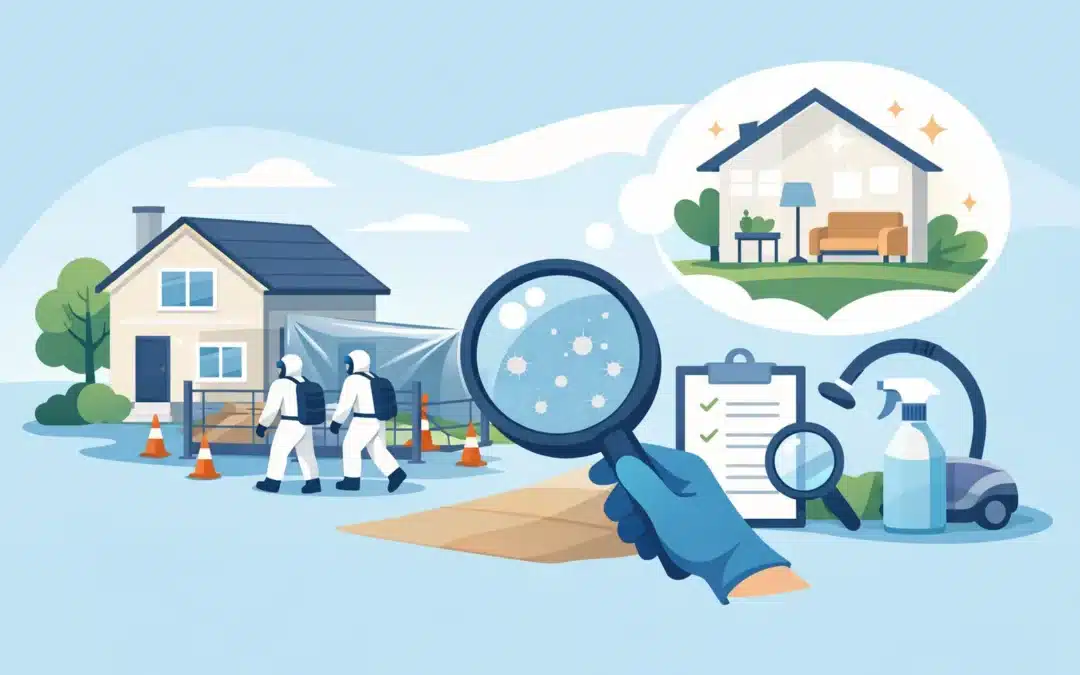
The removal team has packed up, the containment area is down and the asbestos is gone. But what happens after asbestos removal is just as important as the removal work itself. Before anyone returns to the area, there are checks, cleaning requirements, waste controls and, where required, formal clearance steps to confirm the space is safe for its intended use.
For Victorian homeowners, builders and site managers, the key point is simple: do not treat the job as finished just because the material has been taken away. A professional asbestos removal process ends with the work area being properly cleaned, inspected and released for reoccupation under the right conditions.
What happens after asbestos removal?
After asbestos-containing material has been removed, the contractor will complete a controlled clean-up of the work area and arrange lawful disposal of the waste. The site is then inspected to check that no visible asbestos debris, dust or contaminated materials remain.
The exact process depends on the type and scale of removal. A small, non-friable asbestos cement removal at a residential property does not carry the same requirements as friable asbestos removal in a commercial plant room or industrial facility. The removal method, licence class, containment arrangements and applicable Victorian regulations all affect the final steps.
You should receive clear information about what was removed, how the area has been cleaned, where the waste has gone and whether a clearance inspection or certificate is required before work recommences.
The work area is cleaned before it is reopened
Asbestos removal is not a standard demolition clean-up. The objective is to remove asbestos residue without creating further airborne dust or spreading contamination into adjoining rooms, roof spaces, soil or public areas.
Within a contained work area, licensed removalists use controlled methods appropriate to the job. This may include careful wet wiping of surfaces, vacuuming with a properly maintained H-class vacuum cleaner, and cleaning tools, equipment and containment materials before they leave the area. Disposable protective clothing, plastic sheeting, filters and other contaminated consumables are treated as asbestos waste.
Dry sweeping, household vacuuming and using compressed air are not suitable ways to clean asbestos dust. These methods can disturb fine fibres and move them into areas that were not originally affected.
For larger or more complex projects, the contractor may also clean access paths, decontamination areas and nearby surfaces that could have been exposed during the works. On an occupied property, this matters just as much as cleaning the removal zone itself. A clean-looking room is not necessarily a properly cleaned asbestos work area.
Containment is removed in a controlled order
Where the removal involved plastic enclosure, negative air equipment or a decontamination unit, these controls remain in place until the removal and initial clean-up have been completed. The containment is not simply pulled down once the asbestos sheets or insulation have been removed.
The team will follow an organised sequence to clean the enclosure, remove waste and safely dismantle controls. This reduces the chance of residue being carried into the rest of the building. For friable asbestos work, this stage is particularly strict because loose material presents a higher risk of fibre release.
Clearance inspection confirms the area is ready
A clearance inspection is the final check of the asbestos work area. Its purpose is to verify that the removal and clean-up have been completed to an acceptable standard before the area is handed back.
Depending on the type of removal and the relevant requirements, the inspection may be performed by an independent licensed asbestos assessor or another competent person permitted to carry out the clearance. For higher-risk friable asbestos removal, independence and formal assessment are especially critical. The person conducting the clearance should not be put in a position where they are marking their own work.
During the inspection, the assessor or competent person looks closely at the removal area, containment, surrounding surfaces and access routes. They check for visible debris, dust, residue and any remaining asbestos-containing material that should have been removed under the agreed scope of works.
If the area does not pass, it is not released. The removalist must complete further cleaning or rectify the issue, then the area is reinspected. While this can add time, it is the right outcome. Reoccupying a work area before it meets clearance requirements is not worth the risk to workers, occupants or your project schedule.
Clearance certificates and project records
Where a clearance certificate is required, keep it with your property or project records. Builders and facility managers may need it before follow-on trades can start, while commercial and government clients may require it for compliance files, handover documentation or contractor management records.
It is also sensible to retain the removal documentation, waste records and asbestos register updates where applicable. If you are renovating an older home, selling a commercial property or managing ongoing maintenance, these documents provide a reliable record of what was found and what was removed.
Air monitoring may be used for higher-risk work
Air monitoring measures airborne fibre levels during or after certain asbestos removal works. It is not necessary for every small removal job, and it should not be used as a substitute for proper containment and cleaning. Its role depends on the risk level, removal method and regulatory requirements.
For friable asbestos removal or projects where there is a greater potential for fibre release, air monitoring may be part of the control plan. Personal monitoring can help assess worker exposure, while control monitoring may check whether containment measures are performing as intended. Clearance air monitoring can also form part of the process in situations where it is required.
A result only has value when it is interpreted alongside the condition of the work area and the removal controls used. The practical priority remains the same: contain the work, remove the material safely, clean thoroughly and do not reopen the area until the appropriate clearance process has been completed.
Asbestos waste goes to an approved facility
Once asbestos is removed, it remains regulated waste. It cannot go into a household bin, hard rubbish collection, skip bin or general construction waste load.
The removalist must package, label, transport and dispose of asbestos waste in line with Victorian requirements. This generally involves sealed, clearly identified packaging that prevents fibres from escaping during handling and transport. Larger items may be wrapped and sealed, while smaller debris and contaminated materials are placed into approved asbestos waste packaging.
Waste is taken to a facility authorised to receive it. The disposal pathway matters because illegal dumping and incorrect disposal can expose others long after the original removal work has finished. It can also create significant clean-up costs and enforcement consequences for property owners and contractors.
Ask for waste disposal documentation where it is relevant to your project. A reputable contractor will be able to explain how waste has been managed and provide the records required for the work.
When can people return to the property?
People can return to the affected area only after the removal work, cleaning and any required clearance steps are complete. The timing can range from the same day for a straightforward, contained task to longer for complex removal involving friable materials, multiple rooms, roof spaces, contaminated soil or a large commercial site.
Do not let painters, electricians, carpenters, tenants or family members enter early to save time. Trades should wait until the area has been formally handed back. Starting follow-on work too soon can disturb residue, compromise the inspection process and make it difficult to establish whether later dust was present before or after clearance.
For a home renovation, it is also wise to keep children and pets away from the work zone until you have been told it is safe to re-enter. If the removal was outside, ask whether nearby garden beds, paths, sheds or eaves were included in the final inspection.
What should happen next on your project?
Once the area is cleared, normal building, repair or refurbishment work can resume. This is also the right time to check whether any asbestos remains elsewhere on the property. Older Victorian homes and buildings can contain asbestos in more than one location, including eaves, wall linings, vinyl flooring, backing boards, roofing, fencing, pipes and electrical switchboard panels.
If further demolition or refurbishment is planned, an asbestos audit or targeted inspection can help prevent surprises once trades are on site. For commercial and industrial properties, update the asbestos register and communicate relevant findings to workers and contractors who may be affected by the remaining material.
The best handover is a clean site, complete records and clear advice about what has been removed and what still needs managing. If you need practical guidance after asbestos work in Melbourne or across Victoria, Asbestos Audits Australia can help you understand the next safe step before your project moves on.