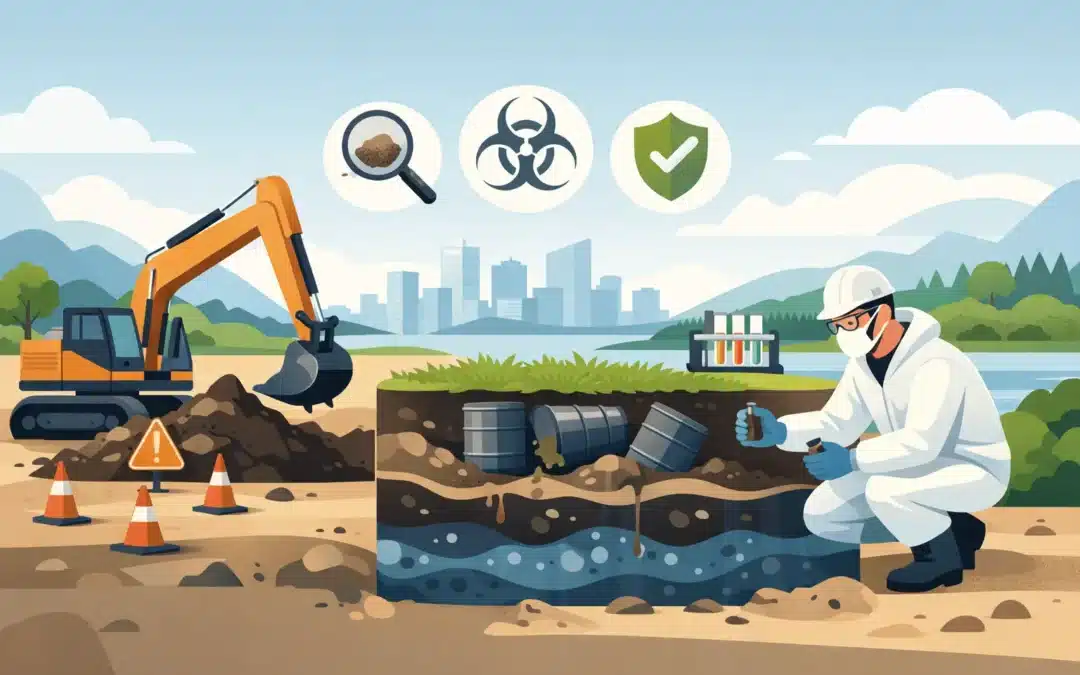
A discoloured patch of ground, buried building rubble or an unexpected odour can bring a renovation, excavation or redevelopment job to a halt. Knowing how to manage contaminated soil early protects people on site, prevents costly delays and helps Victorian property owners meet their legal obligations.
The first rule is simple: do not assume soil can be moved, reused or taken to a tip because it looks like ordinary fill. Contamination is not always visible, and disturbing soil before it has been assessed can spread the problem across a site or beyond its boundaries.
Start by controlling the area, not digging further
If potentially contaminated soil is uncovered, stop excavation in that area and keep workers, vehicles and the public away from it. Mark out the affected zone, limit access and avoid tracking soil across clean parts of the property on boots, tyres or machinery.
Covering exposed soil may be appropriate where it can be done without further disturbance, particularly before rain or strong winds. Sediment controls, such as barriers around the work area, can also help prevent runoff entering drains or neighbouring land. The right controls depend on the site, the suspected contaminant and weather conditions, so they should be planned by a competent person rather than applied as a quick fix.
Do not hose down the area, mix the soil with clean fill or spread it out to make it disappear. These actions can increase the volume of affected material and make later disposal more expensive.
Identify what may be in the soil
Contaminated soil can arise from many sources. Former industrial uses, workshops, fuel storage, chemical handling, illegal dumping, old demolition waste, lead-based paint, treated timber, pesticides and fill brought onto a property can all create a concern. On older Melbourne sites, asbestos-containing material in soil is a particularly serious issue, especially where broken cement sheeting, fragments of insulation or demolition rubble are present.
A site history review is a useful starting point. Look at past land uses, building age, available plans, previous reports and any visible signs such as ash, drums, stained soil, unusual smells or buried rubbish. Site history alone cannot confirm contamination, but it helps determine where testing should be focused.
Arrange a proper site assessment and sampling plan
Soil testing needs to be representative. Taking one scoop from a convenient spot rarely provides a reliable answer, particularly on larger sites or land with mixed fill. An appropriately qualified environmental consultant can prepare a sampling plan based on the proposed works, site history and likely contaminants.
Laboratory analysis may test for substances such as asbestos, heavy metals, hydrocarbons, pesticides or other chemicals. The results should be interpreted against the intended land use. Soil suitable for an industrial setting may not be suitable for a backyard, childcare facility or residential development.
This step is where good advice saves money. Testing too little can leave unknown risk behind. Testing without a clear plan can produce results that do not answer the practical questions: what can remain, what must be removed and where can it lawfully go?
Make a management plan before soil is moved
Once the contamination has been identified, the project needs a documented approach. The best option depends on the material, the location, the future use of the land and how accessible the affected area is.
In some cases, contaminated soil can remain in place if it is safely contained, capped and managed under a long-term plan. This may reduce excavation costs, but it can restrict future works and require ongoing records, inspections and controls. For a redevelopment, sale or high-use area, removal is often the more practical option.
A management plan should set out the work boundaries, dust and runoff controls, excavation method, vehicle movements, stockpile arrangements if permitted, waste classification, transport and disposal pathway, worker protection, incident procedures and validation requirements. It should also clarify who is responsible for decisions and site records.
For asbestos-contaminated soil, the controls need to be particularly strict. Handling requirements vary according to the material and the level of risk. A licensed and experienced contractor can assess the scope, isolate the area, remove material safely and manage disposal in line with Victorian requirements.
Use competent, licensed contractors where required
Contaminated soil removal is not a general labouring task. Workers need the right training, equipment and supervision for the contamination involved. Depending on the material and scope, this may include licensed asbestos removalists, environmental consultants, waste transport providers and specialist disposal facilities.
Before work begins, confirm the contractor understands the site conditions and can explain their method in plain language. Ask how they will control dust, prevent cross-contamination, clean machinery, package or cover loads, and deal with unexpected material found during excavation.
Price matters, but a low quote that leaves out testing, waste classification, disposal charges, transport, validation or clean-up can become an expensive problem. A clear scope gives you a more meaningful comparison and reduces the risk of variations halfway through the job.
Remove, transport and dispose of soil lawfully
Contaminated soil must be classified before it is sent off site. The classification determines the type of receiving facility that can accept it and the transport and disposal requirements that apply. Do not rely on a verbal assurance that a facility will take the load. Confirm the disposal pathway before excavation starts.
Loads should be managed to prevent spills, dust and material escaping during transport. This commonly involves suitable containment, covered vehicles and careful loading practices. Trucks and equipment may also need to be cleaned before leaving the site so contaminated soil is not carried onto public roads.
Keep waste dockets, transport records, laboratory reports and disposal receipts. These documents are not administrative clutter. They provide evidence that soil was managed correctly and are valuable if questions arise during a property transaction, council enquiry, audit or future development.
Validate the work before rebuilding or backfilling
Removal is not automatically complete when the last truck leaves. Depending on the project, validation sampling or an inspection may be needed to confirm that the excavation area has been cleaned to the required standard.
This is especially relevant where soil has been removed from beneath a proposed building, landscaped area, playground, service trench or residential yard. Validation gives the owner, builder and future occupants confidence that the affected area has been properly addressed.
Only bring clean fill onto the site once its source and suitability have been checked. Imported fill can create a new contamination issue if it is poorly documented or contains rubble, asbestos fragments or unsuitable material. Keep records for incoming material as carefully as you do for outgoing waste.
Common mistakes that create larger problems
The most costly mistakes usually occur before a specialist is called. Excavating first and testing later can spread material through the site. Stockpiling unknown soil without controls can expose workers and neighbours. Reusing fill elsewhere on the property can contaminate a previously clean area.
Another common error is treating all demolition rubble as inert waste. Soil mixed with fragments of asbestos-containing material, painted timber, ash or other hazardous debris needs a different response. Separating and assessing materials early is safer than discovering a problem after a load has been rejected at the disposal facility.
When to seek urgent specialist advice
Act quickly if you find suspect asbestos, chemical drums, strong petroleum or solvent odours, oily staining, buried waste, large amounts of demolition debris or soil that is generating dust near homes, schools or occupied workplaces. Stop work in the immediate area and obtain professional advice before proceeding.
For Victorian property owners, builders and facility managers, a prompt assessment is usually far cheaper than a contaminated-site incident. Asbestos Audits Australia can provide practical advice and professionally managed contaminated soil and asbestos removal works, with safety, site cleanliness and compliant waste management kept front of mind.
A controlled response gives your project the best chance of staying safe and moving forward. If soil on your site does not look right, treat that uncertainty seriously and have it assessed before the next bucket goes into the ground.