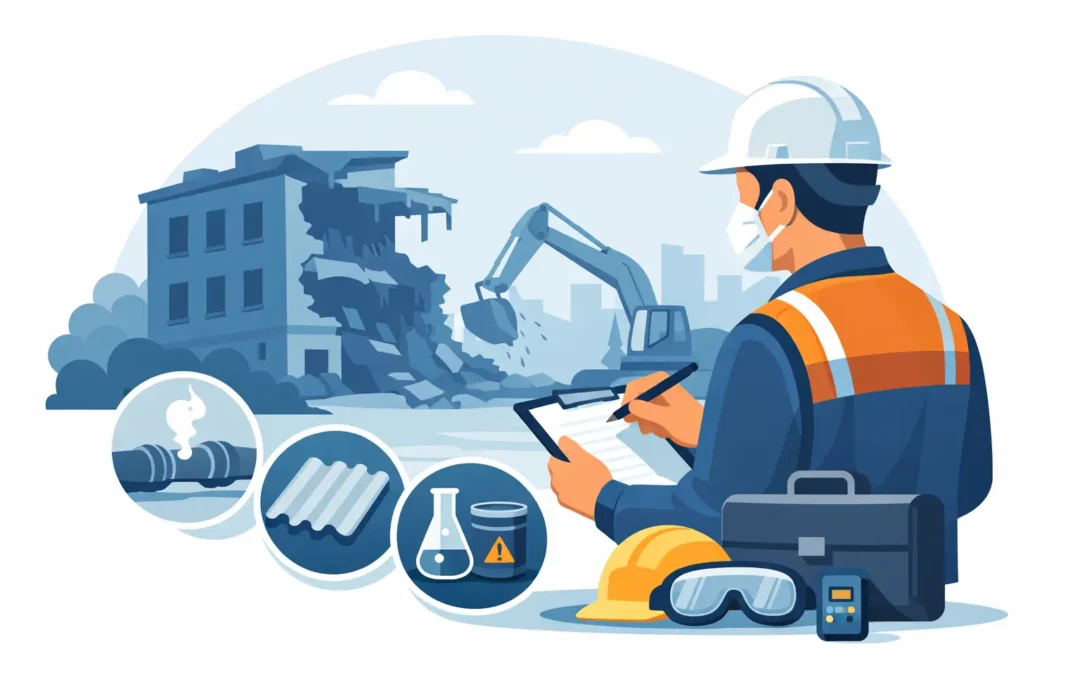
A wall comes down quickly. Finding hazardous material after demolition has started can stop a project just as quickly, while adding exposure risks, disposal costs and avoidable delays. A pre-demolition hazardous materials survey gives property owners, builders and site managers a clear picture of what is in a structure before anyone starts stripping out, cutting, breaking or removing it.
For older Melbourne and Victorian buildings, asbestos is usually the first concern. However, a proper survey can also identify other materials that need controlled removal, specialist disposal or a change to the demolition plan. The aim is straightforward: make the site safe, meet your duties and keep the job moving with fewer surprises.
What a pre demolition hazardous materials survey covers
A pre-demolition survey is a detailed inspection undertaken before a building, part of a building or fixed plant is demolished. Unlike a basic visual check, it is designed to locate hazardous materials that may be hidden within the structure and disturbed during demolition works.
The surveyor reviews accessible areas and, where required, carries out intrusive inspection work. That can involve entering roof spaces, inspecting wall cavities, lifting sections of flooring, checking behind linings and examining service penetrations. Sampling is used where a material cannot be reliably identified by sight alone, with samples sent for laboratory analysis.
The final report should identify the material, its location, its condition and the risk it presents. It should also set out practical recommendations for removal, containment, waste handling and sequencing the works. This gives the demolition contractor information they can actually use on site, rather than a vague list of possible risks.
Hazardous materials commonly found before demolition
The materials present will depend on the age, use and history of the property. A former factory requires a different investigation from a weatherboard home, office fit-out or government facility. Still, several hazards appear regularly across Victorian sites.
Asbestos-containing materials
Asbestos was used widely in Australian construction for decades and can occur in far more places than external cement sheeting. It may be present in eaves, wall and ceiling linings, vinyl floor tiles and backing, pipe lagging, electrical switchboards, fire doors, roof materials, gaskets, adhesives and textured coatings.
A material that is intact may not pose the same immediate risk as damaged or friable asbestos. Once demolition begins, though, materials can be broken, crushed and made airborne. This is why asbestos needs to be identified and removed under the right controls before general demolition starts.
Lead, chemicals and industrial residues
Lead-based paint can be a concern in older buildings, especially where paint removal, abrasive work or large-scale demolition is planned. Commercial and industrial sites may also contain oils, fuels, solvents, acids, chemical residues or contaminated equipment.
The survey may flag areas that need further assessment rather than trying to treat every issue as identical. For example, staining around a former workshop drain or tank location may point to a potential contaminated soil issue outside the building footprint. That finding can affect excavation, disposal and project timing.
Other regulated or difficult-to-manage materials
Depending on the site, the inspection can identify synthetic mineral fibre insulation, polychlorinated biphenyls in older equipment, mercury-containing lamps or switches, refrigerants in cooling systems and silica-containing materials. Each requires an appropriate approach to removal and disposal.
The value of early identification is not simply compliance. It allows the project team to arrange the right licensed trades, equipment, exclusion zones and waste streams before the site becomes a demolition zone.
Why survey scope matters
A survey is only useful if its scope matches the proposed works. A limited inspection may be appropriate for a small, clearly defined strip-out where most surfaces remain in place. Full demolition usually calls for a much more comprehensive investigation because concealed materials are likely to be disturbed.
Access is a major factor. Occupied buildings, live services, locked plant rooms, restricted roof spaces and structural instability can limit what can be inspected on the first visit. Any inaccessible areas should be clearly recorded in the report, along with the action required before demolition proceeds. Treating an inaccessible area as clear is not a safe shortcut.
For a residential property, the survey might focus on the house, garage, sheds, fences and surrounding structures affected by the works. On a commercial or industrial site, it may also need to consider plant, service tunnels, fire protection systems, switchrooms, redundant equipment and historic alterations.
A good surveyor will ask what is being demolished, how it will be demolished and when the work is due to start. Those details shape the inspection and help avoid paying for an unsuitable report.
The survey process before demolition
The process starts with available site information. Building age, previous asbestos registers, plans, maintenance records and renovation history can help direct the inspection. They are useful references, but they do not replace a site assessment. Buildings are altered over time, and undocumented materials are common.
The site inspection then identifies suspect materials, collects samples where necessary and records locations carefully. Photographs, plans and clear descriptions are particularly valuable when multiple contractors will work on site.
After laboratory results are received, the findings are compiled into a report. The report should distinguish confirmed hazardous materials from materials that could not be accessed or tested. It should also provide clear recommendations, including whether asbestos removal must occur before demolition and what controls are needed for other identified hazards.
The project team can then plan removal and demolition in the right order. In many cases, hazardous material removal is completed first, the area is cleared, and only then does the general demolition contractor begin work. This sequence reduces the chance of cross-contamination and makes waste management far more straightforward.
Compliance, duty of care and project certainty
Under Victorian occupational health and safety requirements, people controlling workplaces and demolition activities have responsibilities to identify hazards and manage risks. Asbestos duties are particularly strict. Where asbestos is known or suspected, relying on assumptions can expose workers, occupants and neighbours to unnecessary risk.
There is also a commercial reason to get the survey right. An unexpected asbestos discovery can shut down a demolition crew, leave machinery idle and force a rushed search for a licensed removal contractor. Rushed decisions often cost more than planned work.
The survey report supports better quotes too. Contractors can price hazardous material removal, waste transport and disposal based on known conditions instead of allowing for broad contingencies. It will not remove every unknown, particularly on heavily altered or damaged sites, but it greatly reduces the chance of costly discoveries after work begins.
Choosing the right contractor for the job
Look for a contractor with practical experience in asbestos, hazardous materials and demolition environments, not just report-writing experience. They should understand how findings affect access, sequencing, worker protection, waste classification and site handover.
Ask whether the inspection will include sampling where required, how inaccessible areas are reported and whether the recommendations are specific to your planned demolition. Clear communication matters. Homeowners need plain advice on what happens next, while builders and facility managers need a report that can be incorporated into a work plan without delay.
Asbestos Audits Australia provides practical hazardous materials assessments for residential, commercial and industrial projects across Melbourne and Victoria. The focus is on clear advice, compliant work practices and the highest quality workmanship from initial inspection through to safe removal where required.
Arrange the survey before the machines arrive
The best time to find asbestos, chemical residues or other hazardous materials is before a skip bin is delivered, services are disconnected and demolition machinery enters the site. Give the survey enough lead time for inspection, laboratory testing and any removal work that follows.
A clear pre-demolition report helps everyone make better decisions: owners can budget with confidence, contractors can organise their work safely, and workers can arrive knowing the hazards have been properly addressed. If demolition is planned, arrange expert advice early and keep the site safe from the first day of work.