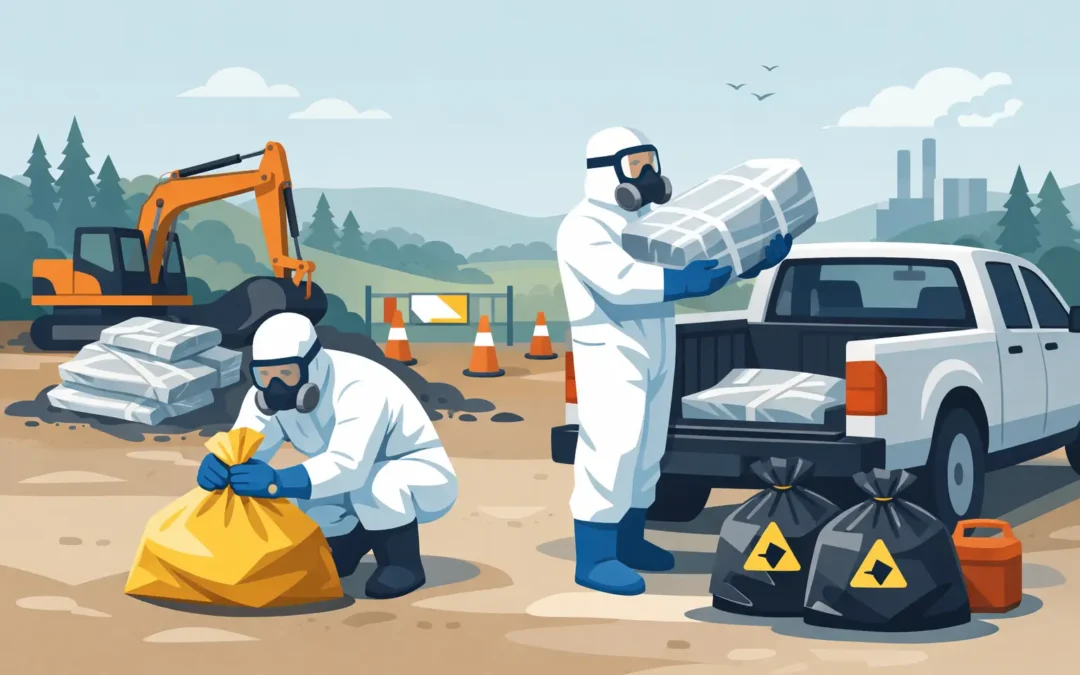
A pile of broken fibro sheeting beside a renovation site is not ordinary building rubbish. If you are asking how to dispose of asbestos waste, the safest answer is to stop work, prevent anyone from disturbing it and arrange compliant handling from the outset. Poor disposal can release dangerous fibres, contaminate a property or vehicle, and create significant legal and clean-up costs.
For Melbourne and Victorian property owners, builders and site managers, asbestos waste needs to be identified, packaged, transported and delivered to an approved facility correctly. The right approach depends on the material, its condition, the quantity involved and where it came from. When there is doubt, treat the material as asbestos until it has been assessed by a competent professional.
First, determine whether the material may contain asbestos
Asbestos was used widely in Victorian homes, commercial buildings and industrial sites built or renovated before the early 2000s. It may be found in cement sheeting, eaves, wall cladding, roofing, vinyl floor backing, pipe lagging, switchboard panels, fire doors, adhesive, insulation and old construction debris.
You cannot confirm asbestos simply by looking at it. Some products are obvious to experienced contractors, but many materials look similar to non-asbestos products. A professional inspection and, where appropriate, laboratory testing can provide certainty before demolition, renovation or waste removal begins.
The condition of the material matters. Bonded asbestos cement sheeting is generally less likely to release fibres while intact. Once it is drilled, broken, cut, weathered or crushed, the risk increases. Friable asbestos, such as loose insulation or degraded lagging, can be crumbled by hand pressure and requires far more controlled removal and disposal.
Do not sweep, vacuum with a household vacuum, use a leaf blower, pressure-clean, drill or cut suspected asbestos. These actions can spread fine fibres through the air and across surrounding surfaces.
How to dispose asbestos waste without spreading fibres
The disposal process starts well before a vehicle arrives at a waste facility. Waste must be kept contained at the work area so fibres are not carried into gardens, neighbouring properties, common areas or occupied buildings.
If asbestos is intact and a suitably qualified person has confirmed that small-scale handling is appropriate, the material should be removed carefully with minimal breakage. It should be kept wet enough to reduce dust, but not saturated to the point that contaminated water runs into soil or drains. Never throw sheets from a roof, drop them into a skip or break them down to make them fit.
Asbestos waste is generally sealed in heavy-duty plastic packaging. The wrapping must be durable, fully sealed and clearly labelled to identify asbestos content. Double-wrapping is commonly required for sheet material and other waste, with tough plastic sheeting and tape used to create a secure package. Smaller fragments, dust-contaminated materials and personal protective equipment need similarly secure containment in suitable bags or packaging.
For a commercial, industrial or demolition project, waste controls should be planned before removal starts. This includes the work area, exclusion zones, decontamination arrangements, packaging method, waste storage location, transport route and disposal facility. A licensed asbestos removal contractor can manage these details and provide the documentation needed for a properly controlled job.
Never place asbestos in a bin, skip or hard-rubbish collection
Asbestos must not go into a household wheelie bin, general construction skip, recycling bin, green-waste bin or kerbside hard-rubbish pile. It should never be mixed with bricks, timber, soil or general demolition waste.
A skip provider may refuse a load if asbestos is found, and the entire load can become contaminated. That can delay a project and leave the property owner or responsible contractor facing additional sorting, disposal and cleaning costs.
Avoid these common mistakes:
- leaving wrapped material exposed to weather, damage or public access
- transporting unwrapped sheets in a ute, trailer or car boot
- breaking sheets into smaller pieces for convenience
- taking waste to a transfer station that does not accept asbestos
- burying asbestos on site or placing it in soil fill
If asbestos has been accidentally broken or dumped, keep people away from the area. Do not attempt a rushed clean-up with domestic tools. Professional advice is the sensible next step, particularly where dust, fragments or contaminated soil may be present.
Transport asbestos waste to an approved Victorian facility
Not every landfill or transfer station accepts asbestos, and facilities may have specific booking times, packaging standards, load limits and paperwork requirements. Confirm acceptance directly with the disposal facility before transport. This is particularly important for commercial loads, demolition waste and asbestos-contaminated soil.
During transport, packages must remain sealed and protected from damage. The load needs to be secured so it cannot move, tear or release material. An enclosed vehicle or covered, protected load is often the practical choice, provided it meets the facility’s requirements. The vehicle should not carry other unsecured rubbish that could damage asbestos packaging.
For larger quantities, friable material, difficult access sites or any project where there is a risk of exposure, use a suitably licensed and insured asbestos contractor. In Victoria, asbestos removal licensing requirements apply according to the type and amount of asbestos being removed. As a general guide, friable asbestos and larger quantities of non-friable asbestos require licensed removal. A competent contractor can assess the work and ensure the correct licence class, controls and disposal pathway are used.
Keep records of disposal. For businesses, builders, facility managers and government-related projects, waste documentation is an essential part of demonstrating that asbestos has been managed responsibly. Records can include removal details, waste transport information, landfill receipts and clearance documentation where required.
What changes when asbestos is mixed with soil or rubble?
Asbestos-contaminated soil is not a standard excavation problem. Small pieces of asbestos cement can be spread through fill, garden beds, demolition rubble or stockpiled soil, especially on older sites where previous works were poorly managed.
The first priority is to stop moving the soil. Excavators, skid steers, trucks and foot traffic can distribute fragments well beyond the original area. The site should be assessed to establish the extent of contamination and determine whether the material is isolated, widespread, bonded, friable or mixed with other regulated waste.
Contaminated soil often needs a project-specific waste management approach. That may involve controlled excavation, segregation, stockpile management, air monitoring where appropriate, transport in suitable covered containers and disposal at an approved facility. The most cost-effective solution is not always the cheapest initial quote. Proper assessment can prevent unnecessary excavation while ensuring no contaminated material is left behind.
When professional asbestos disposal is the right call
A homeowner may be able to manage a very small amount of intact, non-friable asbestos only where it can be handled and disposed of safely under Victorian requirements. In real terms, many jobs are not as simple as they first appear. A cracked bathroom wall, weathered garage roof, old heater flue or pile of demolition debris can involve hidden materials and a greater risk of contamination than expected.
Professional removal is the sensible option when material is friable, damaged, difficult to access, above ground level, near occupied areas, mixed with other demolition waste or present in significant quantities. It is also the right call for workplaces and commercial sites with duty-of-care obligations, where shortcuts can expose workers, tenants, visitors and contractors.
A capable asbestos contractor should explain what has been found, what work is required, how the area will be protected and where the waste will go. They should not pressure you into unnecessary work, but they should be clear about risks, licensing and compliance. Good old fashioned service means answering questions plainly and leaving the site clean, not simply removing visible sheets and moving on.
A safer next step for Victorian property owners
If you have suspected asbestos waste on your property, do not let urgency turn it into a bigger problem. Keep the material undisturbed, restrict access and get practical advice before arranging removal or transport. For renovations, demolitions, commercial sites and contaminated soil projects, Asbestos Audits Australia can assess the situation and provide a compliant, professionally managed removal and disposal solution.
The best disposal outcome is one that protects the people around the site, keeps your project moving and leaves no hazardous surprise for the next person to work on the property.