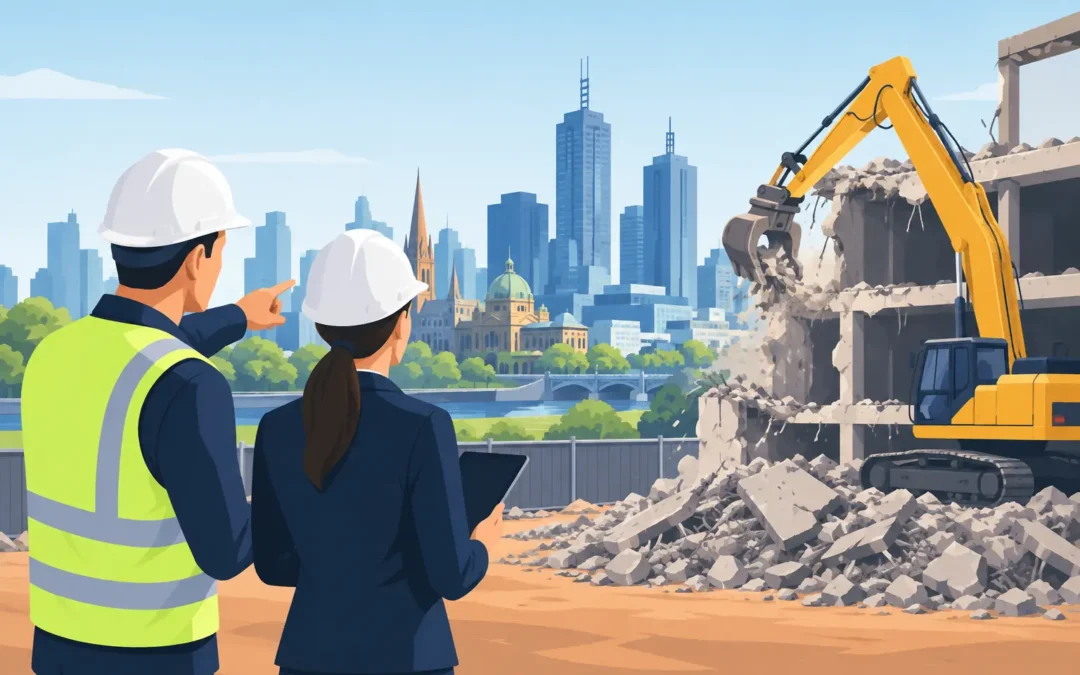
A demolition job can look straightforward from the street: a machine, a skip bin and a cleared block by the end of the week. In reality, choosing demolition contractors is a decision that affects safety, project timing, neighbours, waste costs and, in older buildings, potential asbestos exposure. The right contractor does more than pull down a structure. They plan the work, manage the risks and leave the site ready for what comes next.
For Melbourne and Victorian property owners, builders and site managers, demolition needs to be handled with the same care as construction. A fast price is useful, but a clear scope, appropriate licences and practical communication are what keep a project moving without costly surprises.
What demolition contractors should manage
Professional demolition is not a single service. The work may involve a small garage or shed, internal strip-out before a renovation, a commercial tenancy make-good, partial demolition around retained structures, or full removal of a house, factory or industrial building. Each job has different access requirements, hazards and approvals.
A capable contractor starts by inspecting the site and defining exactly what is being removed, what must remain and how machinery, workers and trucks will access the area. This early planning matters. Tight suburban blocks, shared driveways, overhead powerlines, neighbouring properties and restricted site hours can all change the method and cost of demolition.
The scope should also cover services. Electricity, gas, water, sewer and communications need to be identified, isolated or disconnected by the appropriate providers or trades before demolition starts. Guesswork is not acceptable when live services may be present beneath a slab or behind a wall.
Good old fashioned service also means being upfront when a job requires more investigation. If site conditions do not match the original information, a professional contractor explains the issue, outlines the options and obtains approval before proceeding.
Asbestos comes before demolition
Any property built before 2004 should be treated carefully, as asbestos-containing materials may be present. It can be found in eaves, wall and ceiling linings, vinyl floor coverings, wet-area backing, roof sheets, fencing, electrical boards, pipe lagging and many other building products. It is not always obvious by sight alone.
Demolition can disturb these materials quickly. Breaking, cutting, drilling or crushing asbestos-containing products can release airborne fibres, creating a serious health risk and a compliance problem for everyone on site. For this reason, asbestos should be identified and managed before general demolition begins.
Depending on the building and proposed works, this may involve an asbestos audit or targeted inspection, sampling where required, and removal by appropriately licensed asbestos removalists. The removal area must be handled separately from ordinary demolition waste, with correct containment, transport and disposal arrangements.
This is one reason a contractor with asbestos and demolition experience offers real value. Rather than treating hazardous materials as an afterthought, the work can be planned in the correct order: identify the risk, remove it safely, clear the area and then demolish the remaining structure. It protects workers, occupants, neighbours and the construction program.
What to check before appointing demolition contractors
The cheapest quote is not always the lowest project cost. An incomplete allowance for asbestos, disposal, traffic management or difficult access can become a variation once the job is underway. Compare quotes by looking at what is included, not just the total at the bottom of the page.
Ask whether the contractor is appropriately licensed and insured for the proposed works, and whether they have experience with sites similar to yours. A residential weatherboard house, an occupied commercial building and an industrial facility are not interchangeable projects. The contractor should be able to explain their proposed method in plain language.
It is also worth confirming who manages permits, service disconnections and waste disposal. In Victoria, requirements can vary according to the type of structure, location, council controls and the scale of work. A demolition permit may be required, while heritage overlays, planning conditions, road occupancy needs and environmental requirements can add further steps. An experienced contractor will identify the likely requirements early and clarify responsibilities in writing.
Before accepting a quote, make sure it addresses the following practical points:
- the exact structures, fixtures, slabs, trees or rubbish included for removal;
- asbestos inspection, removal and clearance requirements where relevant;
- site fencing, dust suppression, noise controls and protection of retained areas;
- access for machinery and trucks, including any traffic or neighbour considerations;
- disposal of demolition waste and contaminated material at approved facilities; and
- final site condition, such as a clean block, crushed concrete, retained fill or excavation work.
A written scope gives both parties something clear to work from. It reduces assumptions and helps prevent the familiar dispute of one party believing an item was included while the other treated it as extra work.
Safety, dust and waste are part of the job
A demolition site should be controlled from the first day. That means establishing safe exclusion zones, suitable fencing and signage, checking the condition of structures before entry, and selecting machinery that suits the site. Manual demolition may be necessary in confined or delicate areas, while larger equipment can improve efficiency where space and separation allow. The right approach depends on the structure and its surroundings.
Dust management is particularly important in built-up Melbourne suburbs and active commercial sites. Water suppression, controlled removal methods, covered loads and regular site cleaning help limit dust migration. These measures are not cosmetic. They protect nearby residents, workers, vehicles and neighbouring operations.
Noise, vibration and truck movements also need attention. A well-managed contractor considers work hours, delivery timing and the effect on adjoining properties. On commercial and industrial sites, demolition may need to be staged around tenants, customers, production areas or critical services. That can take more planning, but it is often safer and less disruptive than trying to complete everything in one hit.
Waste management is another sign of a professional operation. Concrete, brick, metal, timber, green waste and general building materials may be separated where practical for recycling or appropriate processing. Hazardous materials and contaminated soil require their own controlled pathways. Rubbish should not be left piled on site with the expectation that someone else will deal with it later.
Questions worth asking at the site inspection
A site inspection is your chance to test how the contractor thinks. Ask what risks they see, how they will protect any retained building elements, and what could affect the proposed price or timeframe. Clear answers are more useful than vague assurances.
You should also ask about communication during the work. Who is the point of contact? How will unexpected findings be reported? When will the site be ready for the next trade? For builders and facility managers, these details are essential because demolition is often the first critical step in a wider program.
If asbestos is suspected, ask directly how it will be assessed and managed. No reputable contractor should dismiss the concern or suggest that unknown materials can simply be broken up and removed with general waste. The correct process may add time at the beginning, but it can prevent a much larger shutdown, clean-up cost or safety issue later.
Choosing experience over shortcuts
Demolition has a visible result, but much of the quality lies in the work you do not see: the planning, paperwork, isolation of hazards, protection measures and lawful disposal. A clean site handed over on time is the result of careful preparation, capable operators and a contractor prepared to take responsibility for the whole job.
Asbestos Audits Australia provides demolition and hazardous-materials services across Melbourne and Victoria, with a focus on safe work practices, clear advice and high-quality workmanship. Whether the project is a home renovation, commercial strip-out or complex site clearance, the first step is a proper conversation about the building, the risks and the outcome you need.
Before machinery arrives, take the time to request a detailed assessment and quote. The right demolition partner gives you confidence that the site will be cleared safely, managed professionally and ready for the next stage of work.